


The future continues to knock on our doors, highlighting a significant challenge: families are seeking both independence and togetherness without being hindered by space limitations. Recent surveys conducted by AIA indicate that flexible layouts catering to multiple generations are on the rise. This 5 BHK floor plan, designed on a 1000-gaj plot, exemplifies how households can enhance autonomy. I perceive floor layouts as operating systems—rooms managing their shared space—where privacy and connection are not conflicting elements but rather complementary features in a living interface. This highlights the importance of a spatial reasoning toolkit, like Homestyler, to visualize such concepts effectively.
Courtyard Spine + Dual Living Zones
Design Logic: A central courtyard serves as the thermal and social heart, effectively separating formal and family lounges to prevent overlap in future multi-generational routines.
Flow: Entry → formal lounge → courtyard spine → family lounge → bedroom clusters; this creates a guided pathway reminiscent of a high-level protocol with low-latency diversions.
Sightlines: Layered perspectives draw soft attention from the foyer to the green area, followed by staggered transitions to private wings, effectively managing visual bandwidth.
Storage: Perimeter millwork functions as a storage cache; benches facing the courtyard conceal seasonal items, while linen towers near bedrooms facilitate quick access.
Furniture Fit: Sofas designed as modular sections measuring 3 meters; tables are positioned to follow circulation patterns, with passage clearances set at 1200 mm for optimal flow.
Verdict: This central spine separates ceremonial aspects from everyday activities; in five years, it will still maintain its calm framework for diverse family interactions.
save pin
Split-Master Suite + Flexible Junior Wing
Design Logic: One master suite is located near a quiet area, while a semi-master suite within the family cluster is designed to accommodate remote work trends and elder care needs.
Flow: Private loop: master → study → pocket terrace; junior wing → shared play/study → bath areas, creating a repeatable guideline for future adaptations.
Sightlines: Angled entries disrupt direct views into bedrooms; long cross-views to terraces maintain privacy while enhancing interface legibility.
Storage: Dual wardrobes act as mirrored storage spaces; deep storage under the stairs for larger items and shallow niches on the walls for frequently used objects.
Furniture Fit: Beds designed in 6.5–7 ft modules, with strategically placed headboard outlets; desks are floated at 1400 mm spans to accommodate future technologies without compromising flow.
Verdict: This wing structure adapts seamlessly to evolving life scenarios—study, caregiving, hybrid work—ensuring that transitions are effortless and stress-free.
save pin
Island Kitchen + Service Loop and Roof Utility
Design Logic: A 14 ft island acts as the command center for cooking, charging devices, and social gatherings; the service loop ensures heat and deliveries are kept separate.
Flow: Garage/service entry → utility → pantry → kitchen → dining → terrace; this path allows for smooth movement without disrupting formal areas.
Sightlines: The view from the island to the dining area and courtyard is structured like layers on a dashboard, enabling hosts and families to gauge the atmosphere at a glance.
Storage: The pantry offers a tiered caching solution (bulk, daily, quick access); ceiling-mounted rails accommodate pots, complemented by labeled bins for efficiency.
Furniture Fit: Clearance around the island is 1100–1200 mm, while the dining set is scaled to accommodate 10–12 people; bar stools serve as plug-ins rather than obstacles.
Verdict: The kitchen-service design foresees future needs for meal logistics and deliveries, ensuring that, even in five years, it can adapt to new appliances without hindering flow.
save pin
Final Takeaway
A 5 BHK layout on 1000 gaj is not solely about the sheer size; it revolves around managing signals—privacy, rituals, caregiving, and work all converge through a single interface. With an emphasis on multi-generational living and hybrid working patterns, the design operates much like an efficient operating system. Its long-term resilience stems from streamlined flow and organized storage. From my perspective, the most intelligent homes of the future aren’t necessarily larger—they’ll be more intentional, and I consistently observe how even minor spatial decisions can profoundly influence the way families live, especially when utilizing tools like Homestyler for visualization.
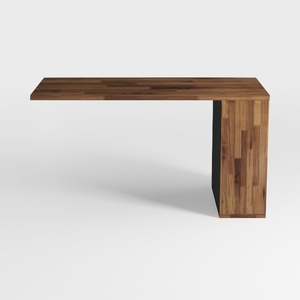
Minimalist Solid Walnut Wood Desk 3D Model

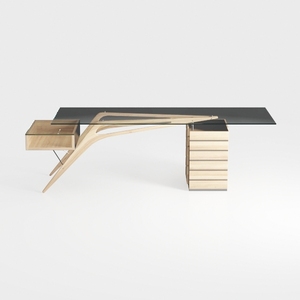
Modern Solid Wood Glass Top Office Desk With Storage Drawers 3D Model
Discover the amazing world of home design with Homestyler! This user-friendly platform boasts an intuitive online design tool, stunning 3D rendering, and a wealth of inspirational design projects and DIY video tutorials. Bring your creative vision to life effortlessly!
立即免费设计
































