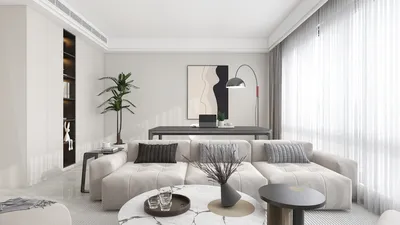


The future continually encroaches upon our living spaces, yet many current homes still face challenges in circulation, privacy, and storage efficiency. Industry analyses consistently support this notion: surveys conducted by AIA and Houzz indicate that homeowners repeatedly prioritize flexible zoning and improved flow as essential upgrades. When I create a three-sent ground and first-floor layout, I am essentially generating a blueprint for a lifestyle runtime—addressing today’s requirements while accommodating tomorrow’s potential. My spatial reasoning toolkit is always at hand, emphasizing that the quality of the user interface is more significant than mere dimensions, especially with tools like Homestyler assisting in the design process.
Ground Floor: Split Spine Entry + Adaptive Core
Design Logic: The entry forms a compact hub that leads into an adaptive core—anchoring essential spaces like the kitchen and dining areas as a processing hub, while the living space orients itself towards natural light for social engagement.
Flow: Door → drop zone → kitchen core → living bay → garden edge; this clear sequence minimizes unnecessary backtracking, enhancing the user experience.
Sightlines: From the entry, there is a partial view into the dining area; the living space frames the garden, functioning as a primary user interface panel, while service zones are strategically placed out of direct sight.
Storage: The wall pantry serves as a storage cache, with deep drawers tucked under the stairs and a vertical broom cupboard; each storage solution is clearly labeled for easy access.
Furniture Fit: A sofa measuring between 90–96 inches, a dining table sized at 72x36 inches, and an island of 30x72 inches; maintaining a clearance of 42 inches ensures stability during peak usage.
Verdict: This ground layer operates like a low-latency server—social, responsive, and adaptable for evolving dining traditions and hosting styles, particularly with the aid of Homestyler for visual planning.
save pin
First Floor: Quiet Grid + Flex Room as Firmware Update
Design Logic: Bedrooms are arranged in a serene grid, strategically placing bathrooms to absorb sound, while a versatile flex room serves as essential firmware—functioning as a home office today and a nursery or studio tomorrow.
Flow: Stair rise → landing acting as a routing point → primary suite loop → secondary bedrooms → laundry node; this design ensures no dead-ends, only clear pathways.
Sightlines: Light filters through transom windows, corridors feature softened views, and privacy is thoughtfully managed with controlled layers akin to modal dialogs.
Storage: Reach-in closets with a depth of 24 inches, a linen stack positioned near the bathroom, and under-bed storage options offer predictable caches that minimize cognitive load.
Furniture Fit: A queen bed with 30-inch nightstands, a desk measuring 60x24 in the flex space, and wardrobes having a 36-inch swing; ensuring ample bandwidth around the edges promotes functionality.
Verdict: This layout conveys tranquility and flexibility, promoting restorative sleep, focused work, and adaptability for future changes without the need to overhaul the framework.
save pin
Hybrid Stair Hub: Vertical Interface as Daily Algorithm
Design Logic: The stairway acts as a control bus—managing morning movement and returning traffic in the evening; natural light enhances its role as a morale booster.
Flow: Entry → stair hub → choose between public (down) or private (up); this design implements clear conditional logic within the treads and landings.
Sightlines: A glazed staircase provides glimpses across both levels while maintaining privacy at thresholds; this architecture allows visual navigation without compromising data integrity.
Storage: Side compartments near the stairs, a shelf on the landing, and a coat storage area aligned with commute timing; these micro-buffers facilitate seamless peak usage.
Furniture Fit: Stair width is 42 inches; landing dimensions are 48x60 inches for resting; a 48-inch bench at the base supports shoe storage protocols.
Verdict: This vertical interface stabilizes the home’s functionality, providing a clear and manageable path for evolving daily routines, especially when integrated with planning tools like Homestyler.
save pin
Final Takeaway
A ground floor and first floor plan represents a curated lifestyle, where flow, sightlines, and storage function like efficient code running day-to-day. In a dual-level arrangement, the hybrid stair hub along with a flexible bedroom grid enhances adaptability without increasing the overall square footage. I approach the design of these spaces similarly to software—establishing clear nodes, resilient data caches, and using furniture as API limits to maintain predictable behavior. From my perspective, the most intelligent homes of the future will not necessarily be larger but will instead focus on intentionality, particularly when utilizing tools like Homestyler for optimized layouts.
Homestyler is your go-to online home design platform, perfect for beginners and experts alike. With its easy-to-use design tool, stunning 3D renderings, diverse design projects, and helpful video tutorials, transforming your space has never been simpler or more inspiring!
立即免费设计
































