


With extensive experience in designing and reimagining multi-use venues such as conference centers, university auditoriums, and corporate town halls, I've come to understand that the most effective spaces prioritize human behavior. These spaces must be adaptable, seamlessly transitioning between various events—from keynotes and panels to galas and community forums—optimizing the experience with minimal disruption. Utilizing tools like Homestyler can assist in visualizing these transformations.
The foundation of any successful performance lies in the comfort of its users. WELL v2 emphasizes the critical role of proper lighting to boost cognitive performance, advocating for strategies focused on glare reduction and circadian-friendly illumination. These lighting strategies are complemented by insights from Steelcase, which indicate that tackling acoustic distractions through sound masking can significantly enhance productivity. Together, lighting and sound design should be treated as strategic tools rather than mere ambient elements.
Effective spatial flow is equally important as sensory comfort. Research from Gensler reveals that environments that facilitate smooth transitions between solitary work and collaboration lead to greater engagement and performance. In the context of a large hall, this translates into intuitive navigation, unobstructed sightlines, and versatile furniture that allows for rapid reconfiguration. By using an interior layout planner, I can simulate various crowd dynamics and stage configurations to ensure efficient use of space—just like with Homestyler's layout features.
Design Principles: Flexibility Without Friction
Real flexibility in design should be practical, not just theoretical. I advocate for modular seating arrangements (offering 18–20 inches per seat with 36 inches for main aisles), movable stage risers, and easy-to-connect audio-visual components. Storing materials close to the venue rather than down long corridors is essential for efficiency. Integrating adaptable lighting and power systems within floor designs allows for quick adjustments to accommodate different stage setups, achieving a swift 30-minute reconfiguration from keynote to banquet through intentional furniture design.
Lighting: Layered, Glare-Free, and Ready for the Camera
Begin with ambient lighting set to 300–500 lux for general events, then add task and accent lighting layers. It’s vital to balance vertical lighting, which helps illuminate faces and ensures favorable camera visibility, with uplighting to moderate contrast. Recommendations from IES stress glare reduction through indirect lighting, shielded optics, and dimmable fixtures. Employing tunable white lighting (ranging from 2700K to 4000K) can reflect the mood of various programs—warmer tones for receptions, neutral for discussions, and slightly cooler for interactive workshops. Additionally, maintaining a Color Rendering Index (CRI) of 90 or above is crucial for accurately portraying expressions and brand colors in presenter areas.
Acoustics: Prioritizing Speech Intelligibility
For the best audience experience, speech intelligibility must take precedence over loudness. The target reverberation time (RT60) should be approximately between 0.8 and 1.2 seconds, tailored to audience size and noise levels. By combining wide-band absorption materials, such as ceiling clouds and perforated wood panels with mineral wool, along with sensible diffusion at the back walls, we can eliminate unwanted echoes. Incorporating soundproof doors and seals is equally important to minimize sound leakage through corridors, ensuring a top-notch audio experience while preserving the main objective to enhance recording quality.
Stage Design, Sightlines, and Camera Positioning
Effective sightlines start with an optimal stage height—18 to 24 inches for rooms accommodating up to 800 attendees, and up to 36 inches for larger spaces—paired with staggered seating arrangements. Maintaining a distance of at least 8 to 10 feet from the stage to the first row promotes comfortable viewing. I configure camera setups on dedicated risers at mid-room and rear positions, ensuring straightforward cable management. For events requiring live streaming, integrating acoustic drapes and blackout shades contributes to effective light control, optimizing both visibility and audience engagement.
Harnessing Color Psychology to Elevate Brand Presence
Understanding color's impact on attention and arousal is vital. Studies suggest that warm hues foster a welcoming atmosphere whereas cooler tones can enhance concentration. In my designs, I opt for neutral, low-saturation backgrounds complemented by brand colors at strategic points, such as stage backdrops and signage. This approach avoids visual fatigue during lengthy events and allows the hall to remain versatile for various hosts and events, effectively aligning with branding goals while employing tools like Homestyler for visualization.
Focusing on Human Factors: Seating, Circulation, and Comfort
Ergonomics play a key role in design details, including seat pitches of 34 to 36 inches for ample legroom, armrest specifications to avoid shoulder clashes, and proportionate aisle widths relative to venue capacity. Clear, accessible routes with 60-inch turning radii are essential, and incorporating 'micro-refuge' areas along aisles—like small ledges or stools—allows guests to stretch without disrupting the flow of traffic. To enhance the overall experience, I recommend hydration stations and convenient coat storage near entries to minimize clutter.
Material Choices and Sustainability Considerations
Balancing durability with effective acoustic performance is critical. I prefer materials like perforated wood panels and PET felt baffles that offer high Noise Reduction Coefficient (NRC) ratings, particularly under seating. Selecting low-VOC finishes improves air quality, and opting for modular flooring allows for individual tile replacements as needed, maintaining the hall's integrity. By integrating LED lighting with replaceable drivers and including occupancy sensors within budgets, we can optimize energy usage during off-peak times, enhancing sustainability.
Wayfinding, User Experience, and Behavioral Cues
Establishing a clear hierarchy in wayfinding is more effective than relying solely on decorative signage. Consistent typography combined with illuminated markers can clearly indicate entries, stages, and facilities. Digital directories positioned in prefunction areas offer session schedules and usage statuses. Behavioral cues—such as subtle changes in floor texture and lighting levels—naturally guide movement, reducing trip hazards and fostering calm transitions throughout the venue.
Seamless Technology Integration: AV, Power, and Control
The backbone of successful events lies in a well-planned technology framework. Position floor boxes within every second seating bay, provide accessible rear and side stage power sources, and set up redundant CAT6 lines for robust control options. Implementing networked Digital Signal Processing (DSP) enables efficient equalization presets according to room arrangements. Prior to finalizing designs, conducting Wi-Fi heat mapping ensures optimal placement of access points away from obstructions, streamlining connectivity during events.
Creating Functional Layouts for Various Event Types
Planning at least four distinct layouts is essential: keynote (fan-shaped seating), panel (straight rows with expanded aisles), workshop (small pods of 6-8 with writable surfaces), and banquet (round tables seating 8-10). Pre-assembly of furniture on mobile dollies, with well-marked routes to storage, ensures efficient reconfiguration. Utilizing tools such as an interior layout planner allows for assessment of sightlines, spacing, and service pathways before finalizing designs—immersively aided by Homestyler.
Acoustic Comfort in Prefunction and Lobby Areas
Excellent halls extend user experience beyond their physical boundaries. Prefunction spaces should incorporate sound absorption features to manage conversation levels, utilizing felt ceiling panels, upholstered furniture, and strategically placed rugs to mitigate echo. Limiting hard stone surfaces or coupling them with acoustic treatments is advisable. It’s also beneficial to offer phone booths or quiet areas to reduce noise spillover into the main hall, ultimately elevating overall guest satisfaction.
Crafting Lighting for Engaging Hospitality Experiences
Events like receptions and galas flourish under thoughtfully controlled warmth and ambiance. To set the right mood, I utilize accent lighting at 2700K along service areas, incorporating texture through gobos on walls, while maintaining a gentle ambient light around 200–300 lux to keep the scene flattering. It is crucial to ensure that emergency egress lighting remains unobstructed even when the rest of the room is dimmed, allowing for safety features to function without compromise. Additionally, marking cable routes and using low-profile ramps keeps the venue safe and organized.
Ensuring Safety, Accessibility, and Compliance with Regulations
Accessibility is essential and should be woven into the very fabric of the experience design. Offering wheelchair-accessible seating across various zones with clear sightlines is imperative, not confined to the rear. including hearing assistance systems and visible captioning for events that require it enhances the experience for all attendees. Properly planning egress routes and adding contrasting tread markers at aisle ends promotes safety while remaining compliant with local regulations regarding occupancy loads and fire safety from the design phase onward.
Strategic Budgeting: Prioritizing Investments
When budgets are restricted, emphasis should be placed on core elements: acoustics, stage lighting, and seating comfort. While decorative considerations can be revisited later, investing in essential infrastructure—albeit less glamorous—can significantly enhance flexibility over time. Opting for modular lighting and seating solutions ensures that initial investments yield lasting returns as formats and needs evolve.
Hall Maintenance: Establishing Operational Procedures
Efficient operation of top-tier halls is driven by established routines: Schedule regular checks on dimming curves and lamp utilization quarterly, replacement of high-traffic carpet tiles biannually, and yearly acoustic re-evaluations to adapt after layout modifications. Training staff in pre-set arrangements and upkeep, along with maintaining a well-equipped 'day-of' cart with essential supplies, enables rapid responses to unforeseen challenges that may arise during events.
Frequently Asked Questions
For keynotes, aim for an ambient light level of 300-500 lux with heightened vertical illumination focused on presenters. Workshops tend to benefit from 400-600 lux at tables, keeping contrast minimal to alleviate eye strain.
Strive for a targeted RT60 of around 0.8-1.2 seconds, utilizing a combination of ceiling-mounted absorption elements and wall diffusers. Additionally, strategically deploying distributed loudspeakers ensures even sound coverage while minimizing echo from parallel hard surfaces.
Utilizing staggered rows with a pitch of 34-36 inches and maintaining 36-inch wide main aisles establishes a well-balanced environment for both capacity and movement. Fan-shaped seating arrangements notably improve sightlines in keynote settings.
Employing neutral bases with subdued, cool-toned accents enhances attendee focus. Reserve vibrant brand colors for specific highlight areas, like stage backdrops, to minimize visual fatigue during lengthy events.
Incorporating sound absorption strategies within prefuction areas—along with soft seating and rug placements—combined with well-sealed hall doors, significantly elevates speech privacy without amplifying volume levels.
By distributing floor boxes among seating bays and implementing redundant network routes with clearly labeled AV connections, we can enable swift adaptations between various event setups.
Indeed, modulating the Correlated Color Temperature (CCT) from warm to neutral influences perceived comfort levels. The WELL v2 framework underscores the importance of high-quality lighting managing to support occupant well-being.
Integrating wheelchair-accessible options across different seating zones while ensuring unobstructed sightlines to the stage guarantees an inclusive experience; thoughtful seat redistribution can uphold capacity while adhering to necessary codes.
The optimal combination of acoustic treatment with adequate stage lighting ensures substantial improvements in perceived quality. Additional investments in modular seating and storage setups empower venues to adapt flexibly to diverse formats.
Defining at least four primary layouts, ensuring furniture storage is conveniently located, marking floor anchor points, and training staff on preset lighting and audio configurations can streamline setups for rapid transitions.
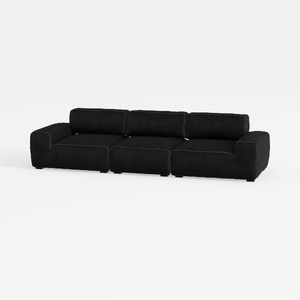

Minimalist Black Fabric Modular Sofa 3D Model

Modern Olive Green Velvet Loveseat Sofa with Metal Legs 3D Model
If you're looking to transform your home effortlessly, try Homestyler! This exceptional online design platform offers an easy-to-use design tool, stunning 3D renderings, inspiring design projects, and helpful DIY video tutorials. Create your dream space today, regardless of your skill level!
Design Now for FREE
































