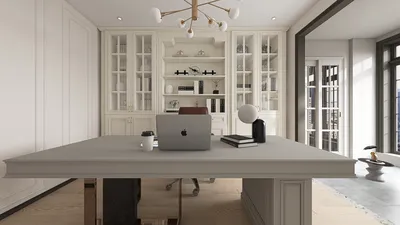


Interconnected hotel rooms cater to the essential needs of families, groups, and extended-stay travelers who seek closeness while maintaining their personal space. In designing these adjoining or connecting room layouts, I focus on ensuring sound insulation, facilitating movement between rooms, and providing flexibility in operations—creating environments that feel spacious, secure, and intuitive. Using tools like Homestyler allows for precise planning and visualization of these unique configurations.
The demand for interconnected spaces isn't just a passing trend. Gensler's latest analysis on hospitality reveals a notable transition toward adaptable, multi-use designs that cater to a variety of guest needs, demonstrating how modular room layouts enhance guest satisfaction and overall asset efficiency. The WELL v2 framework connects guest experience to the quality of the environment—elements such as acoustics, lighting, and thermal comfort—directly influencing our choices regarding interconnected doors and other vital components. Delve into WELL v2's guidelines and best practices to ensure acoustic comfort and lighting that meets industry benchmarks at wellcertified.com.
Design Intent: Prioritizing Privacy and Flexibility
Interconnected rooms are more than just a pair of keys linked by a door; they must be designed to guarantee complete privacy for single occupants while also easily transitioning to accommodate multiple guests. My goal is to achieve a minimum Sound Transmission Class (STC) rating of 55 for the shared wall and STC 45+ for the interconnecting door setup, utilizing double door systems with drop seals and perimeter gaskets. WELL v2 emphasizes the importance of acoustic comfort in perceived quality and restful stays, thus informed design choices ultimately make a significant difference. In my experience, using double-rebated frames combined with three-point latching significantly minimizes sound leakage.
Optimized Layouts Enhancing Flow and Safety
Effortless circulation is crucial within interconnected rooms. I ensure that beds do not directly face the connecting door to uphold privacy. The interconnecting door is strategically placed in a short vestibule shared by both rooms, with sightlines blocked by a shallow partition or wardrobe niche, which not only protects privacy but also mitigates cross-room glare during the night. Utilizing an interior layout planner, like Homestyler, aids in visualizing bed placements, verifying clearances around door swings, and simulating luggage circulation for optimal design iterations.
Lighting: Layers, Color Temperature, and Glare Management
Effective lighting is key to creating a cohesive experience between the two rooms. I find a balance with warm ambient lighting ranging from 2700 to 3000K for relaxation, complemented by higher color rendering index (CRI) task lights at vanities and desks. According to IES recommendations, I target ambient lighting levels of approximately 100–150 lux for sleeping areas, 300–500 lux for task surfaces, and a soft 5–10 lux for night-time guidance near the interconnecting door. Dimming capabilities are essential in both rooms, coordinating scenes when the door is unlocked to maintain a unified ambiance without excessive brightness.
Acoustic Strategies Beyond the Door
Sound control extends beyond doors. I focus on isolating back-to-back headwalls, strategically positioning electrical outlets, and avoiding continuous flooring under the door threshold to minimize sound transmission through the structure. Utilizing soft finishes—such as curtains with heavy lining, upholstered headboards, and area rugs—contributes to perceived tranquility. For HVAC, I advocate for independent controls in each room to prevent disputes and further noise interference. Properly managing supply and return paths is crucial; I've employed lined ductwork and flexible connectors to help limit cross-talk between rooms.
Ergonomics and Human Factors
Travelers often navigate with various devices, strollers, and luggage. I ensure a minimum clear pathway of 1100–1200 mm between the foot of the bed and the opposite wall, while also maintaining ergonomic independence for desks in both rooms—seat height should be 430–460 mm and work surfaces range from 730–760 mm, with adjustable task lighting available. To promote accessibility, handholds near the interconnecting door are essential, and handles should be designed for ease of use with one hand and minimal force.
Safety, Security, and Access Logic
Establishing a robust access hierarchy is essential. Each side of the interconnecting door must include self-closing and self-latching mechanisms with a deadbolt. Housekeeping should be able to service one room without trespassing into the adjoining one. I recommend implementing electronic access logic that only allows both doors to open when a specified group booking is made, with straightforward status indicators for staff to monitor. Life-safety regulations must be upheld in both independent and interconnected modes; therefore, pathways to exits should never traverse through the adjoining door.
Color Psychology for Cohesion
Color plays a significant role in uniting separate rooms. Utilizing warm neutrals paired with subtle accent hues can lower stress levels and promote restful sleep, while maintaining a consistent accent palette fosters a unified suite feel when the rooms are connected. Research indicates that shades of blue and green generally enhance tranquility and recovery—beneficial for guests recovering from jet lag—whereas vivid reds should be limited to small accents to avoid overstimulation during nighttime.
Furnishing Strategy: Essential Duplication and Shared Extras
Each room must be fully self-sufficient, featuring necessary elements such as beds, storage, minibars, and work surfaces. When the rooms are interconnected, redundancy should be minimized. I often recommend one room to contain a larger seating area while the other has a more focused workspace. Sliding coffee tables, nesting stools, and a foldable dining leaf enhance flexibility for family meals or team meetings. Power outlets and USB-C accessibility should be evenly distributed across both rooms to ensure convenience.
Bathrooms: The Unobtrusive Connector
For families, the inclusion of dual sinks within the interconnected footprint can save precious time. If budget permits, consider designing one room with a walk-in shower and the other with a bathtub to accommodate different preferences. Installing acoustic backing and resilient layers around wet walls is critical. Incorporating privacy glazing that allows natural light while providing an option for blackout blinds can ensure instant privacy when needed.
Materials and Sustainability
Durability and ease of maintenance are vital for cost-effective operations. I prioritize low-VOC materials and long-lasting upholstery that withstands 100,000+ double rubs for durability. When possible, modular carpet tiles with cushion backing not only enhance acoustics but simplify maintenance processes as well. For millwork, selecting durable laminates or engineered woods with easily replaceable components allows for easy refreshment without requiring complete overhauls.
Revenue and Mix Optimization
Interconnected rooms provide greater flexibility for bookings, capable of functioning as two individual keys or as a single family suite. Research from Steelcase indicates that relating flexibility to satisfaction applies equally to hospitality—guests cherish customizable options that align with their stay patterns. From an operational standpoint, locating housekeeping closets adjacent to these room clusters can decrease turnover time during transitions.
Tech Integration: Subtle Yet Effective
When the connecting function is in use, it's crucial for lighting scenes, climate settings, and entertainment systems to synchronize. Keeping controls user-friendly is important; for instance, a shared “Quiet Mode” that lowers volume and dims lights on both sides is beneficial for families with sleeping children. Additionally, implementing low-level sound masking near the connecting vestibule can help reduce occasional noise disturbances during group stays.
Prototyping and Testing
Before committing to larger-scale implementations across multiple floors, I always create a full-scale mockup of the design. This allows us to evaluate the flow of luggage, maneuver around strollers, manage door clearances, and monitor sight lines with actual guests and staff involved. Digital tools like the Homestyler layout simulation can expedite the shortlisting of viable designs, while the mockup phase clarifies tactile details like handle comfort, seal pressures, and hinge weight.
Maintenance and Lifecycle Planning
Due to the frequent functional transitions of these rooms, components such as hinges, seals, and locking hardware experience accelerated wear. I schedule regular checks every three months for seal compression and latch alignment, standardizing on specific hardware SKUs to ease replacement processes. Clear standard operating procedures for housekeeping should be established—detailing what needs to be locked, timing, and effective communication strategies—to save time and eliminate awkward encounters with guests.
Checklist: Ensuring Effective Interconnected Rooms
- Target STC 55 for shared walls; incorporate double interconnect doors with perimeter seals
- Design an interconnecting vestibule that features broken sightlines
- Implement layered lighting: 2700–3000K ambient light, task lighting targeting 300–500 lux, all with dimmable settings
- Ensure independent HVAC systems with decoupled duct paths
- Maintain ergonomic clearances of 1100–1200 mm for primary circulation
- Simplify access logic with group activation and dedicated egress paths
- Balance furnishings to minimize redundancy when rooms are combined
- Conduct mockup tests and digital simulations prior to rollout
FAQ
Typically, I aim for 10–20% of the total room count to be interconnectable, fine-tuning according to market demand: resorts and family-oriented destinations tend to have a higher percentage, while business areas may have less. Monitoring booking patterns before expanding is advisable.
The practical minimum is achieving STC 45 for the door assembly coupled with drop seals, while the shared wall should strive for STC 55. Real-world performance is more critical than lab measurements; on-site evaluations are essential.
No, as long as the HVAC systems remain independently zoned for each room. It's crucial to maintain separate thermostats and sensors, ensuring that doors self-close to maintain temperature settings when not in use as a combined space.
To avoid sound transmission, outlets should not back onto each other, utilizing putty pads, and continuous conduit pathways between rooms should be avoided. It's vital to seal baseboards and any penetrations meticulously.
Offer three lighting presets on both sides: Wind Down (warm lighting, 30% ambient light, nightlights on), Evening (60% ambient, task lighting at 100%), and Day (ambient at 100%, daylight blinds wide open). Synchronizing scenes when the rooms are connected is also effective.
Certainly, if one of the two rooms has an expanded seating arrangement and a flexible table included. Guests will perceive added value without requiring a full suite, boosting average daily rates (ADR).
Incorporate lever handles, low-force closers, a clear opening width of 850–900 mm, and ensure thresholds are flush. Confirm that the vestibule allows space for mobility devices with a sufficient turning radius.
Utilize clear status indicators within the property management system (PMS) to denote connected bookings. Standard operating procedures should encompass dual-door inspections, seal checks, synchronized placement of amenities, and privacy confirmations prior to guest arrivals.
Soft neutrals combined with blue-green accents tend to foster a calming environment conducive to rest. Maintain high-chroma accents in small quantities away from the sleeping area to prevent overstimulation during the night.
Yes, provided one of the rooms is designed with additional seating and a flexible table. Implement controls that allow for independent or shared streaming, and include volume caps to mitigate noise disputes.
Create a short vestibule, hinge both interconnecting doors to open into this space, and ensure a 1200 mm clear maneuvering area remains free of obstructions such as closet or bathroom door swings.
Leverage digital iterations for layout optimization before selecting the final designs, and construct one full-scale mockup for guest testing. Continuously track satisfaction, noise issues, and cleaning times to inform data-driven decisions for the rollout.

Minimalist Solid Oak Wall Mounted Floating Shelf 3D Model

Minimalist Solid Oak Wood Platform Bed 3D Model
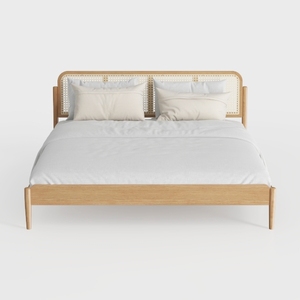
Meridian Furniture SienaNatural-T Siena Collection
Homestyler is your go-to online home design platform! With its user-friendly design tool, stunning 3D renderings, inspiring design projects, and helpful DIY video tutorials, you can easily create and visualize your dream space. Transform your home design journey today!
Concevez maintenant gratuitement
































