

Creating an ideal living space in India often begins with understanding the essential dimensions. I perceive room sizes not as strict measurements but as functional spaces influenced by human needs, furniture arrangements, and the local lifestyle. According to the WELL v2 standards, a minimum circulation space of 750 mm is recommended to enhance accessibility and minimize the risk of colliding, which is pivotal in daily movements. Furthermore, research from Steelcase indicates that even slight increases in space and personal area can significantly reduce stress levels and boost productivity, underscoring the necessity of proper room dimensions. These considerations go beyond mere technicalities—they play a critical role in comfort, safety, and overall family life.
When considering room sizes, it's also important to factor in lighting and ergonomics. The Illuminating Engineering Society (IES) suggests a range of 100 to 200 lux for circulation spaces and 300 to 500 lux for focused areas, dictating how far a room can extend before needing additional light sources. Research by Gensler highlights that access to natural light is a key driver of perceived productivity and overall well-being. Therefore, when designing room depths exceeding 4.5 to 5.5 meters, one must ensure that window dimensions, reflectance, and task lighting are optimized to maintain sufficient brightness throughout the area. The use of design tools, such as Homestyler, can further assist in achieving these goals effectively.
India's varied architectural contexts—spanning from compact urban flats to expansive suburban homes—indicate that thoughtful design should prevail over simply seeking larger spaces. I emphasize proportions, clearances, and furniture placement instead of merely aiming for increased size. Below, I outline practical guidelines tailored to typical Indian home styles, integrating professional insights into lighting, acoustics, and material considerations, while also recommending tools like Homestyler for enhanced planning.
Living Room Dimensions
In most apartment scenarios, an ideal living room tends to measure between 3.2 to 3.8 m in width and 4.2 to 5.5 m in length (approximately 135 to 210 sq ft). This configuration accommodates a three-seater sofa, a couple of lounge chairs, a television setup, and sufficient space for movement. Strive for a minimum of 900 mm of walking area behind seated furniture and a clearance of 450 to 600 mm between the coffee table and the sofa to ensure comfort. For those looking to explore furniture arrangements or traffic flow, utilizing a room layout tool like Homestyler can be tremendously beneficial in visualizing optimal placements and reducing glare from windows.
Master Bedroom Dimensions
A master bedroom typically performs best with dimensions of 3.2 to 3.8 m by 3.8 to 4.8 m (130 to 190 sq ft). It’s advisable to allocate 750 to 900 mm of clear space on each side of a queen bed (1.52 x 2.0 m) and maintain at least 900 mm of clearance in front of the wardrobes. If opting for a king-size bed (1.83 x 2.0 m), increase the width of the room to between 3.8 to 4.2 m. It's also vital to design the dressing area apart from the sleeping zone to limit disturbances at night. A balanced lighting approach combining 100 to 200 lux ambient light with 300 to 500 lux task lighting beside the bed, using warm tones (2700 to 3000K), provides a serene environment. Additionally, acoustic comfort can be enhanced with soft materials like headboards, curtains, and rugs to address sound reflections.
Secondary Bedroom / Kids’ Room
Functional layouts for secondary bedrooms or children's rooms generally range from 3.0 to 3.5 m by 3.5 to 4.2 m (110 to 160 sq ft). Including a single bed (1.0 x 2.0 m) along with a study desk necessitates 800 to 900 mm of clearance around both the desk and bed. In instances of planning for bunk beds, ensure the ceiling height is at least 2.6 to 2.7 m for safe clearance and ventilation. Providing around 500 lux task lighting at the desk can support productive study sessions; positioning screens perpendicular to windows helps to reduce glare. Storage solutions should be zoned appropriately—lower drawers for easy access by children and higher shelves for items used less frequently.
Kitchen Sizes and Work Triangle
For linear kitchens, a minimum length of 2.1 to 2.4 m with 600 mm deep counters is recommended; for L-shaped kitchens, a comfortable range of 2.4 to 3.0 m for each segment is ideal. A well-designed Indian kitchen generally spans between 50 to 90 sq ft, while larger residences may feature kitchens of 100 to 140 sq ft, accommodating a breakfast counter as well. Maintain the legs of the kitchen work triangle (hob-sink-fridge) between 1.2 to 2.7 m each and a total length of 4.0 to 7.6 m for optimal efficiency. Proper ventilation is crucial; consider pairing a chimney with cross ventilation, complemented by task lighting ranging from 500 to 700 lux. Choosing durable materials like quartz or granite is vital, along with matte tiles to minimize glare and ensuring rounded edges for safety.
Dining Area
A dining table that seats six (900 x 1800 mm) requires a minimum area of 3.0 x 3.6 m to allow for 900 mm of clearance around all sides. If the dining area is integrated with the living room, aim for a total width of 3.6 to 4.2 m for comfortable use across both zones. Warm lighting at 2700 to 3000K alongside 200 to 300 lux levels fosters a welcoming atmosphere, while soft furnishings in the space absorb sound and facilitate clear communication.
Bathrooms
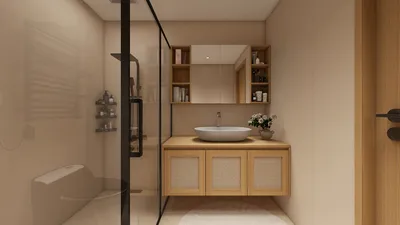
Typical bathroom layouts range between 4.5 to 6.0 ft by 7.0 to 8.0 ft (approximately 30 to 48 sq ft). Segregating wet and dry areas enhances safety, necessitating a shower space of 900 x 1200 mm with a glass partition, along with a basin width of 600 to 700 mm and a 700 to 800 mm clearance for the toilet. Ensure a minimum headroom of 2.1 m in shower areas, apply anti-slip floor tiles with a rating of R10 to R11, and incorporate task lighting near mirrors to achieve 500 to 700 lux. Adequate exhaust and cross-ventilation is essential for hygiene maintenance and humidity reduction.
Work-from-Home Study
A compact home office can be designed within dimensions of 2.0 to 2.4 m by 2.4 to 3.0 m (50 to 75 sq ft). Research from Steelcase and Herman Miller consistently shows that ergonomic seating and proper posture are crucial for productivity. Therefore, target a desk height of 730 to 750 mm, monitor distance of 500 to 700 mm, and ensure task lighting of 300 to 500 lux with low glare. To minimize noise, consider using sound-absorbing elements like bookcases, rugs, and fabric wall panels, especially in units with hard finishes. If planning to share space with a bedroom, place the desk away from the bed to maintain a sense of separation.
Entrance Foyer
A functional entrance foyer should measure a minimum width of 1.2 to 1.5 m and a length of 1.8 to 2.4 m to facilitate shoe storage and accommodate a console table. Bright lighting at 200 to 300 lux, coupled with a neutral color temperature, enhances wayfinding. Strategically placed mirrors can increase the perception of space, but avoid aligning them directly opposite the main door if privacy is a concern.
Balcony and Utility
Balconies in metropolitan residences typically range from 1.0 to 1.2 m in depth; if additional depth of 1.5 m is available or more, consider adding seating along one side and planters on the opposite to create visual balance. Utility balconies should be at least 1.2 m in depth to accommodate a washing machine and ensure easy access, along with proper drainage and sun protection. Utilize anti-slip flooring and perforated screens to promote ventilation.
Ceiling Heights
Contemporary Indian apartments generally feature ceiling heights between 2.6 to 2.9 m. Strive for at least 2.7 m to comfortably incorporate fans, pendant lights, and even bunk beds. Elevated ceilings not only enhance daylight flow but also contribute to thermal stratification; however, they necessitate meticulous acoustic planning to prevent echo issues.
Color Psychology and Visual Balance
Colors significantly affect the perception of space. According to Verywell Mind's color psychology insights, softer shades such as light blues and greens create calming and expansive feelings, while vivid warm tones can energize a room but may make smaller spaces feel congested. I seek to balance these palettes through contrast ratios—employing light walls with mid-tone floors and limiting darker accents to vertical features, thus preserving a feeling of height. Ceiling reflectance values above 70% assist in bouncing light further into the room layout.
Acoustic Comfort
Living in apartments often involves coping with shared walls and external noise. To enhance acoustic comfort, use a combination of materials such as rugs, upholstered furniture, curtains, and bookshelves to absorb sound effectively. In bedrooms, aim for a soft acoustic environment; those sensitive to noise may benefit from solid-core doors equipped with acoustic seals around the edges.
Material Selection and Sustainability
Choose low-VOC paints and sustainably sourced wood products. For wet areas, opt for anti-slip tiles and stainless steel fixtures to prevent corrosion. When the budget allows, invest in durable surfaces like quartz or stone, paired with easy-to-clean grout. Rooms receiving direct sunlight should utilize thermal curtains and high-performance glazing to mitigate heat gain while allowing natural light to infiltrate.
Layout Strategy and Circulation
Regardless of the dimensions of a home, efficient circulation is essential for comfort. Maintain primary walkways at 900 mm and secondary pathways at 750 mm. For complex living-dining or bedroom furnishings, using an interior planner can simulate furniture layouts, door swings, and light pathways, enabling informed design decisions before implementation.
2024–2025 Trends Shaping Indian Homes
Current Indian residential design trends emphasize open yet designated living spaces, hybrid work areas, soft neutral color palettes, and an integration of natural elements. Clients are increasingly requesting designs that prioritize natural light, adaptable furniture, and sound-controlling features—practical adaptations to the realities of densely populated urban living and the rise of remote work.
FAQ
An ideal living room dimension is around 3.2 to 3.8 m wide by 4.2 to 5.5 m long, which appropriately supports seating arrangements, TV viewing distances, while allowing for 900 mm circulation space.
Maintain a clearance of 750 to 900 mm on either side of the bed, with 900 mm available in front of wardrobes for ease of access.
Utilize 100 to 200 lux for circulation areas and 300 to 500 lux in workspace zones. Warmer lighting (2700 to 3000K) is best suited for bedrooms and dining areas, whereas neutral light (3500 to 4000K) is ideal for kitchens and studies.
A minimum depth of 1.5 m is recommended for compact chairs and circulation; a depth of 1.0 to 1.2 m suffices for standing plants and slim benches.
Each leg of the work triangle should measure between 1.2 to 2.7 m, with a total trajectory of 4.0 to 7.6 m to balance efficiency and safety in culinary activities.
Most apartments can accommodate this dimension, although a minimum ceiling height of 2.7 m is preferable for fans, pendant lighting, and bunk beds; higher ceilings necessitate careful acoustic considerations.
Incorporate light, cool tones to enhance spatial perception; ensure high reflectance for ceilings, and use darker tones sparingly on vertical surfaces to maintain an airy feel.
Strive for 750 mm clearance for secondary pathways and 900 mm for primary corridors; this aligns with human-centric design and accessibility standards.
Employ materials such as rugs, upholstered headboards, curtains, solid-core doors, and sealed frames to effectively dampen and block noise transmission.
Yes, organize the workspace away from the bed to foster a psychological distinction; professional task lighting at 300 to 500 lux and ergonomic seating should be prioritized.
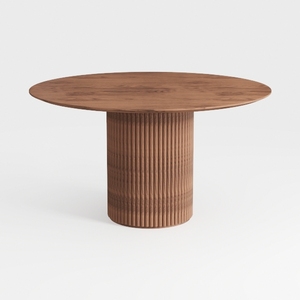
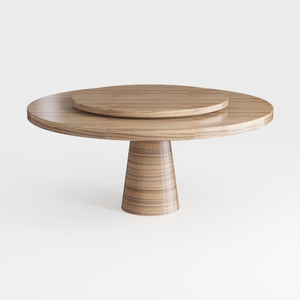
43.3''-59'' Extendable Round Dining Table for 4, M
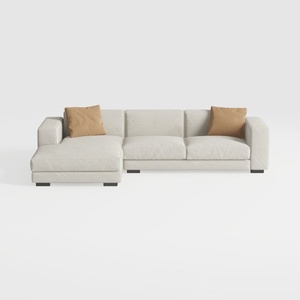
Minimalist Fabric L Shape Sectional Sofa with Throw Pillows 3D Model
Discover your creative potential with Homestyler! This intuitive online design platform offers a user-friendly home design tool, stunning 3D renderings, and a wealth of DIY video tutorials. Bring your vision to life effortlessly and transform your space with ease!
Zaprojektuj teraz za darmo
































