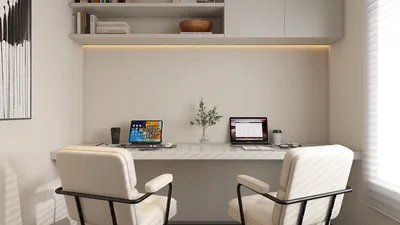


As the future looms ahead, my clients are still grappling with rising rent costs and limited storage options. I approach design as if the habits of tomorrow are already being compiled today. According to recent data from the NAHB, the average size of homes has been shrinking since 2015, and there is a growing preference for efficient layouts—making a 540 sq. ft. apartment floor plan a precise tool. Behind every line I draw lies a spatial reasoning toolkit, where proximity and clarity have become paramount over mere square footage. Tools like Homestyler can assist in visualizing these effective designs.
Rail-Line Studio: Split-Core Efficiency
Design Logic: A linear spine stretches from the entrance to the window, creating a separation between service and living areas like two strands of code—compact kitchen and bath on one side, with a flexible living and sleeping area on the opposite side, accommodating hybrid work styles.
Flow: Entry → pantry niche → galley → flex lounge → sleeping area beside glazed panels; daily routines are executed with minimal context switching.
Sightlines: The long axis captures daylight as the primary user interface; low partitions maintain an uninterrupted horizon, emphasizing important signals over distractions.
Storage: A full-height wall of cabinets acts as a storage cache; toe-kick drawers and overhead cabinets handle seasonal loads seamlessly.
Furniture Fit: A 72" sofa, a 30" deep workstation, and a queen bed occupying a 60" x 80" footprint; every piece respects the flow between pathways.
Verdict: For a space of 540 sq. ft., this rail layout enhances usability: straightforward actions are performed swiftly, and future flexible living finds a place.
save pin
Ring Node: Perimeter Loop with Central Anchor
Design Logic: Rooms revolve around a central island that serves as both a desk and dining area; a looped perimeter ensures that functions are accessible from any node—ideal for multitasking households.
Flow: Entry → coat storage → island hub → perimeter loop (sleep nook → bath → closet → living area); no dead ends, simply choices for routing.
Sightlines: The island serves as a clear focal point; peripheral glazing transforms into a readable dashboard for light, avoiding any cluttered overlays.
Storage: Perimeter millwork, 14" deep, acts as a continuous buffer; vertical modules are segmented based on frequency of use, resembling tiered memory organization.
Furniture Fit: A 36" deep island, compact lounge chairs (30" footprint) and a sliding door wardrobe minimize collision risks.
Verdict: This loop design ensures microliving is future-proof: tasks transition seamlessly, and the central anchor maintains system stability regardless of daily demands.
save pin
Pocketed L-Plan: Quiet Work + Night Rest
Design Logic: An L-shaped configuration carves out a work area and a sleep area; the social functions take place in the open leg, catering to remote-first living.
Flow: Entry → storage vestibule → L-kitchen → living edge → pocket office → sliding panel leading to sleep; sequences help minimize interruptions.
Sightlines: A diagonal view from the entry to the window expands perceived spatial depth; pocket doors adjust the user interface when focus is needed.
Storage: Dual-pocket closets with configurable shelves; under-bed drawers provide cold storage for rarely used items—keeping everything neat and organized.
Furniture Fit: A 48" round table for small gatherings, a wall-mounted console to maintain clear pathways, and a Murphy bed option for maximizing floor space when necessary.
Verdict: This L-plan strikes a balance between solitude and connection; over five years, the design accommodates evolving routines without requiring a complete overhaul of the apartment.
save pin
Final Takeaway
A 540 sq. ft. apartment floor plan should function like software—efficient, clear, and poised for upgrades without disrupting the interface. Variants such as compact studio layouts and micro-unit configurations demonstrate that usability outweighs size, while long-term strategies like sliding partition systems and perimeter millwork offer sustainable flexibility. Based on my observations, the most intelligent homes of the future won’t necessarily be larger—they will be more intentional, a principle easily designed through platforms like Homestyler.
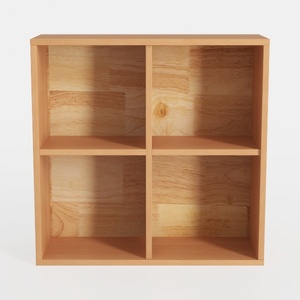
Minimalist Solid Oak Open Storage Bookshelf 3D Model

Minimalist Solid Wood Rectangular Furniture Panel 3D Model

Minimalist Solid Oak Fluted Glass Arch Door Cabinet 3D Model
Homestyler is your ideal partner for home design! With its user-friendly online design tool, breathtaking 3D renderings, and a rich library of design projects and video tutorials, you can effortlessly transform your space into your dream home. Start designing today!
立即免费设计
































