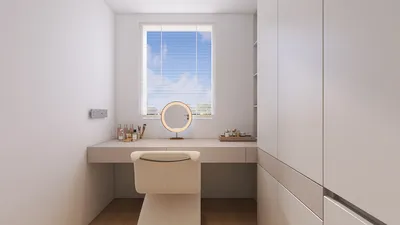


In small Indian residences, creating a toilet environment that is clean, efficient, and comfortable is entirely possible, even within limited space constraints. I have designed numerous micro-bathrooms in apartments under 600 square feet, where every inch must be utilized effectively. The best designs achieve a harmonious balance between flow, storage, and sanitation while adhering to building codes and cultural practices such as wet bathing and bucket washing. Integrating tools like Homestyler can greatly assist in visualizing these compact spaces.
With limited space, maximizing functionality per square foot is crucial. The WELL v2 framework emphasizes reducing touchpoints and improving cleanliness as vital factors for user health. Additionally, the Illuminating Engineering Society recommends that bathroom lighting for grooming should ideally be around 300–500 lux, complemented by diffused ambient lighting to minimize harsh shadows. I typically aim for a lighting level of 350–400 lux in compact toilets, utilizing warm-neutral color temperatures between 3000–3500K, which create a comfortable atmosphere in the early mornings and late nights. Research from Steelcase demonstrates that environments that streamline daily tasks enhance perceived wellbeing, aligning with the goals of a well-designed small toilet, and insights from WELL v2 can provide further guidance.
Optimized Layout: Clearances, Traffic Flow, and Zoning
The main focus in small Indian bathrooms is functional zoning: entry, handwashing, and the wet area. I strive for compact dimensions of 900–1200 mm in width by 1500–1800 mm in length for the WC and handwash area, and 1200–1800 mm by 1800–2100 mm if a shower is part of the design. It’s important to maintain clearances: 750–800 mm in front of the WC, 150–200 mm from side walls, and at least 600 mm clearance for door swings (considering a sliding door as an alternative). Position the handwash basin close to the entry for convenience, and situate the shower at the far end to contain splashes efficiently.
During the initial planning stages, employing a simple room layout tool, such as Homestyler, can help simulate door swings, fixture placements, and drainage options before making plumbing commitments. This approach ensures clarity upfront, preventing expensive renovations and awkward traffic paths later on.
Fixtures for Limited Spaces
Wall-mounted WCs with concealed cisterns create an illusion of more space and simplify cleaning. I prefer short-projection toilets (500–540 mm depth) to maintain an open flow. For wash basins, consider corner wall-hung styles or slim semi-recessed models (300–380 mm projection) that incorporate splashbacks. Choose single-lever faucets equipped with aerators to enhance water efficiency and minimize splatter, which is crucial in very compact areas.
If hand showers and bucket washing are part of daily routines, position the bib tap and health faucet conveniently near the WC, but angle the outlets to prevent cross-splash onto paper or storage. If codes permit, including a handheld bidet sprayer with backflow protection enhances hygiene. For ultra-small setups, consider a folding shower screen or a half-glass partition (900–1200 mm length) to control splashing without constraining the space.
Wet Area Planning: Contain Splash and Safeguard Surfaces
Australian bathrooms often function as wet rooms, so it’s essential to keep the toilet area dry. Designate a shower area with a slight curb (20–25 mm) or a linear drain. Ensure floors slope 1–2% toward the drain, a minor incline enough to direct water without compromising footing stability. Using larger-format tiles (600×600 mm) with matte, slip-resistant finishes (R10 or equivalent) minimizes grout lines and enhances traction. My preferred choice is epoxy grout for its stain resistance and durability.
Lighting and Color: Enhancing Comfort, Visibility, and Atmosphere
Compact bathrooms benefit greatly from a layered lighting approach. Aim for an ambient brightness of 350–400 lux with low-glare diffusers, along with a focused task light at the mirror of about 300–500 lux, utilizing either vertical sconces or backlit mirrors to reduce shadows. A warm-neutral color temperature of 3000–3500K is ideal for morning routines, creating a more welcoming environment than cooler alternatives. For ceiling heights below 2.7 meters, opt for shallower LED downlights and avoid hard spotlighting which can create unpleasant glare.
Color can also create a sense of spaciousness. According to insights from Verywell Mind, lighter tones diminish visual density, which is why I frequently use soft off-whites, pale greige, or light sand in conjunction with a deeper floor color to ground the space. Accents in bolder colors—like an indigo niche or terracotta shelf—add character without making the room feel cramped.
Ergonomics: Proper Reach, Height, and Comfort
Mount basins at a height of 800–850 mm for the average user, positioning the lower edge of the mirror at 1000–1050 mm, with accessories within a reach of 900–1200 mm. Paper holders should be placed 200–250 mm forward of the edge of the WC seat and 650–700 mm above the floor level. For traditional Indian bathing setups, the hand shower should be installed at 900–1100 mm with a flexible hose. In environments accommodating elderly users, consider incorporating grab bars at heights of 800–850 mm near the WC and shower, along with a fold-down seat in the wet area.
Innovative Storage Without Bulk
Low-profile mirrored cabinets (100–120 mm deep) positioned above the basin are excellent for concealing essential items. Recessed niches within the shower area can keep bottles out of key traffic lines; a 300×600 mm niche typically suffices, lined with durable solid-surface or porcelain for longevity. Avoid using floor cabinets in wet zones unless they are elevated on legs or skirting to fend off water damage.
Ventilation and Odor Control Strategies
To maintain fresh air in small toilets, mechanical ventilation is often essential. Select a fan sized appropriately for the room volume, aiming for 8–10 air changes per hour. Position the exhaust away from the shower to prevent humid air from being introduced to the mirror area. If windows are available, opt for frosted glass with trickle vents, placing the exhaust fan at a high position to effectively capture rising moisture. An undercut door of about 10–12 mm can provide necessary make-up air.
Materials: Long-lasting, Easy to Maintain, and Locally Sourced
In humid Indian bathrooms, dense porcelain tiles or sintered stone are ideal for handling everyday dampness. For wall applications, extend to a height of 2100–2400 mm with tiles or solid-surface panels; above, use moisture-resistant acrylic paint. Choosing rounded edge profiles can help prevent chipping. Stainless steel hardware (SS304/316) is recommended for its corrosion resistance. Where budgets allow, installing concealed cistern frames from well-regarded sources enhances overall functionality, including slow-close seats with antibacterial surfaces.
Acoustic Solutions and Privacy Considerations
Compact toilets located near living areas can benefit from acoustic seals on doors and solid-core structures. Incorporating a soft-close seat and buffered hinges can greatly minimize noise. For shared apartments, a gentle white-noise fan can effectively mask sound transmission without being intrusive.
Waterproofing and Maintenance Essentials
It’s critical to prioritize a full membrane within the wet area, detailing corners and penetrations using pre-manufactured collars. Conduct a flood test to ensure proper sloping before laying tiles. Additionally, ensure service access to concealed cisterns and traps through removable panels. Schedule regular maintenance, including quarterly cleaning of exhaust grills and annual recaulk of silicone joints.
Two Functional Micro Layouts
1) Linear dry-to-wet: Entry → basin → WC → shower. This configuration keeps the entrance clean and progressively increases wet exposure toward the back. 2) L-shaped: Basin near the door on one short wall, WC on the long wall, and the shower tucked behind a half partition. Both designs respect minimum clearances and ensure a dry pathway after showering.
If you're exploring layout options, an interior planner like Homestyler can facilitate quick comparisons of door placements, partition lengths, and fixture projections.
Small Enhancements for Significant Impact
- Sloped vanity counter edges toward the basin to catch any splashes.
- Utilize magnetic door stops to prevent any protruding hardware in narrow spaces.
- Favor wall-mounted towel rings instead of bars in exceedingly compact areas.
- Consider adding an under-mirror shelf (50–75 mm deep) for easy access to daily toiletries.
- Opt for an LED backlit mirror with low-UGR diffusion for night-time ease of use.
Frequently Asked Questions
For a combined WC and shower area, I aim for dimensions between 1200–1800 mm in width and 1800–2100 mm in length. While it's compact, it remains functional with a half-glass partition and a short-projection WC.
Target ambient lighting of 350–400 lux along with 300–500 lux at the mirror. A color temperature of 3000–3500K keeps the environment comfortable throughout the day and night, aided by low-glare diffusers to prevent harsh lighting.
Wall-mounted models are beneficial for visual space and ease of cleaning, but they require robust frames and access points. Where wall support is inadequate, short-projection floor-mounted WCs are a reliable alternative.
Designate a specific shower area using a low curb or linear drain, create a floor slope of 1–2%, and utilize a half-glass partition or folding screen to effectively manage splashes.
High-quality dense porcelain tiles, sintered stone, and solid-surface panels are ideal. Pair these with epoxy grout, SS304/316 hardware, and moisture-resistant paint for areas above tile height.
Utilize shallow mirrored cabinets, recessed niches within the shower, and slim under-mirror shelves to keep everyday items within reach while maintaining an unobstructed flow.
Install an exhaust fan sized for approximately 8–10 air changes per hour, placing it high to capture moisture effectively, while ensuring a 10–12 mm undercut for fresh air circulation.
Yes—light, neutral walls paired with a slightly darker floor tone enhance perceived space. Introducing small vibrant accents adds character without compromising the room's spatial perception.
Position basins at 800–850 mm, with the mirror's lower edge at 1000–1050 mm, paper holder heights at 650–700 mm, and forward placement of 200–250 mm relative to the WC edge; consider grab bars at 800–850 mm if necessary.
Where feasible, employing a sliding door can enhance swing clearance and minimize collision risks. If this isn't an option, consider a slim-profile inward swing equipped with a magnetic stop.


Discover the power of Homestyler for your home design needs! This user-friendly online platform offers a stunning 3D rendering tool, a vast array of design projects, and informative DIY video tutorials. Bring your creative vision to life effortlessly and transform your space today!
지금 무료로 디자인하세요
































