

I design event spaces that excel under pressure, accommodating quick timelines, diverse use cases, and high expectations from attendees. The Mehdi Function Hall operates like a symphony, where circulation, acoustics, lighting, and services come together with purpose. Over the last decade, I've discovered that successful halls do more than look attractive; they influence behavior, minimize obstacles, and enhance the overall experience.
Supporting data reinforces this approach. According to Gensler’s Workplace Research, environments equipped with effective wayfinding and seamless support functions can significantly boost perceived efficiency and guest satisfaction (Gensler Research Institute). Additionally, WELL v2 connects occupant comfort to tangible outcomes—optimal acoustic levels, balanced lighting, and thermal comfort play crucial roles in enhancing well-being and engagement (v2.wellcertified.com). The IES recommends target illuminance levels between 300 and 500 lux for multi-use spaces, with higher task lighting levels when necessary, while glare control remains essential (ies.org/standards). These principles form my foundational criteria for designing function halls like Mehdi’s.
Establishing Spatial Intent Before Aesthetic Choices
I begin by creating a program matrix that considers aspects such as capacity ranges, types of seating (banquet, theater, classroom), stage dimensions, AV zones, catering workflows, and storage logistics. Spatial intent dictates ratios—sightlines from stage to audience, aisle density, and service corridors. When modeling layouts, I utilize innovative design tools like Homestyler’s room simulation capabilities to evaluate ingress, egress, seat configurations, and buffer zones around key entry points. By having a clear spatial intent, I can minimize setup errors and time during the event.
Circulation and Egress: Designing for Effortless Movement
It’s critical that guests can move seamlessly through the space. I recommend minimum aisle widths of 1.5 to 1.8 meters for banquet arrangements and 1.2 meters for theater seating, widening as necessary at congested points. The primary circulation path should remain unobstructed—service areas ought not to interfere with guest traffic. For exits, direct sightlines should be maintained, free of obstructions within one meter of exit doors. Effective wayfinding can be reinforced through high-contrast signage placed at eye level (1.5 to 1.7 meters) and varied tactile cues like lighting and floor texture changes that guide attendees along a defined route.
Acoustics: Managing Reverberation and Clarity
Versatile halls often face challenges with speech intelligibility. The aim should be to achieve a reverberation time (RT60) of around 0.8 to 1.2 seconds for speech-driven events, stretching slightly for musical performances while ensuring clarity remains intact. I recommend a blend of wall panels (NRC ratings of 0.7 to 0.9), acoustic ceiling tiles, and softer materials like drapery to fine-tune the acoustics of the space. Proper placement of subwoofers prevents modal hotspots, while directed sound arrays ensure even coverage across rows. Different sound zones should be established: stage monitors separated from the audience, and HVAC noise levels kept below NC 30 to 35 for clear sound delivery.
Lighting Layers: Balancing Hospitality and Performance
Effective lighting choreographs moments while keeping guests comfortable. My baseline ambient lighting level is set around 300 to 350 lux for social gatherings and can be dimmed to 150 to 200 lux during presentations. I introduce accent lighting that escalates to 500 to 700 lux for focal areas such as stage backdrops, floral arrangements, and signage. Adjustments in color temperature are essential: 3000 to 3500K for warm, social atmospheres; 3500 to 4000K for corporate clarity; and 2700K for intimate cocktail settings. Glare must be controlled through strategic cut-off angles and the use of indirect sources—downlights with UGR ratings below 19 help alleviate eye strain during presentations. I create presets for scenes to enable quick transitions (reception, dinner, keynote, dance).
Seating Strategies: Emphasizing Comfort, Views, and Flexibility
Seating configurations are crucial for attendee experience. In banquet setups, I limit round tables to 8 to 10 guests, ensuring a minimum of 1.2 meters between table edges for effective service. Theater setups require a center-to-center spacing of approximately 900 to 1000 mm, with adequate knee space of 450 to 500 mm and staggered rows to avoid sightline conflicts. I often incorporate slight stage risers (300 to 450 mm) and advise against excessively deep rooms, limiting the distance from the stage to the last row to 25 to 30 meters for optimal visibility and sound quality. Dead zones near columns should be managed through angled seating and strategic placement of projection screens.
Back-of-House Operations: The Unseen Backbone
Service efficiency is pivotal to event success. There should be a direct path from the loading dock to the catering preparation area and out to the main floor using wide corridors (at least 1.8 to 2.0 m). Dishwash areas must be acoustically isolated and kept away from guest pathways. Storage units should be modular, allowing for stackable chairs, folding risers, and organized cable management. It’s important to build redundancy into electrical and AV setups—floor boxes should be positioned near stage edges and at central feeding points, along with UPS systems for critical equipment. When internal service routes are streamlined, decor remains intact and staff maneuver confidently.
AV Systems: Ensuring Plug-and-Play Compatibility
I specify a distributed network of power and data points across a grid, with dedicated circuits for lighting, audio, and video to reduce interference. Mixing consoles should be positioned for optimal sightlines to the stage, and cable routes must avoid crossing any egress paths. It’s vital to integrate ceiling rigging points for projectors, trusses, and banners. Wireless microphones require clear paths to receivers; careful antenna placement is necessary in metal-clad rooms. Additionally, prewiring for hybrid events, which encompasses camera placements, operator platforms, and blackout screen options, is a must.
Material Selection and Long-lasting Durability
Function halls undergo significant wear. I choose resilient flooring with high abrasion resistance—either engineered wood with commercial durability or luxury vinyl tile featuring wear layers of 20 to 28 mil. Wall surfaces should be easy to clean and resistant to impacts in high-traffic areas; fabric panels ought to have excellent scrub ratings. To support sustainability, I prioritize low-VOC materials and third-party certifications whenever appropriate. Lifecycle considerations are essential—edges on stages should allow for repairs, while carpet tiles in primary areas should be replaceable without needing full renovation.
Color Psychology and Expressing Brand Identity
Color creates atmosphere and influences behavior. Neutral bases ensure versatility, while accent colors can shift according to event themes. Warm color palettes foster social interactions, while cooler shades help maintain focus during presentations. Existing research on color psychology suggests that blue tones may evoke calmness and trust, while red accents can energize moments without overwhelming the room if used sparingly (verywellmind.com/color-psychology). Practically, I opt for muted tones in the envelope, allowing lighting to drive dynamic transformations.
Comfort: Addressing Thermal, Acoustic, and Human Factors
Comfort encompasses multiple senses. Maintaining consistent airflow with diffusers that ensure no draft reaches seated attendees is crucial. It’s also important to create zoning where high-occupancy areas don’t freeze the stage. Ergonomics go beyond seating—aisle dimensions, handrail grips, and step nosings should help minimize trip hazards. Standing cocktail tables should be around 105 to 110 cm tall, while buffet counters at about 90 cm should feature clear reach zones for attendees. Accessibility must be integral—at least 5% of seating needs to offer companion space and unobstructed views, including tactile cues and contrasting colors at thresholds.
Wayfinding and Brand Integrations
Direct guests effectively with multi-layered cues—shifts in floor patterns, strategic lighting toward key anchors, and minimal, clear signage. Position information stations at intuitive decision-making points: lobby entry, pre-function crossroads, and near restrooms. Weave in brand elements through materials and lighting choices instead of permanent graphics that could restrict flexibility. Digital signage should be user-friendly for quick updates, particularly for multilingual events.
Pre-Function and Transition Spaces
Pre-function areas provide crucial relief from pressure. Allocate space for registration, sponsor displays, and mingling without hindering traffic flow. Ensure access to power and data near lounge areas for quick charging and hybrid event support. Soften ceiling acoustics to minimize noise from conversations, and keep ambient lighting lower so that the main event space feels like the visual highlight of the occasion.
Operational Playbook: Preparing for Quick Turnarounds and Risk Management
Maintain a comprehensive operations playbook, documenting standard room setups with diagrams and photos. Clearly label power boxes and rigging locations. Create a checklist for seamless scene transitions—including lighting presets, microphone tests, temperature adjustments, and catering staging. Establish alternative routes for equipment movement and clarify roles for staff members overseeing transitions. With a precise playbook, Mehdi Function Hall can transition smoothly from a daytime conference to an evening gala without stress.
Key Design Ratios
- Stage height: 300 to 450 mm; deeper stages for multi-performance events.
- Last-row sightline maximum: approximately 25 to 30 m from the stage for improved clarity.
- Ambient lighting: 300 to 350 lux; accent lighting at 500 to 700 lux; UGR below 19 during presentations.
- Aisle width: between 1.2 and 1.8 m based on the type of seating.
- Reverberation: RT60 should aim for 0.8 to 1.2 seconds for enhanced speech clarity.
- HVAC noise: maintain levels below NC 30 to 35.
FAQ
Ensure your layout aligns with event objectives: theater style for lectures, banquet layout for dining events, and classroom arrangements for training sessions. Validate sightlines, aisle density, and service paths with tools like an interior layout planner, such as Homestyler, before finalizing designs.
At a minimum, create setups that work for reception (warm lighting at 200–250 lux), dining (3000K with table accents), presentations (3500 to 4000K with UGR < 19 and 300–350 lux), and dance areas (dynamic accents with low ambient levels). Scene recall features will expedite transitions and ensure consistency across events.
Achieve a balance of sound absorption and diffusion by employing acoustic panels with NRC ratings between 0.7 and 0.9 on side walls, treating ceilings, and incorporating soft furnishings. HVAC noise should be minimized, and speaker positioning should direct audio toward the audience for optimal sound clarity.
Design separate electrical circuits for audio, lighting, and video. Ensure cable runs do not obstruct egress routes, employing low-profile ramps at crossings, and clearly label all endpoints. Planning rigging points well in advance and verifying load ratings will aid in smooth operations.
Utilize commercial-grade finishes featuring high-wear luxury vinyl tile or engineered wood, impact-resistant wall surfaces, and carpet tiles that can be replaced easily. Additionally, opt for materials low in VOC content to prioritize occupant well-being.
Maintain a neutral base for color schemes and utilize brand colors through lighting, textiles, and temporary graphics. Warmer hues can incite social energy, whereas cooler tones are beneficial for focus. Manage saturation to ensure overall comfort for guests.
Adhere to WELL v2 guidelines for acoustics, lighting, and thermal comfort, and refer to IES standards for illuminance targets. These criteria help ensure that design elements align with measurable outcomes for user satisfaction.
In standard layouts, plan for companion seating, uniform sightlines, and barrier-free routes. Use staggered rows and adjustable risers to maintain visibility while accommodating circulation widths.
Design your pre-function spaces to comfortably accommodate registration and mingling, ensuring you have access to power and data while maintaining proper acoustics to prevent noise disruptions from reaching the main event area. Lower ambient lighting enhances the main space's importance.
Start with a flexible platform design that allows for expansion. Aiming for a stage height between 300 and 450 mm, and consider side wings for AV and performers, while keeping clear access paths behind the stage to facilitate fast transitions.

Fluted Storage Cabinet, 31.5“ Wooden Sideboards

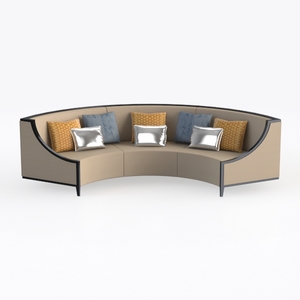
Modern Fabric Curved Sectional Sofa With Decorative Throw Pillows 3D Model
Homestyler is an outstanding online home design platform perfect for both novices and experienced decorators. Its user-friendly design tool, impressive 3D rendering features, inspiring design projects, and helpful DIY video tutorials make it easy to transform your creative ideas into stunning reality. Dive in and start designing today!
Design Now for FREE
































