


I focus on designing airport environments that efficiently manage high passenger flows, stringent safety measures, and diverse traveler expectations. Smoking lounges exist at the intersection of public health, airflow design, and hospitality. When executed properly, they mitigate secondhand smoke exposure, enhance circulation, and ease navigation for hurried passengers.
Quantitative metrics are essential for performance assessment. The WELL v2 Air standard establishes ambitious benchmarks for ventilation efficiency and pollution control; achieving these targets in smoking areas necessitates elevated air change rates and carefully maintained pressure zones to keep pollutants away from surrounding corridors (refer to WELL v2 for Air and Pollution Management). Concurrently, Gensler's investigations into passenger experiences at airports indicate that clear and intuitive navigation significantly lowers cognitive load and stress—important for accommodating smokers without displacing non-smoking travelers (source: gensler.com/research). This foundational knowledge influences my design strategy from the building envelope to the signage.
Location, Access, and Flow
The strategic placement of smoking rooms is crucial for both compliance and user comfort. These spaces should be situated adjacent to key circulation pathways but not directly on them—preferably along secondary corridors, ensuring they are within a 2–4 minute walk from major gates and lounges. This layout allows for accessibility while preventing smoke-sensitive passengers from entering smoking zones. When determining positioning, it's advisable to stay clear of entrances to dining areas, family spaces, and medical facilities. Featuring glass fronts with offset vestibules provides an immediate visual indication of the room's purpose while minimizing the need for excess signage and enhancing security oversight.
When conducting schematic evaluations of room placement and passenger flow, utilizing a layout tool such as Homestyler can help visualize foot traffic, queue overflow, and cleaning access routes prior to finalizing the design.
Air Quality, Pressure, and Ventilation Strategy
The engineering foundation relies on maintaining negative pressure: keeping a differential of -5 to -10 Pa relative to adjacent corridors to prevent smoke infiltration when doors open. Aim for 12–20 air changes per hour (ACH) based on occupancy and regulatory requirements, ensuring direct exhaust to the outside without recirculation. Employ interlocked door closers and installation of pressure monitors at a height accessible to maintenance personnel. Ductwork design should minimize sharp turns; when turns are necessary, smooth-radius elbows should be used to reduce static pressure building.
Effective filtration enhances exhaust systems. Utilize MERV 13–16 pre-filters for supply airflow, along with high-efficiency particulate filters for any return air balancing (but never for recirculation into public areas). Ensure that carbon filtration systems are accessible from a dedicated maintenance space; monitoring differential pressure across filters is key for timely replacements and consistent air quality.
Materials and Surface Performance
Select materials that can resist tar buildup and facilitate easy cleaning. Non-porous wall systems—such as high-pressure laminates, ceramic tiles, or powder-coated metals—are superior to standard painted gypsum in durability. For flooring, dense porcelain tiles with epoxy grout help prevent staining and simplify odor control. Ceiling panels should be washable and fitted with gaskets to stop smoke from entering the plenum spaces.
Choosing the right furniture is essential; opt for low-porosity laminates and metals that can withstand bleach cleaning. Avoid soft furnishings unless they utilize healthcare-grade vinyl or similar textiles designed for rigorous cleaning practices. Incorporate built-in ash disposal features with stainless steel liners designed to prevent smoldering.
Lighting: Visual Comfort and Safety
Effective glare and shadow management can significantly reduce visual fatigue while improving oversight. Target illumination levels of 300–500 lux on task surfaces, using 3000–3500K warm-neutral LEDs to prevent smoke haze from appearing excessively yellow or gray. Employ uniform, indirect light around the perimeter to soften the visibility of particulates while keeping facial visibility clear for surveillance purposes. Emergency lighting must be distinct; avoid color variations that can obscure exit signage.
Adhere to recommended practices from the Illuminating Engineering Society to enhance interior lighting and reduce glare (ies.org/standards). Using dimmable scenes can help optimize energy efficiency during low traffic periods while still ensuring safety standards are maintained.
Acoustics and Psychological Comfort
Effective acoustic management is vital to minimizing social tension within compact spaces. Target an ambient noise criterion (NC) of 30–35 using mineral fiber ceiling panels and wall absorbers above a height of 1.5 m to control sound reflections. The stressful environment of smoking rooms calls for subtle design elements—such as rounded corners, a calming color scheme, and clearly legible signage—to promote orderly behavior.
Incorporating color psychology can help regulate emotions. According to research by Verywell Mind, cool colors like blue and muted greens are effective in lowering arousal and fostering tranquility; thus, it is advisable to use restrained color palettes on background surfaces while applying high-contrast signage for regulations and exits (verywellmind.com/color-psychology).
Human Factors and Ergonomics
Design areas for both standing and seated use to keep movement unobstructed. A clear aisle of 1000–1200 mm allows for two-way traffic without collisions. Integrate lean rails at a height of 1050 mm for brief stays, complemented by occasional perch seating at 650–700 mm. Ensure at least one accessible area allows a turning radius of 1500 mm with ash disposal easily reachable.
Place ash receptacles at a height of 900–1100 mm, slightly off from primary pathways to minimize shoulder conflicts. Incorporate coat hooks at 1600–1700 mm and bag storage at 800–900 mm to help maintain a tidy environment and reduce tripping hazards.
Capacity, Ratios, and Room Sizing
I determine room capacities based on a sizing of 0.9–1.2 m² per standing individual or 1.4–1.8 m² per seated individual, plus an additional 20–30% for movement. For terminals experiencing peak flow related to scheduled departures, operational data should inform capacity settings. If forecasts indicate 60–80 smokers potentially present during peak 15-minute periods, consider creating two smaller rooms on opposite concourses to minimize queue length and decrease the risk of smoke escape at a single entry point.
Door Systems, Vestibules, and Leakage Control
Implement self-closing doors with minimal sweeping gaps; automatic sliding doors can be effective provided they are paired with a short vestibule and directed airflow from clean corridors into the room. Incorporate smoke-rated gaskets and threshold seals. Entrance mats should be installed outside the rooms to prevent the introduction of particulate matter into interior floor spaces.
Waste Management and Cleaning Logistics
Anticipate frequent cleaning needs. Provide metal-lined, self-extinguishing ash bins and maintain a waste disposal route that excludes food service waste, designed to control odors. A small janitorial closet adjoining the smoking space, equipped with direct exhaust, will keep cleaning supplies accessible and minimize downtime. Specify cleaning products compatible with chosen materials to prevent discoloration.
Signage, Wayfinding, and Policy Communication
Utilize clear iconography and bilingual text where necessary, positioned at a height of 1400–1600 mm to align with typical sightlines. Keep communication on rules concise and easy to read, including maximum occupancy limits, no open flames, door closure reminders, and disposal instructions. A digital occupancy counter can be useful at the entrance when capacities are restricted. Linking the signage's color scheme to the airport's overall design reduces decision-making time for travelers in busy terminals.
Safety, Compliance, and Monitoring
Incorporate smoke detection systems that distinguish between environmental tobacco smoke and fire incidents, integrated with safety systems to prevent false alarms. Air quality sensors for PM2.5 and VOCs, displayed on a maintenance panel, enable staff to assess performance without entering during busy times. Scheduling for filter changes and ash collection should be integrated into the airport's Computer-Aided Facilities Management (CAFM) protocol.
Amenity Layer and Hospitality Touches
Small enhancements can make brief stays more enjoyable, without extending the duration of visits. Include charging stations with tamper-proof outlets, a slim shelf for drinks (no food preparation allowed), and visual privacy screens on glass at 900–1200 mm to reduce visibility into the room while maintaining staff sightlines. The overall design should remain understated and resilient since this area serves a utility function, complemented by just a few hospitality elements.
Digital Planning and Operations
I frequently model pressure dynamics, user loads, and adjacency effects using layered layouts and circulation heatmaps. When evaluating multiple smoking rooms, a simple digital dashboard can track current occupancy and alert maintenance when PM2.5 thresholds are exceeded or when ash receptacles approach their limits.
- Compact (15–20 m²): Single entry door, no vestibule, strong negative pressure; includes lean rails, perimeter ash disposal points, and ceiling absorbers.
- Standard (30–45 m²): Vestibule at entry, seating options available, indirect perimeter lighting, dual ash stations with metal containers.
- High-Throughput (60–80 m²): Two doors for separate entry and exit, divided zones to prevent cross-traffic, dispersed exhaust outlets, digital occupancy counter.
Implementation Checklist
- Confirm pressure differential and air changes per hour, in accordance with WELL v2 Air guidelines.
- Validate materials: they should be washable, non-porous, and compatible with bleach.
- Adjust lighting to achieve 300–500 lux, utilizing 3000–3500K low-glare fixtures.
- Ensure accessible turning radii and reach ranges are adequate.
- Design waste and service pathways to avoid food service areas.
- Align signage with established airport standards and visibility requirements.
- Set up filter replacement schedules that rely on differential pressure rather than fixed timelines.
- Conduct pre-occupancy smoke tests to ensure effective leakage prevention measures are in place.
FAQ
Q1: What ventilation rate should an airport smoking room aim for?
A1: Aim for 12–20 air changes per hour with negative pressure of -5 to -10 Pa to prevent the escape of smoke; exhaust should always lead directly outdoors. Confirm performance using pressure monitors positioned at the door.
Q2: How can lighting diminish the visibility of haze?
A2: Utilize even indirect lighting coupled with 3000–3500K LEDs at levels of 300–500 lux. Avoid harsh overhead lights that highlight dust and smoke particles; implement low-glare lighting according to IES best practices.
Q3: What materials best resist tar buildup and odors?
A3: Opt for non-porous finishes such as high-pressure laminate, ceramic tiles, and powder-coated metals. Flooring should consist of dense porcelain tiles with epoxy grouting, while ceiling panels should be removable and washable with sealing gaskets to minimize smoke intrusion.
Q4: How do we balance room capacity and air quality?
A4: Space should be allocated at 0.9–1.2 m² per standing individual or 1.4–1.8 m² per seated individual, plus an additional 20–30% for circulation. If peak usages are high, design separate rooms across different concourses for improved queuing and smoke management.
Q5: What human factors can minimize conflicts inside smoking lounges?
A5: Ensure aisles of 1000–1200 mm, lean rails, clear ash disposal areas, coat hooks, and bag shelves are available. Keep rule signage short, clear, and positioned at typical eyesight levels to enhance understanding.
Q6: Are there specific color schemes that can promote calmness?
A6: Utilizing cool, subdued tones of blue and green can effectively lower anxiety levels; always pair these with high-contrast, easy-to-read signs for exits and rules.
Q7: What door features are crucial for minimizing smoke leakage?
A7: Utilize self-closing doors fitted with smoke-rated gaskets and seals at thresholds; vestibules with directional airflow from the corridor toward the rooms are recommended for larger spaces.
Q8: What maintenance practices will ensure ongoing performance?
A8: Monitor filter pressure levels, schedule regular ash receptacle maintenance, and frequently check PM2.5/VOC sensors. A janitorial closet nearby with dedicated exhaust is essential.
Q9: Is it possible to manage occupancy using digital methods?
A9: Absolutely, employing digital counters and monitoring dashboards can provide live updates on occupancy levels, trigger cleaning alerts, and notify staff of air quality thresholds needing attention.
Q10: Where should smoking lounges be placed to reduce disturbances?
A10: These areas should be located on secondary corridors that are a short distance from gates, avoiding proximity to dining sections, family zones, and medical facilities. Glazed walls enhance visibility and security monitoring.
Q11: What acoustic standards should be targeted to enhance user comfort?
A11: Aim for a noise criteria (NC) rating of 30–35 by using ceiling panel clouds and wall absorbers positioned above 1.5 m to manage sound reflection and minimize disruptive conversations.
Q12: Is soft seating permissible in these areas?
A12: Minimize upholstery; if seating is necessary, use healthcare-grade polyester or vinyl to uphold cleanliness and prevent odors from becoming trapped or staining.
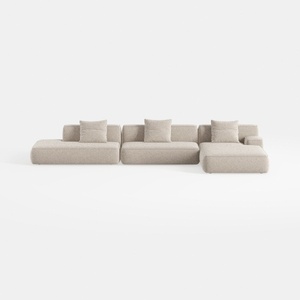
Minimalist Boucle Fabric L Shaped Sectional Sofa 3D Model
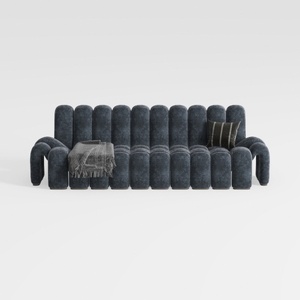

Modern Dark Blue Fabric Channel Tufted Oversized Sofa 3D Model
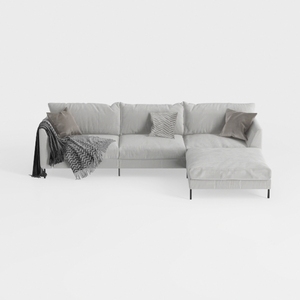
Minimalist Light Gray Fabric L Shape Sectional Sofa 3D Model
If you're looking to transform your home with ease, Homestyler is the ideal platform for you. With its user-friendly online design tool, stunning 3D renderings, diverse design projects, and helpful DIY video tutorials, you can effortlessly explore and create your perfect living space. Dive into your home design journey today!
Concevez maintenant gratuitement
































