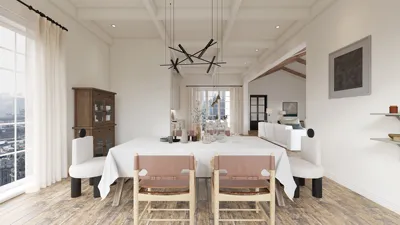


Double occupancy refers to a room specifically designed and priced for two individuals to share. In the contexts of hospitality and student accommodations, this usually entails one room furnished to accommodate sleeping arrangements for two people—either featuring a double, queen, or king bed, or comprising two twin beds—alongside shared storage and circulation area. The importance of this arrangement lies in enhancing comfort, managing acoustics, ensuring privacy, and balancing costs, with variations depending on property regulations and local standards.
When planning spaces for dual occupancy, the presence of two occupants alters several considerations. According to workplace research by Gensler, user satisfaction tends to increase with the provision of personal storage and controlled privacy. In shared rooms, this translates into distinctly allocated zones for personal belongings, lighting, and workspaces. Furthermore, the WELL Building Standard highlights the necessity for minimum illumination levels, recommending around 150–300 lux for ambient lighting in living areas and task requirements at 300–500 lux, accommodating individual preferences—vital in scenarios where different lighting levels are preferred by each user. For more information, refer to the WELL Building Standard (v2) resources available on wellcertified.com. Color and ambiance also play a role, as findings from Verywell Mind suggest that cooler tones can reduce arousal and promote relaxation, whereas warmer accents can create an inviting atmosphere—crucial for double-use spaces where both rest and functionality are essential.
In terms of functionality, a double occupancy room must strike a balance between shared and individual spaces: sleeping, dressing, storing, and occasionally studying or lounging. I usually recommend maintaining minimum clearances around the bed perimeter (typically 24-30 inches on accessible sides) and providing individual lighting controls at each bedside, in addition to incorporating acoustic softening materials like textiles. In student or co-living environments, establishing two distinct task areas lessens potential conflicts, even in compact layouts. To optimize tight spaces, I utilize a room layout tool, like Homestyler, to prototype arrangements that test circulation paths and sight lines without committing to a fixed setup.
Types of Double Occupancy Rooms
1) Shared Bed: One double, queen, or king bed for two individuals. This is often ideal for couples; equitable storage is necessary—ensuring two nightstands, two task lamps, and balanced access to closet space.
2) Separate Beds: Two twin or twin XL beds—commonly found in dormitories and hostels. Each occupant has their own sleeping area, nightstand, or shelf along with a task light. Utilizing headboard separators with padded panels can help reduce perceived noise.
3) Suite with Shared Bedroom and Separate Study/Lounge: A higher level of comfort is offered in this arrangement. A 60/40 partition between sleeping areas and study zones can help keep clutter and noise away from sleeping quarters.
4) Bunked or Lofted Double Occupancy: This vertical arrangement frees up floor space for desks or lounges beneath. Safety measures such as guardrails, proper ladder angles, and adequate head clearance are essential.
Space Planning Essentials
To ensure a comfortable coexistence for two individuals, I approach room design with zones in mind: sleeping, personal storage, study, and transition (circulation). The typical compact dimensions I’ve employed in dorm renovations are a minimum of 9' x 12' for two twin beds and 10' x 12' for a queen bed with dual accessible sides. It’s important to maintain a clearance of at least 36 inches at primary entrances and 30 inches for secondary circulation spaces. For rooms that also accommodate study functionalities, a minimum of 30 inches of desk width per user is preferred, with task zones ideally positioned near windows to minimize electric usage during the day.
While considering various options, employing an interior layout planner can facilitate the simulation of one-bed versus two-bed configurations, micro-lounge concepts, or wardrobe arrangements, helping to avoid costly missteps. Tools like Homestyler can aid in evaluating layout alternatives and verifying clearances effectively.
Lighting and Visual Comfort for Two
Effective two-person rooms must segregate ambient and task lighting, allowing each occupant individual control. I typically incorporate three lighting components: 1) Ambient light (2700–3000K is ideal for comfort; 150–300 lux throughout the space). 2) Task lighting (optional 3500–4000K for desk areas; 300–500 lux at the work surface, utilizing low-glare options). 3) Night lights (under-bed or baseboard lighting equipped with 1–5 lux for safe navigation without disturbing the other occupant). Selecting diffused light sources or wall-washers eliminates hard shadows, and including independent dimmers or personal lamps with shades reduces light spill. For those who enjoy reading in bed, incorporating adjustable sconces with beam angles between 30–45° will help focus light where it’s needed most, preserving the partner’s comfort.
Acoustic and Privacy Strategies
With two occupants, sound levels double, along with diverse routines. I employ soft finishes, including area rugs (increasing NRC via pile and underlayment), curtains, upholstered headboards, and pinboards to dampen reverberation. Creating separate task zones on opposite walls minimizes cross-talk. If desks must reside close to each other, orient them away from the beds and include a low screen (42–48 inches) made from tackable fabric. To enhance privacy, situating beds to prevent direct line of sight upon waking is advisable; even a narrow shelving unit placed between beds can serve as a visual buffer.
Storage That Remains Fair
Fostering fairness in storage alleviates disputes. It’s vital to mirror storage allocations: equal hanging space, drawer count, and bedside surfaces. In bunked setups, allocate shelves and hooks for each occupant, discreetly color-coding hardware for ease of use. Under-bed drawers (18–24 inches deep) offer valuable space-saving options, provided there’s at least 24 inches of clearance for easy access at the end of the bed.
Material Selections and Indoor Air Quality
Opt for low-VOC paints and laminates to maintain healthy indoor air quality. Choose durable, easily cleanable textiles with a rating of at least 50,000 double rubs for seating to withstand regular use. In smaller double rooms, employing lighter wall colors (with a light reflectance value of 60–80) will create the illusion of a larger space; accent colors should be used sparingly to delineate personal zones without creating visual clutter. Cool neutral tones can help to calm; meanwhile, warm wood hues contribute comfort without overwhelming the space. Where budgets allow, consider adding a washable runner to mitigate noise from foot traffic.
Ergonomics for Shared Working Spaces and Sleeping Areas
For dual desks, aim for a work surface height of 28–30 inches and a knee depth of 18–24 inches, paired with adjustable task chairs equipped with lumbar support. Bedside reachability should ensure switches are located within 12–18 inches of the pillow centerline. If utilizing twin XL beds, maintain a clearance of at least 24 inches between the edges of the beds or incorporate a narrow (12–16 inches) shared table featuring individual lighting.
Behavioral Patterns and Day-to-Day Routines
Co-living friction often arises from conflicts in timing—sleeping, studying, and device usage. Implementing features such as headphone hooks, USB and AC outlets at each side, along with visible cable management can minimize disputes. A small white noise machine or fan can also mask minor disturbances. Employing blackout shades combined with sheer curtains can allow one occupant to rest while the other uses task lighting without disruption.
Considering Costs and Value Enhancements
Typically, double occupancy arrangements tend to result in a lower cost per person when compared to single-occupancy accommodations in dormitories or hostels. However, this often entails compromises in terms of personal space and privacy. Investing in layered lighting systems, equitable storage solutions, and acoustic soundproofing can significantly enhance user satisfaction and reduce conflicts—aligning with findings from workplace research by firms such as Gensler, which demonstrate a direct correlation between user control and enhanced experience.
Checklist: Confirmations Before Booking or Designing
FAQ
This means that the room is specifically designed and priced for two occupants. This can involve either one bed for two individuals or two separate beds, depending on the layout and policies of the property.
No, many hotels may use "double" to indicate either a double or queen bed suitable for two, or a room rate for two occupants. It’s advisable to confirm bed types during booking.
For two twin beds, I recommend a minimum of 9' x 12' to ensure sufficient circulation and basic storage. A 10' x 12' space is preferable for one queen bed with two accessible sides, offering more comfort and room for additional utilities like desks.
Provide ambient lighting of around 150–300 lux alongside individual task lights set at 300–500 lux with dimming functionalities. Having separate switches allows one person to read while the other sleeps peacefully.
To absorb sound effectively, utilize rugs, curtains, upholstered headboards, and soft pinboards. It’s essential to delineate study and sleep areas; incorporating a small fan or white noise machine can help mask disturbances.
Arrange desks on opposite walls close to the window if possible. Maintain a minimum of 30 inches desk width per person and ensure chair clearance from bed edges remains within 24–30 inches. With an interior layout planner, explore options to confirm adequate circulation.
These setups effectively save floor space, permitting desks or additional storage beneath. Ensure that safety features such as guardrails, ladder stability, and headroom clearance are adequate. Provide distinct lighting and storage for each bunk.
Mirror storage features: ensure equal drawer counts, hanging inches, and surface area at bedside. Subtly label or color-code internal shelves to avoid mix-ups among individuals.
Utilizing light neutrals along with medium-contrast accents maintains a serene and bright atmosphere. Cooler colors promote restfulness, while introducing warm wood elements or textiles enhances comfort without overwhelming sensory input.
In most dorms and hostels, double occupancy generally makes sense as costs are shared. Confirm specific pricing and included amenities with the property before finalizing.
Opt for LED lighting that allows for dimming, low-VOC paints, durable textiles, and well-positioned task lighting to minimize overall energy consumption. Enhance daylight use at desks to lower daytime electric needs.
Implement furniture for privacy—like bookshelves, low partitions, or back-to-back headboards. Position beds to prevent direct lines of sight and consider adding individual curtains if the ceiling space permits.

Discover the magic of home design with Homestyler! This user-friendly online platform offers an amazing design tool, stunning 3D renderings, and inspiring DIY video tutorials. Bring your creative visions to life and transform your space effortlessly—perfect for both beginners and seasoned designers!
지금 무료로 디자인하세요
































