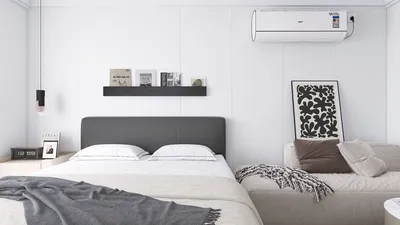


Throughout my experience designing and renovating numerous compact two-storey homes, one key insight stands out: the perception of space can drastically improve when proportion, natural light, and circulation are all harmonized meticulously. In residences spanning 1,200 to 1,600 square feet, optimizing stair location, ceiling height tactics, and the arrangement of storage walls can result in a remarkable increase of 15 to 25 percent in usable space without needing to expand the home's footprint. Research from Steelcase indicates that a thoughtfully designed spatial environment can enhance both comfort and functionality, leading to smoother daily activities and fewer disruptions at home. The WELL v2 standards highlight that good quality lighting is essential for maintaining circadian health, emphasizing the importance of daylight access and glare management as crucial components for well-being, rather than mere luxuries.
For optimal lighting, I generally aim for task areas to maintain a brightness level between 300 to 500 lux, using warm to neutral lighting in the range of 2700 to 3500K for living spaces. It is crucial to implement strong glare control (keeping the Unified Glare Rating below 19 where possible) in work areas and around stairways while adhering to the guidelines set by the IES and WELL v2 for visual comfort. Additionally, color plays a significant role in the ambiance: research by Verywell Mind notes that shades of blue and green promote tranquility and concentration, while warm neutrals enhance approachability—especially important in smaller homes that might otherwise feel cramped. When considering furniture arrangements or stair design options, a room layout planner like Homestyler can be an invaluable tool, allowing for effective visualization and testing of different configurations in a timely manner.
Key Design Considerations for Compact Two-Storey Spaces
Successful compact two-storey homes hinge on three primary strategies: clarity of circulation, vertical layering, and integrated storage solutions. My approach focuses on establishing a singular main pathway (preferably one dominant axis) while relegating secondary circulation to the periphery to liberate the center area. Employing vertical layering techniques—such as split-level designs, partial double heights, or borrowed volume niches—injects a sense of drama without expanding the actual footprint. Lastly, I advocate for incorporating storage as an architectural element: full-height wall panels, stair drawers, and built-in designs measuring 16 to 20 inches deep can creatively address both storage needs and acoustic properties.
Ground Floor Layout: Living, Dining, and the Concept of the 'Invisible Hallway'
I prefer the front section to accommodate the entryway, powder room, and a small coat space, seamlessly transitioning into a combined living and dining area. Rather than formal hallways, I formulate an 'invisible hallway' by strategically aligning furniture and lighting to guide movement organically. When feasible, a 1:1.6 ratio for the main living rectangle is ideal, as this golden-like proportion enhances visual calmness. Dining areas should allow for unobstructed circulation on two sides of the table, ensuring a minimum clearance of 36 inches, with 42 inches being preferable. At the junction of the living space and stairs, incorporating a low built-in feature (ranging from 18 to 22 inches high) serves as both a guard and a bench, enhancing storage capacity while managing sound acoustics effectively.
Kitchen Solutions: One-Wall Design with Island or L-Shape Featuring Pocket Pantry
In smaller two-storey homes, employing a one-wall kitchen layout paired with a 24 to 30-inch deep island enhances the spatial flow. For those who prefer an L-shaped design, adding a pocket pantry or a 24-inch wide vertical storage unit can mitigate clutter. Under-cabinet lighting set to 300-500 lux with 3000K bulbs minimizes shadows and maintains bright prep zones without overwhelming the area. Opting for matte cabinet finishes alongside soft-close hardware can effectively diminish noise and visual distractions. If remote work is a possibility on the ground floor, consider integrating a 30-36 inch shelf concealed behind a fluted door near the kitchen, equipped with power outlets, cable access, and task lighting.
Utilizing Stairs as Space Enhancers
The geometry of the staircase greatly influences the rhythm of the interior. A straight-run design against a party wall allows for optimal space planning, whereas a quarter-turn can cleverly carve out room for a pantry or powder room. An open-riser staircase with solid stringers maintains light flow while remaining structurally sound. For compact designs, a tread width of 36 to 40 inches ensures comfort, while consistent riser heights of 7 to 7.5 inches provide a natural stepping experience. To maximize functionality, consider wrapping the staircase with innovative storage options: pull-out drawers beneath the lower risers, a broom closet tucked under the landing, and a hidden media cabinet accessible from the living space.
Harnessing Light, Views, and Color: Creating an Expansive Feel
Natural light serves as a remarkable means of amplifying spatial perception. By strategically stacking windows vertically, particularly high clerestories within the stairwell, light can penetrate deeply into the layout. Employing a cooler ambient temperature of 3500K in circulation areas, coupled with warmer accents of 2700 to 3000K in seating zones, creates a sense of depth. For intimate living rooms, utilizing a triangular color palette is effective: a soft light-neutral base (L* 70-80), a subdued hue for serenity (such as blue-gray or sage), and a rich dark shade (like charcoal or espresso) to ground the space. Cooler tones will visually recede, enhancing perceived spaciousness, while the darker accent maintains balanced proportions.
Prioritizing Acoustic Comfort in Compact Spaces
In smaller homes, sound can become concentrated. To counteract this, adding sound-absorbing elements discreetly is crucial: upholstered panels behind sofas, felt-lined built-ins, and area rugs with resilient underlayers can all contribute. Aim for varying absorption coefficients across different surfaces to avoid the feeling of a 'dead room'; achieving balance is key. Implementing pocket doors with brush seals and soft gaskets on bedroom doors can enhance night-time privacy. In kitchens, textured surfaces and cork or rubber flooring can help to diminish noise, and selecting appliances that operate below 45 dB makes for a more conversation-friendly environment.
Designing Bedrooms and Baths for Tranquility
On the second floor, position bedrooms toward the quieter exterior façade. Solid walls behind the bed provide stability, and window placement to the side helps manage morning sunlight. Ensuring a perimeter clearance of 24 to 28 inches around the bed is essential; 30 to 36 inches is preferable for a more spacious feel. Integrating a 10 to 14 inch deep headboard niche for books and ambient lighting can add cozy charm. In the case of compact primary bathrooms, a 48 to 60-inch double vanity can be substituted with a single basin featuring ample counter space and vertical storage. Utilizing matte porcelain with a color palette limited to two to three tones eases visual complexity.
Maximizing Storage without Adding Bulk
Consider storage as a fundamental element: continuous planes help to calm smaller spaces. Incorporating full-height wardrobes that feature ceiling shadow gaps can create a 'floating' effect, making the room appear taller. Choosing drawers over cabinet doors for base storage helps to prevent space conflicts. In entryways, a 15 to 18-inch deep bench with flip-up storage for shoes can also serve as a landing spot. In living rooms, a media wall built-in with a depth of 12 to 14 inches is often adequate, as deeper designs can easily become cluttered.
Material Considerations and Sustainability for Longevity
Selecting durable, low-maintenance finishes ensures that small homes retain their elegance over time. Engineered wood with a matte UV coating performs better in daylight than high-gloss options. Mineral-based paints with low sheen effectively camouflage minor imperfections that arise during renovations. When possible, prioritize FSC-certified wood, low-VOC adhesives, and dense wool rugs to enhance indoor air quality and acoustic performance. Adopting a restrained material palette—with a maximum of two types of wood, one stone, and a single paint family—maintains consistency across both levels.
Testing Layouts and Visualization Techniques
Prior to finalizing decisions, I often prototype furniture arrangements using painter’s tape on-site at a 1:1 scale, or quickly trial digital layouts via a room design tool like Homestyler. This approach accelerates choices regarding couch dimensions, island placements, and stair orientations, ensuring that the project remains true to its spatial constraints.
Lighting Layers for Practical Aims
- Ambient: Aim for 100-200 lux in circulation zones, and 150-300 lux in living areas while incorporating dimmable functions for evening relaxation.
- Task: Maintain 300-500 lux for kitchen preparation areas and reading spots.
- Accent: Introduce 50-150 lux to highlight artwork or textured walls for dimensionality.
Ensure beam angles between 24-40 degrees for accents in compact rooms to prevent scalloping. Maintain a color rendering index (CRI) above 90, especially in kitchens and bathrooms, for accurate material representation.
Ergonomics and Human-Centric Design
Paying attention to minute details is vital: maintain counter heights around 36 inches (or 34 for shorter individuals), dining table heights at 29-30 inches, and sofa seat heights near 17-18 inches to facilitate ease of standing. Handrails installed at 34-38 inches provide security without encroaching on stair space. For work-from-home areas, adjust monitor placements to eye level with a 20-28 inch viewing distance and ensure chair support aligns hips slightly above the knees to promote circulation.
2024-2025 Trends for Small Space Design
Soft geometric designs—such as rounded corners on islands and coffee tables—aid flow in tight spaces. Textured millwork adds depth without visual heft. Additionally, micro-terracotta and light oak continue to blend beautifully with dark graphite hardware. Concealed tracks for sheer curtains maintain a clean ceiling line, and linear air supply slits enhance minimalist ceiling designs while increasing comfort.
Timeless Design Solutions That Work
- Transform landing areas into cozy reading nooks with clerestory windows.
- Replace bulky TV stands with a slim 12-inch deep ribbed wall incorporated with a sound bar.
- Utilize a low-height partition behind the sofa to hide a desk, complete with task lighting underneath.
- Consider floating vanities complemented by underlighting to create a sense of levity in compact bathrooms.
- Align the tops of upper cabinets with door headers to create an uninterrupted horizon.
Essential Planning Checklist
- Early decisions regarding staircase design guide storage approaches.
- Prioritize sightline objectives: front-to-back or cross-house visibility.
- Commit to a three-material per floor guideline.
- Plan for layered lighting and switch locations that accommodate various scenarios (morning, cooking, evening).
- Prototype furniture sizes before making purchases.
- Ensure clearances remain adequate: 36 inches for circulation, 42 inches for high-traffic kitchen paths.
- Achieve a balance between durable and soft materials for optimal acoustics.
Authoritative References and Research
For extensive information on visual comfort, lighting, and wellness standards, the WELL v2 framework offers structured guidance, while the IES illuminance recommendations serve as a solid baseline for ambient and task lighting objectives. Both guides have informed the recommended targets outlined above, consistently enhancing livability when applied mindfully.
Frequently Asked Questions
Establish a singular, clear circulation path, utilize borrowed height through partial double volumes near the stair, and vertically align windows to elongate sightlines. Harmonize finishes and minimize material transitions to cut down on visual distractions.
Aim for 150-300 lux of ambient lighting in living spaces using 2700-3000K bulbs and structure task lighting for kitchens at 300-500 lux with 3000K sources while keeping the CRI above 90 for accurate color display in food and materials, in accordance with IES and WELL benchmarks.
A straight stair run against a wall is the simplest and most storage-efficient design. A quarter-turn can effectively incorporate a powder room or pantry. Spiral stairs are space-efficient but can complicate furniture movement and ease of use on a daily basis.
Adopt a light neutral primary color scheme, a cool subdued tone to recede planes, and a single dark color to anchor built-in elements. Shades of blue and green typically foster calm and concentration, supporting established theories of color psychology.
Maintain minimum clearances of 36 inches in major circulation routes, 30 inches in secondary pathways, and 42 inches in front of high-traffic kitchen areas. Around beds, ensure at least 24-28 inches of clearance, with 30-36 inches preferred for comfort.
Combine soft and hard finishes: area rugs, upholstered wall panels, felt-lined cabinetry, and soft-close hardware. Opt for quiet-running appliances below 45 dB and incorporate sealing mechanisms on doors to ensure nighttime privacy.
Select matte porcelain or ceramics for bathrooms, and engineered wood with a matte finish in living areas; employ mineral paints with low sheen and thick wool rugs. Limit the selection to two wood types and one stone for visual cohesion.
Use painter's tape to mark furniture arrangements on-site or leverage a digital space design tool to evaluate clearances, couch proportions, and island arrangements. Early iteration can help avoid future costly adjustments.
With appropriately spaced risers, robust handrails, and controlled open-riser designs, stairs can be both safe and visually light. Adding non-slip nosing and ensuring compliance with building codes is essential.
Consider concealing a 30-36 inch desk behind a low partition or within a cabinetry niche that incorporates power access and task lighting. Ensure a viewing distance of 20-28 inches to monitors, coupled with supportive seating to enhance comfort.


Modern Black Metal Mesh Double Door Cabinet 3D Model

Modern Industrial Solid Wood Metal Open Wardrobe Closet 3D Model
Homestyler is your go-to platform for effortless home design. With its user-friendly online design tool, stunning 3D renderings, diverse design projects, and helpful video tutorials, you can transform your space into a dream home—perfect for both beginners and seasoned decorators!
Progetta ora GRATIS
































