

Having designed numerous mid-size rectangular spaces, I find a layout with a footprint of 10m x 7.5m (75 sqm) to be remarkably adaptable. The key focus is to coordinate circulation, zoning, lighting, and acoustics, allowing the area to serve multiple purposes: from concentrated work to social gatherings and moments of quiet retreat. By achieving the ideal proportions—10m for the long side and 7.5m for the short—you can create clear sightlines and various activity zones while still prioritizing comfort. An ideal tool to visualize these aspects is Homestyler, which can assist in mockups before any physical changes are made.
When it comes to scale choices, empirical data plays a crucial role. For optimal task lighting, the Illuminating Engineering Society suggests aiming for 300–500 lux in general workspaces, with specific high-detail tasks requiring up to 750 lux (according to IES standards). Further, the WELL v2 guidance indicates a color temperature range of 3000–4000K as ideal for supporting circadian comfort in most indoor environments (WELL v2 Light). These guidelines collectively influence how I design layers of ambient, task, and accent lighting to cater to different activities within a single room. For further insights, you can refer to IES standards and WELL v2 Light concepts, which can be effectively visualized through tools like Homestyler.
Insights from behavioral research also inform the decisions made about layout. According to Steelcase’s workplace studies, environments that provide choices—such as quiet areas, collaborative zones, and transitional spaces—tend to enhance satisfaction and perceived productivity. In designing a 75 sqm space, I prioritize three essential areas: focus, social interaction, and flexible usage, each outfitted with tailored lighting, acoustics, and color signals. To efficiently model circulation routes and sightlines before moving furniture, employing a room layout tool like Homestyler can expedite the exploration of various options.
Defining the Spatial Structure
Begin by dividing the 10m length into a 1/3–2/3 ratio. The larger section, which is approximately 6.7m x 7.5m, will serve as the main zone—this could be for living, as an open studio, or for team collaboration. Meanwhile, the 1/3 section (around 3.3m x 7.5m) should accommodate focused activities or support functions, such as a library wall, kitchenette, or compact workstation area. Ensure that key circulation paths maintain a clear width of 900–1200mm to prevent congestion. To enhance the perception of space, position the longest sightline diagonally across the room, anchored by a feature wall, window, or a prominent art piece that balances the visual weight.
Lighting Layers: Ambient, Task, and Accent
For a 75 sqm space, ambient lighting should achieve 300–350 lux as measured at desk height. You can combine dimmable ceiling fixtures with wall washers to improve vertical illumination; lighter walls can create a sense of spaciousness. In the focus areas, deliver 500–750 lux using adjustable task lamps or track lighting, ensuring glare is minimized through controlled shielding angles of about 30° and matte surfaces nearby. For social areas, keep the color temperature in the range of 3000–3500K, while for focus tasks, aim for 3500–4000K; warm tones around 2700K can promote a calming atmosphere in the evening. By distributing control in scenes, you can have tailored settings like "Meet" (brighter, cooler), "Relax" (dim, warm), and "Work" (balanced, glare-free). Homestyler can be a valuable resource for visualizing these lighting scenarios.
Understanding Color Psychology and Visual Flow
Colors can significantly impact behavior and comfort levels. For instance, blue and soft green tones help alleviate stress and enhance concentration, whereas warm neutrals create a welcoming and socially friendly environment. Start with a light base color (LRV 60–75) on walls to maximize reflected light, and incorporate mid-tones to guide movement through the space. Adding a darker color (LRV 10–20) on one short wall can introduce depth without making the area feel smaller. Aim to limit dominant hues to three and repeat them across textiles, storage elements, and wall art to maintain a cohesive visual rhythm. Gentle contrasts—light walls, mid-tone floors, and darker baseboards—assist in defining boundaries without cluttering the visual space.
Furniture Planning and Flow Management
It's essential to follow a perimeter-storage strategy to keep the center of the room open. Within the 3.3m focus area, integrate storage units around 450mm deep, sound-absorbent niches, and a continuous work surface at heights of 730–750mm. In the primary zone, consider floating seating arrangements; ensure a clearance of 600–800mm around significant pieces and 1200mm for primary circulation routes. Orient the furniture to preserve the diagonal sightline. If you're experimenting with various layout scenarios—ranging from workshop seating one day to a lounge setup the next—using an interior layout simulation tool like Homestyler can help visualize modifications before any permanent adjustments are made.
Acoustic Comfort Solutions
Rectangular rooms often face challenges like flutter echoes along parallel walls. To mitigate this, consider using bookcases, fabric panels, or slatted wood with mineral wool backing. Aim for an RT60 of around 0.5–0.7 seconds in multipurpose rooms, which can be attained by integrating soft furnishings (like rugs and upholstered seating) with sound-absorbing wall and ceiling elements. Additionally, maintain asymmetry with hard reflective surfaces—offset a mirror or glass feature with textured treatments on the opposite side. For flexibility during various events, keep portable acoustic screens on hand to rapidly transform the 2/3 zone.
Choosing Sustainable Materials
Select durable finishes with low VOC emissions. Engineered wood or rubber flooring strikes a balance between robust performance and comfort underfoot; pairing these with natural fiber rugs enhances absorption and warmth. For acoustic treatments, recycled PET panels and FSC-certified woodwork can fulfill sustainability objectives. On work surfaces, matte laminates or powder-coated steel reduce glare reflections from task lighting. Focusing on materials with Environmental Product Declarations helps verify their environmental impact.
Considerations for Ergonomics and User Comfort
It’s important that workstations accommodate a range of users. Desk heights should fall between 710–760mm, with adjustable chairs featuring lumbar support, and monitor centers should be approximately 100–150mm below eye level to reduce strain. At least one workstation in the focused area should have a sit-stand option. In social spaces, vary seating heights (between 420–460mm) and backangles to offer flexibility for various postures. Ensure that commonly used items are within a 500–600mm reach from a seated position, and avoid positioning high-glare screens directly across from abundant daylight; angling them 90° to windows helps alleviate discomfort.
Maximizing Daylight, Views, and Glare Control
Utilize the long walls to channel daylight further into the room. Implement sheer shades or micro-perforated blinds to control brightness without obstructing views. If your windows are positioned on a short side, bounce light across the space with light-colored ceilings and wall washers. Task surfaces should be placed perpendicular to the primary source of daylight to avoid veiling reflections. Installing a reflective ceiling (LRV 80+) can enhance diffuse light distribution, potentially reducing the necessity for high-output lighting fixtures.
Zoning Ideas for a 75 sqm Room
- Main zone (6.7m x 7.5m): A lounge cluster accommodating 6–8 people with modular tables and a wall for projection; ensure a 1200mm circulation route around the lounge area for smooth movement.
- Focus area (3.3m x 7.5m): This can feature two workstations, a printer/storage unit, a library wall, and a coffee point, with acoustic lining situated behind shelving for sound management.
- Transition spaces: Create 1.2–1.5m deep alcoves designed for reading or phone calls, using warmer lighting at 2700–3000K and soft finishes to indicate a retreat area.
Art, Storage, and Visual Balance
To maintain the proportions of a long room, position heavier art pieces and storage on one short wall. Hang art at a height of 1450mm for optimal viewing; larger artworks should be spaced adequately and highlighted by lighting. Implement vertical storage solutions (2.1–2.4m) to expand capacity without taking up excessive floor space. Include a 300mm toe-kick for easy access and cleaning, blending closed storage below with open shelving above to prevent a top-heavy appearance.
Encouraging Flexibility and Event Readiness
Select modular tables with locking casters and stackable chairs for versatility. Consider a lightweight mobile credenza that can easily transform into a bar or AV station as needed. Prewire ceiling junctions to accommodate multiple pendant light positions; a track system allows for redirection of accent lighting when switching the room to function as an exhibit space or workshop. Mark two or three floor outlets for power distribution along the 10m length to avoid cable entanglement during events.
Creating Color-Temperature Scenes
Program specific lighting scenes: 1) Focus: 4000K with 500–650 lux and glare control; 2) Social: 3000–3500K offering a brightness of 200–300 lux, plus warm accent pools at 2700K; 3) Night settings: low-level path lights at 2700K and a gentle glow beneath shelves for navigation. Link these scenes to wall dimmers and a convenient control app for user-friendly adjustments.
Common Missteps to Avoid
- Overcrowding the center of the room; pathways should remain unobstructed.
- Using mixed color temperatures without a cohesive plan; designate a primary range for each zone.
- Installing reflective desktops beneath downlights; opt for matte finishes and adjust beam angles.
- Maintaining parallel hard surfaces without any form of diffusion; introduce texture or asymmetry to disrupt echoes.
- Arranging furniture in a way that obstructs diagonal sightlines; reorient clusters to enhance visibility.
Frequently Asked Questions
Q1: How many seating setups can a 75 sqm room realistically accommodate?
A1: With adaptable furniture, you can shift between at least three configurations: a lounge for 6–8, workshop tables for 12–16, and a hybrid setup featuring two workstation bays alongside a casual meeting arrangement. Ensure the 1200mm main circulation path is clear for seamless transitions.
Q2: What lighting standards should be targeted in the focus area?
A2: Focus on achieving lighting levels of 500–750 lux at the work surface to align with IES task guidance. Opt for adjustable task lamps, glare shielding devices, and matte finishes to enhance visual comfort.
Q3: How can I minimize echo in a lengthy rectangular room?
A3: Achieve sound management by mixing absorption and diffusion—incorporate rugs, upholstered seating, perforated or slatted acoustic panels, and bookcases. Target an RT60 around 0.5–0.7 seconds for comfort in multipurpose settings.
Q4: What are the recommended color temperatures for multi-functional spaces?
A4: Social areas should maintain a color temperature of 3000–3500K, focus tasks at 3500–4000K, and use 2700K for evening accents. These align with WELL v2 standards for circadian-friendly light ranges that also aid mood variations.
Q5: What are the ideal dimensions for desks and chairs?
A5: Desk heights should range between 710–760mm with seat heights around 420–460mm, paired with an adjustable chair that provides lumbar support. Set the monitor centers about 100–150mm below eye level, keeping frequently used items within a 500–600mm reach.
Q6: How can I incorporate storage solutions without compromising space?
A6: Implement 450mm-deep perimeter storage, combining closed bases and open shelving above while leaving a 300mm toe-kick. Concentrate heavier storage visually on one short wall to enhance the balanced proportions of the room.
Q7: Which flooring options are ideal for a flexible multi-use area?
A7: Flooring materials like engineered wood, linoleum, or rubber provide great performance; complement them with area rugs for added acoustics and comfort. Select durable finishes with low VOC content and explore using recycled PET panels for walls or ceilings for an eco-friendly choice.
Q8: How should I prepare for power and AV needs during events?
A8: Prewire the ceiling for multiple connection points and install two or three floor boxes along the 10m length. A mobile credenza can house audio-visual equipment while a track lighting system allows for re-targetable accent control.
Q9: Is it possible to enhance the perceived size of the room without structural modifications?
A9: Absolutely—utilizing a diagonal sightline, brighter vertical surfaces through wall washing, and light ceilings (LRV 80+) can create an illusion of spaciousness. Adding a darker tone on one short wall provides depth while maintaining the feeling of openness.
Q10: What are common mistakes that diminish usability in layouts?
A10: Common errors include inconsistent circulation widths, poorly planned cable routes, glare-inducing lighting, and storage solutions that encroach upon the central space. Employ an interior layout planner like Homestyler to simulate different scenarios before finalizing designs.


Minimalist Cream Fabric Modular Sectional Sofa 3D Model

Modern Marble Top Solid Wood Console Table With Decorative Accents 3D Model
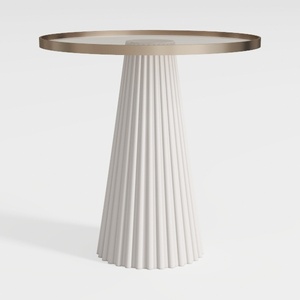
Modern Minimalist Fluted Base Glass Top Side Table 3D Model
Homestyler is your go-to platform for transforming your home design dreams into reality. With a user-friendly online design tool, stunning 3D renderings, inspiring design projects, and helpful DIY video tutorials, you can easily create and visualize your ideal spaces—all from the comfort of your home!
立即免费设计
































