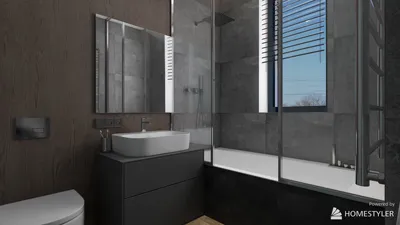


I once had a client who firmly believed that a runway-length mirror was essential for their master bath — in a 15 ft x 11 ft area. At first, I chuckled, but then I realized just how much character can be packed into a small space. This little design risk highlighted how compact rooms can ignite grand ideas, prompting me to maintain a collection of my favorite space planning solutions specifically for limited master suites, often featuring tools such as Homestyler.
In this article, I'll share five effective strategies I employ when designing a 15 ft x 11 ft master bathroom that includes an adjoining closet. Each of these approaches blends practicality, aesthetic appeal, and a keen awareness of budgetary and plumbing limitations.
1. Designate wet and dry zones with a narrow corridor
I typically begin by dividing the space into wet (shower/tub, toilet) and dry (vanity, dressing) zones. By positioning the shower and toilet against one short wall, I keep plumbing runs compact and free up the remainder of the room for a spacious vanity and dressing area.
The advantage here is clarity and unobstructed sightlines. However, this layout might limit future plumbing modifications. For those on tighter budgets, opting for a walk-in shower with a glass partition can create the illusion of more space and is often less expensive than a full-tiled enclosure.
2. Incorporate a double vanity that functions as a dressing counter
A slim double vanity, measuring around 18-20 inches deep, allows for two sinks without overwhelming the room. I occasionally design one side as a full sink and the opposite side as a countertop dressing area, complete with a pop-up outlet for styling devices.
This addition offers a touch of luxury, enhancing efficiency during dressing and eliminating the need for an extra vanity in the closet. The main concern here is storage; addressing this with deep drawers beneath the sink and vertical storage towers alongside the vanity is key.
3. Pair a glass shower with a freestanding tub for elegance and openness
For a spa-like ambiance, consider combining a compact freestanding tub with a glass-enclosed shower. Arranging these fixtures along the same wet wall keeps plumbing consolidated while establishing a focal point that opposes the closet or vanity.
To quickly test various layouts, I map circulation paths and clearance areas using straightforward plans — sometimes leaning on efficient designs I've implemented before to steer clear of tight turns or awkward door swings. The primary drawback is that bathtubs can visually occupy space; opting for a slimmer tub profile can provide needed balance.
4. Merge the closet with layered, visible storage solutions
Instead of enclosing the closet, I often propose a semi-open design that utilizes layered storage options: hanging rods, drawers, and open shelving for shoes and bags. Keeping part of the closet open to the bathroom (using a sliding glass or pocket door) visually expands both spaces and enhances the dressing experience.
This method does require maintaining tidiness, but innovative solutions like pull-out hampers and tilt-out trays simplify upkeep. If privacy is a concern, installing a frosted glass divider allows for separation without feeling heavy.
5. Leverage light, mirrors, and smart technology to enhance the spatial perception
Quality lighting and the appropriate mirrors can create an illusion of enlarged square footage. A long horizontal mirror above the vanity, combined with LED backlighting and dimmable overhead fixtures, can dramatically heighten depth perception. Use accent niches lit with linear LEDs to showcase tile or cabinetry textures.
For those interested in a touch of technological innovation, I sometimes explore AI-assisted design solutions like Homestyler to quickly visualize various finishes and lighting arrangements. However, bear in mind that additional features can lead to increased costs, so prioritizing lighting and mirror placements is advisable.
Tips 1:
Budget-friendly advice: select a standout material — such as a marble-look porcelain tile — while opting for complementary yet economical materials in other areas to minimize expenses. A practical consideration: maintain a clear path of 30–36 inches from the doorway to the vanity to ensure functional movement. A small tip: think about using pocket doors to optimize usable wall space.
FAQ
Q1: What layout is most effective for a 15 ft x 11 ft master bathroom featuring a closet?
A: An optimal layout divides wet and dry areas along one short wall and positions the closet next to the vanity space. This configuration keeps plumbing compact while enhancing sightlines for a more airy feel.
Q2: What is the recommended clearance between fixtures?
A: Strive for a minimum of 30–36 inches of clear space in front of vanities and 24–30 inches in front of showers and tubs. Such clearances ensure the room remains functional and comfortable.
Q3: Is it feasible to incorporate both a tub and shower within a 15x11 space?
A: Yes — a compact freestanding tub combined with a glass shower is doable, provided the plumbing runs along the same wall and a slimmer tub profile is selected. Just make sure to keep adequate clearance for movement around the tub.
Q4: How much closet storage is needed for two individuals?
A: For two people, aim for about 10–14 linear feet of hanging space along with 12–20 drawers or shelves, depending on wardrobe sizes. Adjust quantities based on personal needs, as athletic apparel will necessitate different storage than business attire.
Q5: Are pocket doors advisable for this particular layout?
A: Absolutely, pocket doors save swinging space and increase usable wall area for vanities or storage solutions. They may slightly inflate construction costs, but the spatial benefits often justify the investment.
Q6: What is the best lighting strategy for this layout?
A: Use layered lighting: install bright, non-glare task lighting at mirrors, incorporate dimmable overheads for ambiance, and add accent lighting in niches or cabinets. LED strips behind mirrors are transformational, creating depth and an even light distribution.
Q7: Are there any guidelines or recommendations I should adhere to?
A: Follow NKBA and local building regulations regarding clearances and ventilation; the National Kitchen & Bath Association (NKBA) provides valuable insights on fixture clearances and ventilation best practices (https://nkba.org). Adhering to these guidelines guarantees safety and comfort.
Q8: How do I initiate the planning process for this renovation?
A: Start by crafting a detailed floor plan and a prioritized list of desires (what is essential versus what is nice to have). Sketch out two to three layout options, then refine your choices with a designer or utilize a comprehensive planner like Homestyler to assess proportions before beginning construction.
Discover the ease of home design with Homestyler! This user-friendly platform offers an intuitive online design tool, stunning 3D renderings, and a wealth of inspiring design projects and video tutorials. Perfect for turning your creative ideas into reality, no experience needed!
تصميم الآن مجانا
































