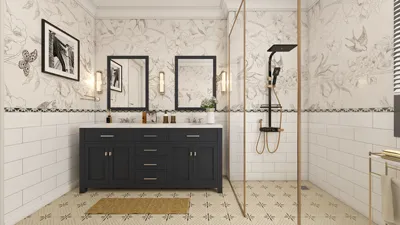


In the past, I attempted to fit a freestanding tub into a compact bathroom because a client insisted that a deep soak would alleviate their stress. We struggled to close the door! This experience highlighted that small bathrooms can inspire innovative ideas when you prioritize smart proportions and functionality. In this article, I will outline five practical design inspirations I’ve implemented to incorporate deep soaking tubs into limited spaces, drawn from actual projects and some valuable lessons I learned along the way.
1. Alcove Deep Tub: Make the Most of Recessed Spaces
An alcove deep soaking tub fits snugly between walls, maximizing usable floor area. I prefer this option because it feels grounded and conceals plumbing neatly; however, it can sacrifice some visual openness compared to a freestanding tub. In one renovation, I removed a shallow ledge and reframed the niche to accommodate a 20" deep alcove tub — this enhanced soakability without altering the room's footprint. A tip: opt for a slimmer rim to maintain shower functionality if needed.
save pin
2. Japanese Soaking Tub (Ofuro): Embrace Vertical Comfort
These compact, deep tubs are designed for upright sitting, effectively utilizing vertical space rather than horizontal. I recommended an ofuro to a couple seeking deep immersion in a limited footprint; they appreciated its space-saving design and heat retention. Keep in mind that the step-in height can be higher, so incorporating a well-placed grab bar or small step is essential for safety. While custom ofuro options tend to be pricier, prefabricated models provide an excellent balance.
save pin
3. Corner Deep Tub: Transform Dead Corners into Functional Spaces
Using corner deep soaking tubs allows you to convert unused corners into luxurious features. I’ve installed molded corner tubs in half-baths, creating a sense of indulgence without overwhelming the space. They work beautifully in asymmetrical layouts, although fitting a shower over a corner tub can be challenging; I often recommend a curved shower curtain or a custom glass panel. Choosing an integrated unit with a finished apron simplifies installation.
save pin
4. Raised Soaker Platform: Create an Illusion of Space with Practical Plumbing Solutions
Constructing a small raised platform to house a deep tub allows for plumbing concealment and storage underneath. In one project, I built a 6" raised deck with pull-out drawers for towels and bath products — the tub exuded a spa-like feel without expanding the footprint. One downside is the step-up, which some older clients may find inconvenient; adding non-slip treads and proper lighting mitigates most concerns. For budget-conscious projects, a straightforward framed plinth with access panels works effectively.
save pin
5. Modular Drop-In Tub: Flexible Designs with Modern Finishes
Drop-in deep tubs are positioned within a custom surround and provide flexibility in finishes, making them ideal for small bathrooms. I frequently specify drop-in tubs to coordinate with tiles or wood paneling, crafting a cohesive design that visually expands the space. The trade-off is the need for proficient waterproofing around the deck, but the aesthetic reward is significant, especially when combined with wall-mounted faucets to save rim space.
save pin
Tips 1:
Before proceeding with your plans, measure doorways and clearances; a deep tub becomes ineffective if it can’t fit into the bathroom. Additionally, consider heat retention (using insulated materials) and the tub’s water capacity to avoid overburdening small water heaters. For layout mockups, I sometimes use room modeling software to test various placements, checking sightlines and door swings — this avoids complications on-site.
save pin
FAQ
Q1: Can a deep soaking tub fit in a small bathroom? A1: Absolutely — designs like alcove tubs, ofuro, and corner models allow for deep soaking without drastically altering the floor area. Accurate measuring and layout planning remain crucial.
Q2: How much additional water does a deep tub consume? A2: Deep tubs generally hold more volume than their shallower counterparts; anticipate increased water usage per soak, so consider shorter soaks or efficient fill depths to conserve water.
Q3: Are deep tubs safe for elderly individuals? A3: With the right features such as grab bars, steps, and anti-slip surfaces, they can be safe; however, low-threshold or walk-in options are preferable for those with mobility challenges.
Q4: Do deep tubs require special plumbing considerations? A4: Typically no, but it's vital to check drain and overflow positions; certain deep tubs may necessitate different waste fittings or higher-capacity drains for efficient drainage.
Q5: What materials are best for retaining heat in tubs? A5: Cast iron and solid surface tubs are superior for heat retention; acrylic options are lighter and more economical but tend to cool quicker. Choose according to your budget and heat retention requirements.
Q6: How can I visualize a tub in my bathroom before purchasing? A6: I suggest creating a scaled floor plan or 3D model to test proportions and clearances. To start, try using a 3D floor planner like Homestyler to experiment with layouts.
Q7: Are deep tubs more costly to install? A7: Installation can be pricier, especially for custom or heavy materials that necessitate reinforced floors. Opting for prefab models and thorough site planning can help manage expenses.
Q8: Where can I find reliable information on bathroom standards? A8: For expert guidelines on accessibility and plumbing, refer to the International Residential Code (IRC) or local building regulations; the IRC provides clear recommendations for plumbing fixtures and clearance (consult IRC resources for specifics).
save pin
Homestyler is your go-to online home design platform! With its user-friendly design tool, stunning 3D renderings, and a wealth of DIY video tutorials, you can easily create and visualize your dream spaces. Transform your home design ideas into reality today!
Design Now for FREE
































