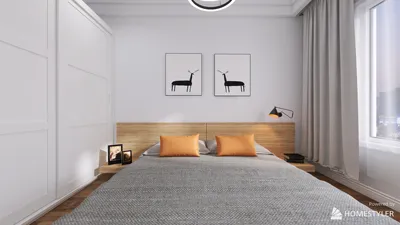


3D modeling presents an exciting opportunity to bring your creative ideas to life in a three-dimensional space. Whether your passion lies in game design, architecture, or animation, grasping the foundational aspects of 3D modeling is essential. This guide will delve into the basics of engaging with 3D modeling, making it particularly useful for beginners interested in exploring this creative field.
Understanding the Fundamentals of 3D Modeling:
The first step in learning 3D modeling is to comprehend its basic concepts. This process involves creating three-dimensional objects using specialized software. Key components include vertices, edges, and faces, which collectively form a mesh. Picture a cube composed of small squares—the more squares there are, the greater the detail of the cube.
Selecting the Right Software:
At the outset, it's crucial to choose the right software for your needs. Programs like Blender, Autodesk Maya, and 3ds Max are popular among both beginners and professionals for their robust tools that assist in developing complex models. While selecting software might seem daunting, the focus should be on learning principles that apply across all platforms, such as the Homestyler, which provides a user-friendly interface for interior design.
There are myriad 3D modeling software options available, and the best one hinges on your specific requirements. For example, beginners may find Blender appealing due to its free access and substantial community support. Meanwhile, Autodesk Maya boasts advanced animation capabilities widely used in the industry.
Think about the type of content you intend to create. If game design is your objective, consider exploring game engines like Unity or Unreal Engine that support 3D modeling. Ultimately, ensure that whichever software you select is accompanied by ample learning resources.
Starting Your First Model:
Once you've selected your software, it's time to dive into modeling. Begin with simple shapes such as cubes, spheres, and cylinders. Learn to manipulate these shapes through movement, rotation, and scaling. Practice utilizing tools like extrusion to expand these shapes into three-dimensional forms.
One effective way to familiarize yourself with the software is by following online tutorials. Many creators share step-by-step video or written guides that can aid your learning journey. Take notes and practice alongside them to reinforce your skills.
Practice and Exploration:
As with mastering any skill, practice is crucial to becoming proficient in 3D modeling. Once you feel comfortable with the basics, challenge yourself by creating more intricate models. Try to replicate real-world objects or conceptual designs. Don't hesitate to experiment with textures and materials to further enhance your models.
Frequently Asked Questions
Q: What is the best 3D modeling software for beginners? A: Blender is commonly recommended as it is free and has a supportive community.
Q: How long does it take to learn 3D modeling? A: Mastering the fundamentals may take a few weeks, but achieving proficiency could require months or even years of practice.
Q: Can someone with no design background still do 3D modeling? A: Absolutely! Many beginners have successfully learned 3D modeling without formal design education. Start with basic shapes and tutorials to build confidence.

Tribesigns 63-inch Executive Desk, Vintage Home Of

Minimalist Cream Fabric Gold Metal Office Chair 3D Model
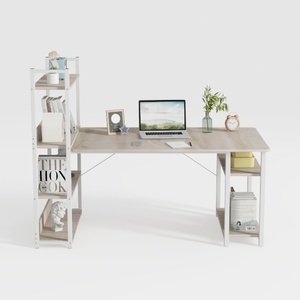
Modern Minimalist Oak Metal Computer Desk With Storage Shelves 3D Model
Homestyler is your go-to online platform for effortless home design. With its user-friendly design tool, stunning 3D renderings, a wealth of creative design projects, and helpful DIY video tutorials, you can transform your vision into reality without any hassle. Explore your creativity today!
تصميم الآن مجانا
































