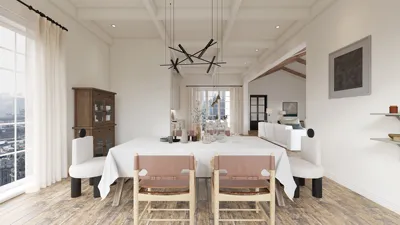


In a memorable experience, a client once asked me to creatively display nine prints within an oddly shaped alcove, desiring them to 'float like clouds.' Despite my efforts, the result resembled a disoriented flock of geese. After several mockups, I learned the importance of grids, spacing, and scale in artwork arrangement. Now, I often utilize 3D rendering tools like Homestyler to visualize layouts before making any permanent decisions, such as drilling holes.
Grid Gallery: Timeless 3x3 Arrangement
For a collection of nine prints, using a classic 3x3 grid is a straightforward approach. I adore this layout as it appears clean, intentional, and aligns perfectly above a rectangular dining table. While the 3x3 formation may seem predictable, introducing variations in mat sizes or exchanging a print with a piece of textured paper can transform the visual appeal dramatically, making it resonate like a well-composed melody.
save pin
Eclectic Ensemble: Uniform Size, Varied Imagery
Maintain an 8.5 x 10 dimension across all prints while diversifying the imagery — consider botanicals, sketches, and one abstract piece. This approach creates a cohesive aesthetic with delightful surprises. It’s also a budget-conscious strategy since identical frames tend to be more economical; just ensure that color balance is carefully maintained to prevent any one piece from overshadowing the others in view.
save pin
Linear Arrangement Above a Sideboard
For those with a long sideboard, consider arranging the nine prints horizontally across three rows of three, or alternatively, create three groups of three with uniform spacing. I once adorned this setup with warm brass frames, beautifully anchoring the buffet area. Be cautious with low ceilings, as you might need to adjust vertical spacing. To maintain open sightlines between the kitchen and dining areas, I often take inspiration from kitchen layout designs.
save pin
Staggered Vertical Displays: Sleek and Stylish
Transform your collection into three vertical columns of three for a sleek, gallery-like ambiance. This arrangement works wonders in narrow dining spaces, drawing the eye upward effectively. However, precision in measurement is crucial; small misalignments can become more noticeable in vertical stacks. Using a laser level or a continuous template can greatly assist in achieving that flawless alignment.
save pin
Shelf Styling: Lean, Layer, Rotate
Instead of hanging the prints, consider placing the 8.5 x 10 images on a slim picture ledge, angling them slightly for a casual feel. I suggest rotating one or two prints seasonally to give the dining area a fresh, lived-in vibe. High-quality frames don’t have to break the bank; a simple matte alongside a thrifted frame can present a gallery-worthy display when arranged thoughtfully. If you’re interested in modern staging ideas, I’ve experimented with similar concepts in AI design scenarios, where Homestyler helped me quickly finalize color palettes.
save pin
FAQ
Q: What spacing should I use between 8.5 x 10 prints? I typically recommend maintaining 1.5 to 3 inches between smaller prints; closer spacing generates a cohesive look, while wider spacing provides breathing room. Consistent spacing across the entire set is more significant than the precise measurement.
Q: Is it advisable to use mats with 8.5 x 10 prints? Absolutely — mats enhance the prints' presence. A 1-2 inch white mat elevates an 8.5 x 10 to an intentional art piece and aids in unifying diverse images.
Q: Which frame styles are most suitable for dining rooms? Slim black or natural wood frames offer versatility and affordability; brass frames contribute warmth if the dining area features metallic accents in hardware or lighting. It’s best to avoid overly ornate styles unless they complement the room’s design.
Q: What is the ideal height for the center of the gallery above the floor? Aim for an average height of 57-60 inches from the ground, which many professionals, including ASID, recommend as a comfortable viewing level.
Q: Is it possible to mix portrait and landscape prints in a set of nine? Yes, but mixing orientations requires thoughtful planning. I often group similar orientations together or utilize mats to balance the visible areas, ensuring the display remains harmonious.
Q: Any economical tips for framing nine prints? Purchase identical, simple frames in bulk or select a single frame size and incorporate mats for added variation. Retailers like IKEA and online custom framers frequently offer competitive pricing for bulk purchases.
Q: How can I ensure the grid is perfectly level? Employ a laser level or create a cardboard template that matches the grid size to mark holes before drilling. I’ve saved considerable time by using templates beforehand.
Q: What are the standard resolutions for 8.5 x 10 prints? To ensure crisp images, target a resolution of 300 DPI at the final size, which translates to an image size of approximately 2550 x 3000 pixels; this standard is commonly adopted by professional printing services.
save pin
Homestyler is your go-to online home design platform for transforming your space effortlessly. With its user-friendly design tool, stunning 3D renderings, and a plethora of inspiring design projects and video tutorials, you can unleash your creativity and bring your home ideas to life!
立即免费设计
































