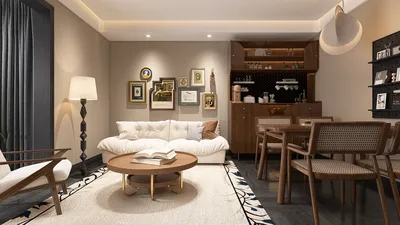


Once, I accidentally installed vertical slats upside down, with the grain oriented incorrectly. This was due to my distraction from a podcast. To my surprise, the client loved the unconventional look, and we decided to embrace it as a quirky focal point. Such little mishaps have shown me how forgiving and expressive wall panels can be.
Small spaces Challenge you to be inventive; even a single panel can effectively conceal storage, direct lighting, or transform a room's overall ambiance. For an initial visualization of layout options prior to material purchase, I frequently turn to 3D floor planning examples to assess sightlines and dimensions in advance.
1. Full-Height Wood Slats for Warmth
I appreciate using wood slats in living rooms, as they introduce rhythm and warmth without overwhelming the senses. When arranged vertically, they create an illusion of taller ceilings, or when laid horizontally, they subtly expand a room's perception. My last project involved oak slats treated with a stain to coordinate with the existing flooring, resulting in a cohesive look throughout the apartment.
Benefits of wood slats include affordability, straightforward replacement for damaged boards, and efficiency in concealing wiring. However, precise installation is crucial to prevent gaps, and raw wood requires sealing in areas with high humidity.
save pin
2. Painted Shiplap with Built-in Shelves
Painted shiplap has become my go-to choice for clients desiring a cozy cottage feel combined with a contemporary flair. I frequently convert a panel run into shallow shelves for books or plants, providing a budget-friendly solution to enhance both functionality and texture.
It's forgiving even if walls aren’t perfectly aligned; paint helps mask imperfections. A potential drawback is that heavy shelves will require solid backing, so it's essential to plan for reinforcement early to evade unexpected issues later on.
save pin
3. Textured Plaster Panels to Add Depth
For clients seeking dramatic flair without the bulk of heavy materials, I often suggest textured plaster panels. On one occasion, I utilized subtle wave panels behind a TV to diffuse reflections, seamlessly integrating the screen into the room's design. To visualize proportions, I prefer mapping out the room in Homestyler to explore various wall widths and assess how textures appear from the sofa.
Advantages include improved acoustics, a sculptural quality, and the convenience of being paintable for easy updates. However, be mindful of dust accumulation on deeper textures and the possibility of requiring professionals for high-relief work.
save pin
4. Living Wall Panels — Greenery That Breathes
Green walls can be either real or simulated. In a small apartment, I helped a client install a low-maintenance moss panel enclosed in slim aluminum, instantly introducing life with minimal effort. Plants not only add vibrant hues but also enhance the feeling of airiness in compact living spaces.
It's important to consider humidity and light needs; faux options can mimic the aesthetic but will not provide the same air quality benefits as real plants.
save pin
5. Mirrored or Lacquer Panels for Brightness
In environments where light is limited, glossy lacquer or segmented mirrors can significantly enhance the perception of space. I once added narrow mirror strips in a dim south-facing lounge, effectively doubling the brightness by reflecting natural and artificial light.
While elegant and functional, mirrors require strategic placement to avoid undesirable reflections. Lacquered finishes can also show fingerprints. For a tech-savvy approach, I typically use Homestyler to experiment with AI-assisted design previews, testing how reflective surfaces behave under varying lighting conditions before finalizing the decision.
save pin
FAQ
1. What materials work best for living room wall panels?
I recommend materials like wood slats, MDF with veneer, plaster panels, lacquered MDF, or living moss panels, depending on budget and preferred aesthetics. Be mindful of moisture levels and your need for acoustic enhancements or storage options.
2. How much does a typical wall panel installation cost?
Costs can vary greatly: simple painted MDF is often very affordable, whereas custom wood or living green walls tend to be more expensive. My projects can range from economical to high-end based on materials and labor.
3. Can wall panels improve room acoustics?
Absolutely. Textured and soft-backed panels absorb sound more effectively than flat painted walls. Combining materials like wood slats with fabric-backed panels can provide the most substantial acoustic benefits.
4. Are wall panels a DIY job?
Some simple panels, like painted shiplap or pre-cut slats, can be tackled by DIY enthusiasts, but more complex options like high-relief plaster, integrated shelving, or living walls typically require professional expertise for structural integrity and waterproofing.
5. How do I choose the right panel scale for a small living room?
Consider scale: narrow vertical slats elongate a space, horizontal panels can make the room feel wider, and oversized panels may be overwhelming. I often create full-scale mockups or utilize room planning sketches to evaluate options prior to any purchasing.
6. Will wall panels damage existing walls?
There is potential for damage, especially if you're securing heavy shelving or if you later remove glued panels. It’s best to utilize reversible fixings when possible and prep the wall backing to minimize long-term consequences.
7. Do mirrored panels pose safety concerns?
Mirrors must be properly installed and tempered in areas where they could be impacted. For reliable safety guidelines on glazing, consult organizations like the International Code Council (ICC) at https://www.iccsafe.org.
8. How do I maintain living moss or plant panels?
Moss panels require little maintenance if properly stabilized; however, living plants necessitate regular watering, sufficient light, and pruning. For compact apartments, I typically suggest stabilized moss or succulents to minimize upkeep.
save pin
Discover the ease of home design with Homestyler! This user-friendly platform offers an innovative online design tool, stunning 3D renderings, and a wealth of inspiring design projects. Plus, with DIY video tutorials, bringing your dream home to life has never been easier.
Zaprojektuj teraz za darmo
































