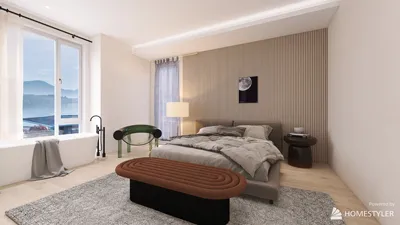


Once, I made the mistake of hanging a massive canvas so low that my cat ended up using it as a headboard—thus learning a valuable lesson about design the hard way. To avoid repeating such costly errors, I now utilize realistic 3D renders for previewing compositions before committing. Restrictions in small spaces actually drive me to be more creative, as these limitations often lead to innovative solutions. In this article, I will share five wall painting ideas I frequently use with clients that transform tiny rooms into spaces that feel intentional and surprisingly spacious, all while considering the benefits of tools like Homestyler.
1. Bold Oversized Statement Piece
I enjoy experimenting with size; placing one large artwork above a slim sofa or bed establishes a clear focal point and creates a cleaner look than multiple small frames. The advantage is that it brings instant drama with minimal clutter; however, a challenge lies in the delivery and hanging—using a rail or cleat system makes leveling and future swaps effortless.
save pin
2. Mini Gallery with a Shelf
For those who struggle with decisions, a picture ledge is indispensable. It allows for displaying a variety of paintings and prints on a shallow shelf, making it easy to rotate pieces without creating new holes in the wall. This approach is budget-friendly and keeps the atmosphere fresh, but too many frames can appear cluttered if a consistent color scheme isn't maintained.
save pin
3. Layered Textures with Paint Scraps
Incorporating a small painted mural alongside framed artwork adds depth without consuming floor space. I make sketches for placement using straightforward plans and sometimes align them with custom floor plans, particularly when walls are near built-in features; this prevents awkward encounters with doors or switches. Although it requires a bit more planning, the outcome resembles a unique installation.
save pin
4. Rotating Miniature Exhibit
By installing a narrow rail or magnetic strip, you can easily swap small canvases seasonally, allowing the room to evolve and enabling experimentation with color. This technique is ideal for renters and those on a tight budget, but be sure to use quality clips and backing boards to ensure pieces hang straight.
save pin
5. Practical Art: Combining Shelves, Hooks, and Painted Panels
I often blend functional storage with art: painted panels that serve as pegboards or low-profile shelves framed by matching artwork look deliberate and optimize square footage. When rethinking adjacent areas, pairing these with smart kitchen layout ideas can visually connect open-plan spaces while enhancing flow. The only caveat involves coordinating finishes, but a cohesive color palette will maintain harmony across the board.
A quick tip for budget-conscious decorators: prints and removable murals offer significant impact for less money, and selecting a single statement piece can serve as an anchor for the rest of the decor. I usually advise clients to choose one main artwork and build from there—this reduces stress and adds a touch of personality.
save pin
FAQ
Q1: What size of painting is appropriate for a small wall?
For a balanced look, I aim for artwork that takes up about 60–75% of the width of the furniture it hangs above; this ratio effectively maintains scale without overwhelming the space. I recommend measuring and sketching with paper before making a purchase.
Q2: Are bold wall paintings suitable for rental properties?
Absolutely—using removable hooks, washi tape for mockups, or leaning displays can prevent damage. Removable murals or framed prints are friendly to renters and create a high-impact look.
Q3: How do I select colors for a small room?
I usually choose one dominant neutral color and one accent color from the artwork to influence cushions or rugs; this strategy fosters continuity and makes the room feel more considered. Lighter backgrounds generally create an illusion of space, allowing bold colors to be used as accents.
Q4: Can I mix different frames and canvases?
Certainly—mixing textures can add visual interest. Just maintain a consistent gap between pieces and limit the color palette or frame finishes to avoid chaos.
Q5: What is the safest way to hang heavy artwork?
Always use suitable anchors rated for the weight, and consider a French cleat system for larger pieces; if you're unsure, hiring a professional is wise. Proper hanging techniques will not only prevent accidents but also safeguard your investment.
Q6: How can I frequently change my art?
Employ picture rails, ledges, or magnetic systems—these options allow for quick swaps and minimize wall damage. Regularly rotating art keeps a small space feeling vibrant without significant expense.
Q7: Do wall paintings influence a home's resale value?
Thoughtfully placed and tasteful artwork can elevate the perceived quality and narrative of a space, but it's wise to keep it neutral when preparing for sale. A strong focal point often photographs better than a cluttered wall.
Q8: Is there evidence that art enhances living spaces?
Indeed—according to the National Endowment for the Arts (NEA), interaction with art fosters community well-being and personal fulfillment (NEA.org). Mindfully selecting art can enhance mood and lend a curated feel to your home.
Discover your dream home with Homestyler! This user-friendly online design platform offers a powerful design tool, stunning 3D renderings, and a wealth of inspiring design projects. Plus, you can learn with easy-to-follow DIY video tutorials. Transform your ideas into reality effortlessly!
Concevez maintenant gratuitement
































