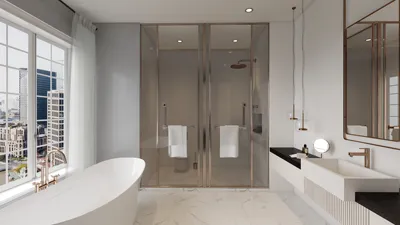


I once had a client who insisted on fitting a bathtub, a piano, and a queen-sized bed into a 6-meter shipping container — I still find myself chuckling at the sketch where the piano also served as a staircase. This experience taught me that living in compact spaces fosters superior decision-making, rather than compromises. In fact, small homes, particularly a two-bedroom container residence, can inspire unexpectedly large doses of creativity.
1. Open-plan living enhanced with sliding partitions
I frequently eliminate rigid walls in favor of sliding partitions to maintain flexibility within the living area. The benefits are clear: natural light penetrates deeper into the space, making it feel more expansive. However, sound transfer can be a minor drawback, so I recommend using acoustic seals and placing soft furnishings judiciously to dampen noise.
save pin
2. Elevated sleeping platform
In a design for a container featuring two compact bedrooms, raising one bed to a loft level liberated floor space for a workstation and additional storage. This budget-conscious approach allows for more usable area, although careful planning for headroom is essential — I typically aim for a clearance of at least 0.9–1.0 m above the mattress to ensure comfort.
save pin
3. Foldable kitchen and dining solutions
One of my favorite clever tricks is creating a kitchen that folds neatly into a cabinet. This not only maximizes counter space but also keeps the home organized. The main challenge lies in efficiently routing plumbing and ventilation; however, with diligent planning, you can establish a fully functional kitchen without monopolizing floor area. I often utilize an online kitchen layout planner, like Homestyler, to visualize ideas before finalizing designs.
save pin
4. Extension of outdoor living areas
Incorporating sliding glass doors and a small deck significantly expands the living area of a container home to the outdoors. In one project, we installed a retractable awning and outdoor storage, which essentially doubled the feeling of space within the tiny home. Weatherproofing and privacy screens are critical considerations, but the benefits for entertaining are substantial.
save pin
5. Built-in storage and multifunctional furnishings
I always integrate storage into walls, beneath staircases, and under beds. A custom-built banquette with drawers can replace cumbersome sofas and minimize clutter. While the initial carpentry costs can be high, the long-term advantages include space-saving and maintaining a peaceful interior vibe.
save pin
Tips 1:
Budget considerations: insulation, shipping fees, and permits can often catch first-time homeowners off guard. It is crucial to prioritize thermal and moisture control from the start to prevent expensive retrofits later on. If you're looking to play with layouts in 3D prior to making commitments, consider using a user-friendly 3D floor planner to visualize options and catch potential errors early on.
save pin
FAQ
Q1: What size should a two-bedroom container home be?
A1: Typical configurations involve either two 20-foot containers or a single 40-foot container with interior partitions, resulting in approximately 300–600 square feet. Design according to your lifestyle and adhere to local building codes for compliance.
Q2: Is building with shipping containers cost-effective?
A2: While material costs may be lower, the expenses for modifications, insulation, and transportation can accumulate. Nevertheless, it remains competitive for compact homes when factoring in speed and modularity.
Q3: How can you effectively insulate a container home?
A3: Common insulation methods include closed-cell spray foam or constructing interior stud walls filled with high-performance insulation. Proper vapor barriers and ventilation are critical to prevent moisture buildup.
Q4: Is it possible for a container home to be off-grid?
A4: Absolutely, numerous homeowners combine solar panels, battery systems, and composting toilets. It’s vital to design your electrical and water systems early for seamless integration.
Q5: Are permits necessary to construct a container home?
A5: Almost always, yes. It’s essential to check local building regulations and zoning laws since requirements can fluctuate significantly. Consulting with a local architect can help simplify regulatory compliance.
Q6: How long does it take to build a container home?
A6: For a well-organized two-bedroom container home, the fabrication and fit-out process typically requires between 8 to 16 weeks, contingent on complexity and weather conditions.
Q7: What are common mistakes to avoid?
A7: Frequent missteps include underestimating insulation needs, ventilation, and structural modifications. Early coordination with engineers can help alleviate delays.
Q8: Where can I locate layout templates and visualization resources?
A8: For dependable planning and visuals, turn to industry tools and case studies. For instance, reputable guides like those from the U.S. Department of Energy outline efficient small home standards (https://www.energy.gov).
save pin
Homestyler is your go-to online home design platform! With its user-friendly design tool, stunning 3D renderings, and a wealth of DIY video tutorials, you can effortlessly create and visualize your dream spaces. Transform your home with ease and inspiration today!
立即免费设计
































