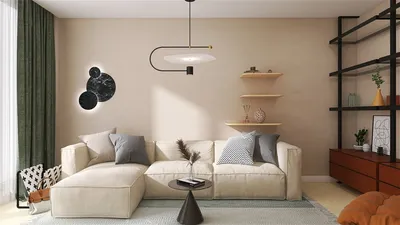


I once attempted to mount a 75" TV on a wall that could barely support my confidence — the shelf buckled, my client chuckled, and I realized that scale truly matters. Small areas can be daunting, or they can inspire ingenuity; I will always choose creativity. If you're looking to explore possibilities, I frequently suggest visualizing the space in 3D using tools like Homestyler before rearranging furniture — this can help prevent mishaps and spare some awkward apologies.
1. Floating media wall with hidden storage
I appreciate a sleek, wall-mounted cabinet that conceals cables and remotes. It appears lighter than a bulky entertainment center and allows a modest living room to feel more spacious; however, this option offers less open shelving, making it unsuitable for collectors of trinkets.
Budget tip: consider modular floating units — they are less expensive to install and easier to replace than a full built-in unit.
save pin
2. Corner TV with angled seating
When a straight wall isn't an option, the corner becomes your ally. Positioning the TV to face a curved sofa or a pair of loungers creates an intimate viewing area. The challenge lies in acoustics — corners can amplify bass, so incorporating a compact soundbar or wall-mounted speakers is essential to balance sound.
save pin
3. Sofa-first layout with the TV as a secondary element
Sometimes, I center my designs around conversation and natural light, placing the TV as a flexible component. This setup works particularly well in multipurpose rooms: the TV can be mounted on a swivel or concealed in a niche when not in use. To ensure accurate measurements and planning, I generally advise clients to draft a detailed floor plan to optimize sightlines and traffic patterns.
save pin
4. Built-in niche with a hideaway TV
I once proposed a vertical cabinet door that elevates the TV into a soffit — dramatic yet costly. The advantage is a clean aesthetic and a protected screen; however, the downside involves mechanical complexity and an increased budget. This is ideal for minimalistic homes that prioritize uncluttered views.
save pin
5. Zoning: TV corner plus reading nook
In compact apartments, I designate a TV area alongside a reading or office nook within the same room. Using rugs, lighting, and a low console, I can define the TV space without the need for walls. If you're struggling with layout options, utilizing AI layout suggestions, such as those provided by Homestyler, can be a quick and effective way to iterate designs under tight deadlines.
save pin
FAQ
Q1: What’s the optimal viewing distance from the TV?
I suggest a distance of about 1.5–2.5 times the screen's diagonal based on its resolution; for a comprehensive guide, refer to RTINGS' distance recommendations, which I follow for practical setups.
Q2: Should the TV be mounted at eye level?
Yes — aim for the center of the screen to be approximately at seated eye level (about 42–48 inches from the floor for most sofas). Minor adjustments may be necessary depending on your seating height and screen size.
Q3: How can I conceal cables without extensive renovations?
Utilize a slim cable raceway painted to match the wall color, or conceal cables behind baseboards. For rentals, stylish cord covers and a neat surge protector behind a console work wonders.
Q4: Is a swivel mount a worthwhile investment?
Absolutely, especially for open-plan or L-shaped rooms — a swivel allows the TV to adapt to various seating configurations. Just ensure the mount can support the weight of the TV and allows for adequate airflow.
Q5: What lighting should I use around the TV?
Bias lighting behind the TV minimizes eye strain and enhances perceived contrast. Combine this with dimmable overhead lights or floor lamps to control glare and maintain ambiance.
Q6: How much clearance is required for a soundbar or speakers?
Leave at least 2–4 inches of space below the TV for a soundbar and ensure ample forward clearance for any speakers. Wall-mounted speakers will require careful planning for wiring and acoustic placement.
Q7: Can I place plants near the TV?
Yes, but avoid large plants that may reflect light onto the screen. Low, matte-leaf plants on lower shelves provide warmth without causing glare.
Q8: Where can I find layout standards and advice?
For professional spacing and safety guidelines, refer to industry resources such as RTINGS for viewing distances and the National Kitchen & Bath Association for general ergonomic principles.
save pin
Homestyler is your go-to online home design platform! With its user-friendly design tool, stunning 3D renderings, and a wealth of design projects and video tutorials, you can easily create and visualize your dream spaces. Start transforming your home today!
Progetta ora GRATIS
































