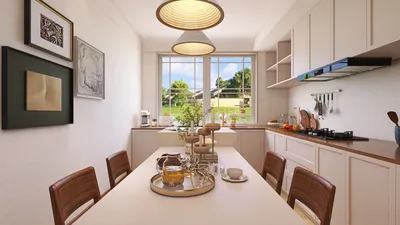


Reflecting on my experience trying to create a quirky, tangled mural on a compact kitchen wall, I ended up with an outcome reminiscent of a perplexed spider web. Although the client appreciated it, it was a humbling lesson for my artistic ego. This experience highlighted the importance of transforming a chaotic concept into intentional art with a proper strategy, showing that even a small wall can serve as a captivating focal point through thoughtful design. If you're considering a daring idea, planning your room layout creatively before diving into painting could save you both time and resources — a tip that could enhance your use of Homestyler as well.
1. Minimalist Tangled Line Mural
I enjoy employing a singular, flowing line that weaves and loops across a wall, adding interest without overwhelming the area. The benefit of this design is that it delivers striking visuals with minimal color, making it ideal for smaller spaces while still maintaining a playful touch.
Challenges arise in achieving the right line proportions, which can require patience; utilizing a projector or a straightforward grid can assist in this task. Budget-wise, hand-painting remains economical, while vinyl decals, though pricier, offer the advantage of being removable.
2. Layered Color Wash with Tangle Accents
Imagine applying a delicate watercolor wash as your foundation, followed by bold, tangled strokes in a contrasting color. I employed this technique in a narrow entrance to foster a sense of depth without clutter; visitors would often pause to admire it, leaving with smiles.
The advantages include concealing minor wall flaws and creating a layered appearance. However, the downside is that achieving a clean DIY result can be challenging — it's wise to test swatches and be prepared for some touch-ups.
save pin
3. Geometric Tangles for Functional Walls
Merging tangled lines with simple geometric shapes can help to break visual disorder, defining practical areas on the wall, such as designated spots for keys or notes. This method is particularly effective in compact kitchens and mudrooms, where functionality meets design, and it integrates seamlessly with the clear zoning often utilized in kitchen layout concepts, including those found in Homestyler.
A practical suggestion is to use washable paint in high-traffic areas and to consider how hooks or shelves will interact with your design.
save pin
4. Textured Tangle: Plaster, Tape, and Light
For a more tactile touch, I've layered thin plaster ropes or painter’s tape to create shallow textures, then highlighted them with a glaze or soft wash. This adds depth that casts captivating shadows, providing artistic appeal even in low-light settings.
A drawback is that textural elements increase costs and blow up permanence; therefore, they are better suited for statement walls rather than everywhere.
save pin
5. Scaled-Down Gallery of Tangled Frames
If committing to a full mural feels daunting, I frequently suggest a series of smaller framed panels, each containing a segment of a tangled design. This modular approach offers flexibility, making it easier to adapt as personal tastes change while maintaining a cohesive narrative.
Thanks to its budget-friendly nature and suitability for renters, this option is enticing; the only caveat is the slight complexity involved in aligning multiple frames — remember to measure twice and hang once. To facilitate visualization during client presentations, a quick 3D render using tools like Homestyler can streamline the approval process.
save pin
FAQ
Q1: What defines a tangled wall painting?
A tangled wall painting employs continuous, looping lines or layered marks to forge an abstract, cohesive motif. Its scale and color usage can range from minimalist to intricate depending on the desired impact.
Q2: Is it appropriate to paint a tangled mural in a compact space?
Absolutely — smaller rooms benefit greatly from lighter, controlled motifs; maintaining moderate contrast and focusing on a single wall helps prevent visual overload.
Q3: What tools facilitate accuracy in tangled lines?
Key tools include projectors, chalk lines, thin painters’ tape, and a steady hand with a brush. For textured appearances, consider plaster ropes or modeling paste.
Q4: Should I hire a professional for my mural?
For larger, detailed murals that need to seamlessly integrate with existing fixtures, hiring a professional is a wise choice to save time and minimize errors. Meanwhile, many DIY enthusiasts can succeed with simpler designs through proper preparation and practice.
Q5: How do I select colors for my mural?
Begin with the room’s color scheme: opt for a base tone that subtly recedes alongside an accent hue for the tangled lines. Neutral backgrounds with a single bold accent create a contemporary and harmonized feel.
Q6: Are textured tangles a permanent decision?
Indeed, textured treatments such as plaster are generally permanent and could require expert removal; use them when you desire a lasting impact rather than a temporary change.
Q7: What clearances should I observe when designing around kitchen walls?
Adhere to established ergonomic standards for work aisles and appliance spacing; guidelines from the National Kitchen & Bath Association (NKBA) are widely utilized in the industry (refer to https://www.nkba.org).
Q8: How can I effectively present a tangled wall concept to clients or housemates?
I create straightforward mockups — combining photographs with sketches or quick 3D visuals — to set clear expectations. Testing a small paint swatch on the wall can also be a practical step before committing to the entire design.
save pin
Looking to transform your space? Homestyler is your go-to online home design platform! With an easy-to-use design tool, stunning 3D renderings, and a wealth of DIY video tutorials, you can effortlessly create and visualize your dream home. Start designing today!
Design jetzt kostenlos
































