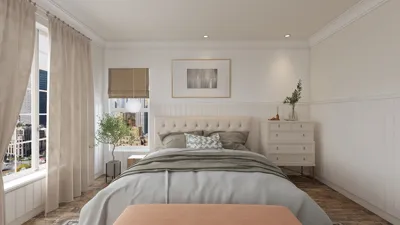


In a previous project, I dedicated time to hand-painting an entire studio apartment ceiling with stars because a client believed it would improve their sleep — I discovered two vital lessons: never commit to painting 200 tiny stars by hand, and the value of mockups in preventing conflicts. This was when I turned to AI interior design sketches to preview color and scale before committing to such an extensive painting task, which ultimately enhances creativity in design. Incorporating tools like Homestyler can streamline this process.
While small walls might seem limiting, they actually encourage innovative thinking. Here, I present five stencil ideas that I have successfully implemented, explaining their effectiveness, potential pitfalls, and economical tips to keep your project manageable.
1. Geometric Repeat Patterns
I find that a sharp geometric pattern works wonderfully in narrow hallways and limited living spaces, providing rhythm without adding visual weight. The advantages include durability and strong aesthetic appeal, but alignment can be challenging — having a level and spacers helps, and achieving perfectly straight lines requires dedication. For an economical alternative, consider crafting your own stencil using stiff mylar or reusing cardboard templates; tools like Homestyler can assist in visualizing these patterns before application.
save pin
2. Oversized Single Motif
Imagine a single large stencil, such as a palm leaf or sunburst, designed to span most of a small wall. This approach resembles a piece of art and minimizes busy seams, which is perfect for renters desiring a standout feature without the commitment of covering an entire wall. However, since it draws the eye, consider arranging furniture around the focal point to maintain a balanced look.
save pin
3. Subtle Tone-on-Tone Texture
Utilizing a stencil with a slightly different sheen or a color just a few shades apart can add texture without overwhelming the eye — especially effective in studio bedrooms. I suggest employing glaze or diluted paint for a layered effect; this technique is forgiving and easier to touch up. While it's a budget-friendly method, achieving seamless blends might require extra time.
save pin
4. Border and Half-Wall Stencils
Stenciling half-wall borders or design bands can be lifesavers in compact kitchens and bathrooms, injecting character while keeping the space airy. This method works well with practical finishes — such as wipeable paint below and eggshell above. If you’re uncertain about the pattern's appearance, test a strip on foam board to check the scale; I often recommend clients explore kitchen layout ideas in Homestyler to ensure that the stencil complements cabinetry and appliances.
save pin
5. Mixed-Media and Stencil Combinations
One of my favorite techniques involves merging stencils with washes, metallic accents, or subtle freehand lines — it gives a wall a unique, custom look. This method requires a bit more skill and budgeting but can yield results that resemble a commissioned mural. To finalize the concept and preview the finishes, I sometimes create a rendered mockup using Homestyler to help clients visualize light and sheen — an effective way to propose ideas with 3D render inspiration.
save pin
FAQ
Q1: What types of paint are most effective with stencils?
I recommend acrylic latex for walls since it dries rapidly and is easy to clean. For metallic highlights, use specialty metallic paints in moderation to minimize glare.
Q2: How can I avoid paint bleed under the stencil?
Use a stencil brush or small foam roller to apply the paint in light, layered dabs rather than one heavy coat. Secure the stencil utilizing low-tack tape and remove it while the paint is still slightly damp for cleaner edges.
Q3: Is it possible to use stencils in bathrooms?
Absolutely—opt for semi-gloss or satin paints on lower areas to resist moisture, and steer clear of porous primers that trap humidity. Proper ventilation is crucial to prolong the finish's durability.
Q4: What is the typical cost for a stencil project?
Prices vary depending on the size, quality of paint, and whether you opt for purchased or custom-cut stencils. DIY projects for smaller walls can be economical, while hiring a professional may increase costs but save time and ensure a precise execution.
Q5: Are stencils suitable for rentals?
Certainly—select removable or low-adhesion stencils and colors that are simple to repaint. Half-wall borders or single motifs are excellent renter-friendly alternatives.
Q6: How long should I wait before using the room after stenciling?
Most water-based paints are touch-dry within an hour, but it's advisable to wait a minimum of 24 hours prior to heavy use to allow layers to cure; metallics and glazes may require additional time.
Q7: Are stencils environmentally friendly?
You can minimize waste by opting for reusable mylar stencils and low-VOC paints. For guidance on indoor air quality, refer to the U.S. EPA, which offers clear recommendations on paint selection and ventilation.
Q8: What’s the best stencil project for beginners?
Begin with a border or tone-on-tone texture; these options are forgiving of minor mistakes and help build your confidence. Practice on a poster board before attempting the actual wall.
save pin
Homestyler is your go-to online home design platform! With an easy-to-use design tool, stunning 3D renderings, and a wealth of design projects and video tutorials, you can effortlessly create and visualize your dream space. Start transforming your home today!
Design jetzt kostenlos
































