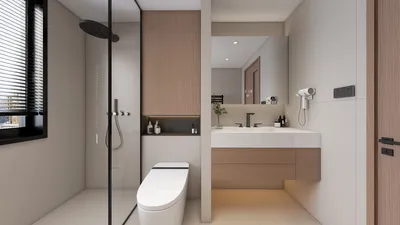


Once, I decorated a client's living room with stripes that accidentally matched their cat's collar—this experience taught me the importance of careful taping and inquiring about pets. This incident highlighted how a wall's color can significantly influence a room's ambiance, particularly in small areas that often inspire innovative solutions. Before I even start painting, I like to visualize multiple design options, which helps ensure client satisfaction by allowing them to make bold choices with confidence. Utilizing the Homestyler tool can enhance this visualization process immensely.
1. Striking feature walls using geometric shapes
Creating a sharp geometric mural in a compact living room instantly adds depth without needing to rearrange furniture. It serves as a dramatic focal point without a hefty price tag, though achieving crisp lines is crucial. I recommend using high-quality painter’s tape and a laser level for accuracy. A budget-friendly tip is to incorporate two complementary colors which not only saves costs but also heightens contrast effectively.
save pin
2. Ombre effects and gentle gradients
Ombre walls often appear to be a designer's secret weapon that is surprisingly affordable, particularly when applied to smaller areas. These techniques soften corners and provide the illusion of higher ceilings, though blending colors does take some practice. I sometimes use a light mist or a sponge to achieve smoother transitions. This approach works exceptionally well in bedrooms and entryways, where a subtle shift in atmosphere is often more desirable than a bold statement.
save pin
3. Trompe-l’œil effects and fake textures
Applying faux panels, bricks, or concrete textures can create a luxurious aesthetic without the need for major renovations. I once transformed a tiny kitchen wall to mimic raw plaster, and everyone believed it was genuine. For practical applications, consider a painted accent wall in a narrow galley kitchen—it brings personality without overwhelming the space; however, be prepared for the effort, as achieving realistic appearances requires time and a steady hand. Using Homestyler can help in planning these designs effectively.
save pin
4. Utilitarian paint options: chalkboard, magnetic, and protective finishes
In smaller homes, paint can serve a purpose beyond mere decoration—using chalkboard paint on a pantry door or applying magnetic primer beneath a colorful coat can help keep notes, recipes, and artworks organized. While the functionality is a significant advantage, it does require thorough surface preparation and occasional touch-ups. I often advise clients that while functional paint options work well for families, they do need durable and washable finishes in high-traffic areas.
save pin
5. Patterns and stencils for compact areas
In spaces where furniture pieces could overwhelm, stencils and repeating patterns become my preferred choice. A subtle recurring motif not only enhances the perception of space but also helps tie colors together. These techniques are budget-friendly; however, they require patience—it's wise to plan for a trial panel and work in stages. For wet areas like bathrooms, be sure to use paint designed to resist mildew and humidity.
save pin
FAQ
Q1: Which paint finish is best for interior walls?
Matte finishes can hide imperfections while creating a cozy atmosphere, whereas eggshell or satin finishes are easier to clean in common areas. In kitchens and bathrooms, opting for satin or semi-gloss provides durability and makes cleaning simpler.
Q2: How should I select colors for a small space?
I always start with assessing natural light: cool tones can make north-facing rooms feel more expansive, while warm tones create a cozy feel in sunnier spaces. Choose one primary color, then use tints and accents to reduce visual clutter.
Q3: Is it possible to paint over wallpaper?
Occasionally, yes—but only if the wallpaper is firmly adhered and smooth; priming is crucial. Typically, removing wallpaper for wall repairs yields a better long-term finish.
Q4: Are low-VOC paints safer for small environments?
Absolutely—low-VOC or no-VOC paints help minimize indoor air pollution and are especially recommended for poorly ventilated rooms. For more information on indoor air quality and paint emissions, consult resources from the EPA: https://www.epa.gov/indoor-air-quality-iaq.
Q5: What is the cost of a painted feature wall?
Costs can vary based on size and complexity; a straightforward accent wall is relatively inexpensive, while murals or textured finishes will require more time and labor. After evaluating the measurements and desired details, I usually provide clients with a transparent cost range.
Q6: How should I prepare walls for painting?
Clean the surface, patch any holes, sand, and apply primer; in my opinion, proper preparation accounts for 70% of a successful finish. Skipping primer may seem like a time-saver but can lead to problems later on.
Q7: Can I create intricate patterns myself?
Yes, with some practice and patience. Start small with stencils and limited areas. For more complex textures or larger murals, hiring a professional can save time and yield superior results.
Q8: How can I visualize paint designs before making a commitment?
I always suggest creating mock-ups using paint swatches, small test areas, or digital previews to assess scale and the interaction of light. Utilizing a 3D mock-up through tools like Homestyler can eliminate uncertainty and assist in finalizing the color scheme before applying the first coat.
save pin
Homestyler is your go-to online home design platform! With an intuitive design tool, stunning 3D renderings, a variety of design projects, and helpful DIY video tutorials, you can effortlessly create and visualize your dream space—perfect for both beginners and seasoned designers!
立即免费设计
































