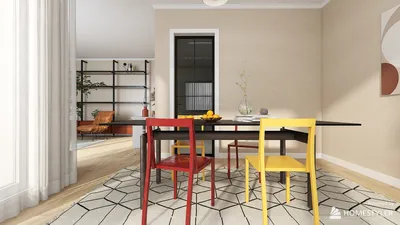


I still remember a client who envisioned a multifunctional divider that served as a wine cellar, a home office, and a cat playground within a compact 12 sqm open space. Instead of constructing an elaborate fortress of shelves, I discovered that a clever visual strategy could achieve the desired effect. When I quickly sketch ideas, I frequently utilize realistic 3D layouts to ensure that sightlines and circulation are adequately optimized, which significantly reduces the potential for errors later on. Using a tool like Homestyler can streamline this process.
1. Low-profile shelving as a central feature
I enjoy integrating a low bookshelf between dining and living spaces, as it functions more like furniture instead of a solid barrier. It provides storage while maintaining an open and airy environment. However, it requires careful decoration — a cluttered appearance can detract from the overall look — but with the right mix of baskets and decorative elements, it proves to be both cost-effective and versatile.
save pin
2. Glass partitions framed in black
My preferred method involves using black-framed glass partitions, which elegantly define areas while allowing natural light to flow. I once persuaded a doubtful couple by showing them visuals from a previous project where the dining area still felt beautifully connected to the living space. Although this option can be more expensive and requires some structural planning, it transforms small spaces into cinematic experiences that feel more luxurious than their actual size.
save pin
3. Adjustable curtains or slatted dividers
Curtains or sliding slatted panels offer unrivaled flexibility — open them for entertaining or close them for intimacy. I often draft curtain placements on paper and then test visibility with simple cardboard prototypes; combining this with integrated storage on one side helps prevent that chaotic 'just moved in' aesthetic. If you’re looking for quicker iterations, I sometimes design integrated kitchen layouts simultaneously to maintain a seamless flow from dining to cooking, especially when using tools like Homestyler for design.
save pin
4. Versatile furniture: bench and table combinations
Benches positioned against a sofa or a long console that accommodates dining benches can create subtle separations that foster social interaction. In one instance, I implemented this in a client’s compact loft, where the bench concealed additional storage and a charging station. Although this might result in a loss of modularity, I recommend planning for future adaptability if you anticipate moving often.
save pin
5. Impactful lighting and area rugs
Never underestimate the power of lighting and rugs — a striking chandelier above the dining table and a layered rug in the living area can instantly signify separate zones without requiring construction. This approach is the most economical way to create visual division and is easily changeable seasonally. For those adventurous enough, I frequently explore ideas with AI interior design tools to quickly visualize material and lighting selections before finalizing decisions, including Homestyler.
save pin
FAQ
Q1: What’s the most budget-friendly way to separate dining and living areas?
I typically start by recommending the use of rugs and lighting — they are affordable, alterable, and provide immediate clarity. Adding a low console or potted plants can enhance definition without straining the budget.
Q2: How can I prevent a divider from obstructing natural light?
Opt for transparent materials such as glass, open shelving, or slatted screens. Even light-colored fabric screens can maintain an open vibe while providing separation.
Q3: Are permanent walls ever advisable?
Fixed walls are suitable if acoustic privacy or distinct functions (like an actual dining room) are necessary, but they tend to limit flexibility and light. In smaller homes, I rarely advocate for full walls unless they serve noise control or structural purposes.
Q4: Can lighting alone create defined zones?
Absolutely — layered lighting (ambient, task, accent) combined with a statement fixture over the dining table can effectively visually segregate areas. It’s one of my cherished non-invasive methods.
Q5: What clearance should I allow between dining chairs and the living area?
Aim for at least 90 cm (approximately 36 inches) between the back of dining chairs and any pathways to ensure easy movement. Cramped setups can feel uncomfortable, so I always advocate for that extra space in my designs.
Q6: Are indoor plants effective as dividers?
Plants are fantastic — they bring texture, soften transitions, and enhance air quality. Just be mindful of maintenance: choosing low-light varieties or planning irrigation can help if you’re not particularly skilled with plants.
Q7: How do I select materials that complement both zones?
Select a common material or color palette to unify both areas, and then vary textures or scale to distinguish them. Maintaining consistency in finishes helps keep the overall space cohesive while allowing each zone to have its individual character.
Q8: Where can I access professional insights on interior layouts?
For safety and professional standards, I often refer to resources and guidelines from the American Institute of Architects (available at aia.org), which cover circulation, clearances, and accessibility. Adhering to these established policies aids in avoiding expensive mistakes during renovations.
Discover the ease of home design with Homestyler! This user-friendly platform features an innovative online design tool, stunning 3D renderings, and a wealth of design projects and video tutorials. Transform your space effortlessly and unleash your creativity—perfect for everyone, from beginners to seasoned DIYers!
Projete agora para LIVRE
































