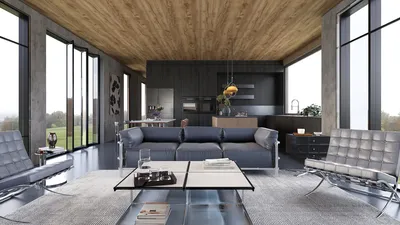


I once transformed my son's imaginary house painting game into a tangible project. He insisted that each room required a 'dragon stripe' and a tiny faux window. Surprisingly, that whimsical idea inspired one of my favorite small-space hacks, highlighting how creativity often leads to the best solutions. If you're someone who enjoys fun design experiments, I encourage you to explore an AI interior design showcase for authentic inspiration.
1. Fun Color Blocking
Color blocking is one of my favorite techniques because it feels like a game: select two or three colors and let them interact across walls and trim. This method visually segments a studio into functional areas without the need for additional furniture, but be cautious with proportions as they can make the space feel heavy — it's wise to test with paint swatches first. A budget-friendly tip is to purchase sample pots and apply them to either the lower third or as a vertical stripe to see how it looks before committing to a full paint job.
save pin
2. Mini Murals and Accent Panels
A small mural or a framed accent panel can serve as the standout feature of a room — drawing attention away from clutter and adding character to an otherwise plain wall. While it offers significant personality, crafting such pieces can be time-consuming and requires a steady hand; therefore, I sometimes stencil the design first before painting freehand. For quick results, peel-and-stick painter's tape can help achieve sharp edges without the pressure.
save pin
3. Faux Windows and Lighting Effects
In darker rooms, I've painted faux windows or light wells using a light glaze and white frames to trick the eye into perceiving more depth and brightness. This budget-friendly and charming technique can enhance a space, but avoid using glossy paint over large areas to prevent any glare. To visualize this concept digitally before selecting colors, utilizing a design mockup helped me persuade a client to opt for a warm faux-sill instead of rewiring their lighting.
save pin
4. Durable, Practical Finishes
For high-usage households (with children, pets, or frequent DIY projects), I recommend using washable eggshell or satin finishes for lower walls, while applying a matte finish up high — effectively enhancing durability where it’s most necessary. However, the contrasting sheens can be an issue, which some clients find appealing, while others prefer a more uniform look; incorporating a molding or a painted chair rail can often resolve this. It's advisable to consider mid-range washable paints for a smart balance between cost and longevity.
save pin
5. Illusions of Painterly Storage
By painting built-ins or closet doors the same color as the surrounding wall, you can make storage visually disappear, while adding contrasting handles gives a playful touch. This approach is not only elegant but also space-efficient, although achieving a consistent sheen and texture can be tricky. In kitchen nooks, I’ve integrated cabinet fronts with backsplash colors — see this kitchen layout example that I adapted for another compact renovation.
save pin
FAQ
Q1: What is the best paint finish for busy small rooms?
A1: I typically suggest using satin or washable eggshell finishes for lower walls and matte for upper regions; this combination offers both cleanability and a soft aesthetic.
Q2: Can painting create the illusion of natural light?
A2: Indeed — light, warm hues paired with pale trims and reflective accents such as gloss or mirrors can mimic brightness without any electrical installations.
Q3: How do I effectively test color in a small room?
A3: Apply 1x1 ft color swatches across various walls and observe them throughout different times of the day to make an informed decision.
Q4: Are faux windows beneficial or misleading?
A4: They are advantageous — they can enhance the perceived space and positively influence mood if designed with realistic proportions; keeping frames simple helps avoid an artificial appearance.
Q5: What should I consider regarding VOCs and safety?
A5: Opt for low- or zero-VOC paints and ensure proper ventilation during and post-painting; as per the U.S. EPA guidelines, these products significantly reduce indoor air pollution risks.
Q6: How much should I allocate for repainting a small room?
A6: If you choose to DIY, budget for quality paint along with primers and supplies, typically totaling between $150 and $400; consulting a professional might elevate costs but ultimately saves time and avoids mistakes.
Q7: Is there a way to virtually try these ideas beforehand?
A7: Absolutely — utilizing digital mockups and 3D renderings allows you to adjust colors and layouts before any real painting starts, which ultimately helps prevent regret and additional expenditure.
Q8: Where can I find examples of these techniques?
A8: Search for case studies and visual demonstrations from seasoned designers; they showcase authentic installations along with candid before-and-after images that assist in setting realistic expectations.
save pin
Homestyler is your go-to online home design platform, perfect for anyone looking to create stunning interiors. With its user-friendly design tool, impressive 3D renderings, and a wealth of DIY video tutorials, you can effortlessly transform your space into a stylish haven. Explore your creativity today!
立即免费设计
































