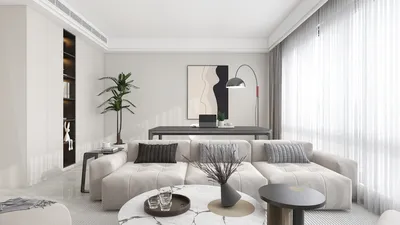


In my early days as a decorator, I made the mistake of agreeing to paint a client's small studio in a bold navy without assessing the light conditions first. The result was nearly cave-like! This experience taught me the importance of testing colors in advance. Now, I always utilize a room planner like Homestyler to visualize how paint colors will interact with both furniture and natural light. Small walls might feel daunting, but they offer an excellent opportunity for bold and creative expressions.
1. Geometric Accent Using Painter's Tape
By incorporating simple shapes like triangles or chevrons, you can quickly modernize a wall without the commitment of applying a full-color treatment. This technique yields high visual impact with minimal paint involved. Just be precise; using low-tack tape and practicing on cardboard can help alleviate nerves. On a budget? One well-chosen color accompanied by a neutral can be much cheaper than wallpaper and can achieve a similarly customized look.
2. Gentle Ombre Gradient
Ombre can significantly enhance a room's sense of depth, whether applied vertically or horizontally. In compact spaces, it can add dimension without causing visual clutter. The beauty of gradients is that they camouflage brush strokes, but blending requires patience—work in sections and maintain a wet edge. I once transformed a cramped hallway using three shades of the same color, receiving praise from visitors who thought it was a professional finish.
3. Painted Paneling Illusion
Creating faux paneling with two-tone paint can add architectural interest without the need for carpentry. Ensure it aligns with your furniture arrangement, especially in tight spaces like kitchens, so that the painted panels compliment the room’s functionality rather than being purely decorative. It's a cost-effective solution that's easy to update compared to real wood; just pay attention to corners and seams for a polished appearance.
save pin
4. Horizontal Stripes for Space Expansion
By using wide, soft horizontal stripes, you can make a narrow room feel more spacious; select two subtle shades for an elegant finish. Measuring and leveling for stripes can be labor-intensive but pays off with a serene and tailored environment. Opt for matte paint to minimize glare, further enhancing the room’s tranquil feel.
save pin
5. Functional Chalk Paint or Washable Accent Wall
Transforming a wall into a writable, washable surface is ideal for spaces like kitchens or dynamic home offices. Use a 3D floor planner such as Homestyler to visualize how your paint choice integrates with flooring and layout. This practical yet playful option does require occasional cleaning, and while washable paints are convenient, they may show wear over time.
save pin
FAQ
Q1: What paint finish is best for small rooms?
A: I typically recommend opting for a matte finish on walls to conceal imperfections and cultivate a cozy atmosphere, while eggshell is better for high-traffic areas due to its easy cleaning. High gloss should be saved for trim or decorative accents.
Q2: How can I select colors for a tiny space?
A: Begin by assessing the natural light—cool hues are great for north-facing rooms while warm shades work beautifully in sunny southern exposures. Always test large swatches at various times throughout the day before deciding on a color.
Q3: Can bold patterns be effective in small spaces?
A: Definitely! Just remember to scale down the pattern and limit it to one wall or a section to ensure it doesn't overwhelm the space. Pairing with simple furniture and a restrained color scheme can create a beautifully cohesive look.
Q4: Are there environmentally friendly paint options available?
A: Certainly! Look for paints that are low-VOC or zero-VOC; these products minimize indoor air pollution and odors. Many well-known brands now provide certified low-VOC options for healthier living environments.
Q5: How long should I wait between painting coats?
A: It's always best to consult the instructions provided by the paint manufacturer—most suggest waiting 2 to 4 hours for water-based paints. Factors such as humidity and temperature can influence drying times, so allowing adequate time ensures a smooth finish without tackiness.
Q6: Which tools help achieve a professional-looking DIY paint job?
A: Investing in a quality angled brush, a good roller, and painter's tape is key; a small edger tool can help achieve clean lines. Don't overlook the preparation—sanding and priming as necessary will yield the best results.
Q7: Is it possible to paint over wallpaper?
A: While it's feasible under certain conditions, it's generally wiser to remove old wallpaper or at least skim-coat over it. Painting on deteriorating wallpaper typically leads to peeling. Although removing wallpaper can be laborious, it results in a far more durable finish.
Q8: Are painted surfaces safe for indoor air quality?
A: By selecting low-VOC products and ensuring good ventilation while painting, you can effectively manage indoor air quality. The U.S. EPA provides guidance which emphasizes the importance of proper ventilation during and after the painting process (https://www.epa.gov/). Always adhere to the safety instructions on your chosen product's label.
save pin
Homestyler is your go-to online tool for home design! With its user-friendly interface, stunning 3D renderings, and a wealth of design projects, you can effortlessly create and visualize your dream space. Plus, the DIY video tutorials make it easy to learn and innovate. Transform your home today!
立即免费设计
































