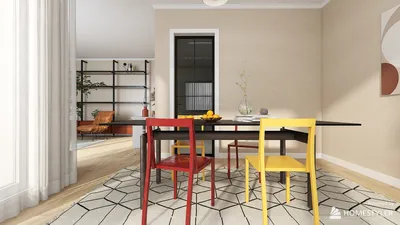


I once had a client who requested a unique home office fitted inside a closet, with the extraordinary requirement of accommodating a piano. This unexpected challenge highlighted that limitations can spark creativity, leading to innovative solutions often born from the most unconventional ideas. When dealing with a snug space, utilizing efficient room layouts can reveal unexpected functionalities without making the area feel cramped, a concept beautifully illustrated by Homestyler.
1. The Vertical Library Desk
I enjoy the concept of vertical storage: towering shelves positioned above a narrow desk create space for books, plants, and a few decorative boxes. The significant advantage is abundant storage within a minimal footprint. However, it requires a certain level of organization; otherwise, the vertical arrangement can appear cluttered and chaotic.
2. Fold-down Wall Desk with Hidden Storage
A fold-down desk stands as a classic solution for small spaces—utilizing it as a writing surface during the day and tucking it away for guests. It's cost-effective if you opt for a DIY project, but ensure that the hinges and catch hardware are of high quality to prevent sagging over time.
save pin
3. Nook with Built-in Seating and Desk Combo
Transforming a window nook into a combined bench and desk offers a cozy workspace that doubles as additional seating. Adding cushions enhances comfort, while under-seat drawers facilitate organization; however, this setup may compromise legroom compared to using a freestanding chair.
save pin
4. Corner Floating Desk with Task Lighting
Corners often go unused—installing a sleek floating desk paired with an adjustable lamp keeps the space functional while maintaining an airy feel. This layout appears contemporary and helps open up the floor area, but careful attention to cable management is essential to avoid unsightly tangles.
save pin
5. Multi-use Cabinet Desk with Fold-out Surface
A tall cabinet concealing a fold-out workspace is ideal for multifunctional rooms: close it to hide your work and open it when focus is needed. This design is sophisticated and minimizes distractions, yet it requires thoughtful planning to accommodate space for a chair and mouse within its footprint.
save pin
Practical Tips and Small Case Notes
I prioritize lighting, ergonomics, and storage hierarchy: ensuring task lighting is adequate, keeping screens at eye level, and placing frequently used items within easy reach. For visualizing arrangements, clients have found that examining efficient kitchen layouts can reveal helpful flow concepts to apply in small office design.
save pin
Budget & Material Advice
For those on a constrained budget, opting for laminate surfaces and DIY shelving can be economical; consider investing in a quality ergonomic chair and suitable lighting. I once transformed a thrifted dresser into a compact workspace for under $200—all while embracing its unique quirks, which my client appreciated.
save pin
Quick Visualization and Next Steps
Before making commitments, sketch out two design versions and utilize 3D modeling if possible—visualizing the dimensions simplifies decision-making. I frequently suggest mockups or basic 3D floor plans to catch potential scale issues early on, helping avoid awkward returns on furniture.
save pin
FAQ
Q1: What are the best office nook ideas for very small apartments?
A: Emphasize vertical storage, foldable desks, and multifunctional furniture. Prioritize ergonomic elements like monitor height and chair support over purely decorative features.
Q2: How can I make an office nook appear larger?
A: Implement light color schemes, integrate lighting solutions, and use mirrors wisely to enhance light reflection. Maintain a clear floor space and select furniture with legs to foster visual openness.
Q3: Can I fit a standing desk in a small nook?
A: Certainly—select a compact electric lift or a converter that rests on a narrow desk. Ensure you have adequate space for leg movement and the management of cables.
Q4: What kind of lighting is optimal for an office nook?
A: Combine ambient lighting with a focused task lamp that features adjustable color temperatures. LED lights are efficient and generate less heat.
Q5: What budget should I expect to allocate for a functional nook?
A: You can create a respectable setup for $300–$800 by focusing on a good chair and lighting; remember that built-in or custom cabinetry will significantly increase overall costs.
Q6: Are built-ins a wise investment for small offices?
A: Built-ins can optimize every inch of space and provide a seamless appearance, but they offer less flexibility when relocating. Consider semi-permanent choices like modular shelving for future adaptability.
Q7: Where can I find ergonomic guidance for home workstations?
A: Reliable sources like OSHA provide useful ergonomic tips for workstation design (see: https://www.osha.gov). Aligning monitor height, keyboard setup, and seating position can help alleviate strain.
Q8: How can I evaluate layout ideas before purchasing furniture?
A: Mark out space on the floor or utilize simple 3D mockups to test movement and sight lines; many individuals find that 3D visualizations greatly assist in confirming scale.
save pin
Discover the ease of home design with Homestyler! This user-friendly platform offers a powerful online design tool, stunning 3D renderings, and a wealth of design projects and DIY tutorials. Bring your vision to life effortlessly—perfect for both novices and seasoned decorators!
تصميم الآن مجانا
































