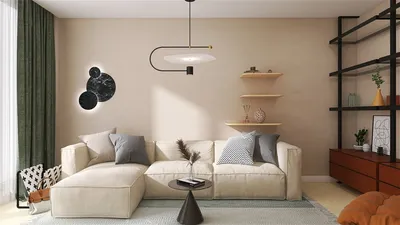


In my decade-long journey as an interior designer, I have significantly observed a prevailing trend: the innovative design solutions that arise from small spaces. A cozy living room featuring a TV can be transformed from feeling cramped to becoming one of the most inviting areas of your home. Today, I’m excited to share 10 creative small living room ideas for TV arrangements that I've personally tested or have witnessed making a remarkable impact, merging my practical experience with professional advice.
Minimalist TV Wall Design
My Perspective: In one of my initial design projects, I opted to eliminate all the bulky cabinetry and introduced a floating shelf beneath the TV. This approach not only maintained an open floor plan but also gave the impression of a larger space.
Advantages: A minimalist TV wall minimizes visual clutter, enhances floor space, and complements various styles ranging from Scandinavian to contemporary. As highlighted in Houzz’s 2023 report on small space trends, uncluttered walls contribute to a tranquil ambiance in compact living areas.
Disadvantages: The absence of enclosed storage implies that you'll need an alternative location for consoles, remotes, and DVDs.
Suggestion: Enhance this look with glass-backed shelves to keep the area feeling spacious and bright.
Built-In Storage Around the TV
My Perspective: For a client residing in a 38㎡ apartment, I designed custom built-ins that framed the TV, incorporating shelving and cabinets — emphasizing vertical storage as the key feature.
Advantages: Perfect for concealing clutter while showcasing decor; tailored designs can seamlessly fit irregular wall dimensions.
Disadvantages: The initial investment is higher, and modifications can be challenging once constructed.
Cost Insight: Custom millwork typically ranges from $1,500 to $5,000 depending on the finish and complexity.
Corner TV Placement
My Perspective: In spaces with limited wall area, I find that situating the TV in a corner liberates central walls for artwork or windows, providing an intriguing focal point.
Advantages: Increases the useable wall area; can create a cozier conversational atmosphere.
Disadvantages: Selecting the right stand or mount can present challenges.
Wall-Mounted TV with Swivel Arm
My Perspective: Utilizing a swivel arm to mount the TV is a game changer in tight spaces — it allows you to adjust the viewing angle towards seating without needing to rearrange furniture extensively.
Advantages: Conserves floor space, offers flexible viewing options, and is ideal for open-plan designs.
Disadvantages: Requires solid wall support; unsightly cables may detract from the overall aesthetic without proper management.
Gallery Wall with TV
My Perspective: In my own residence, I've treated the TV as just another framed piece within a gallery wall—immediately it transformed from being a distracting ‘black hole’ to a cohesive element when turned off.
Advantages: Integrates the TV into your overall decor; excellent for eclectic or artistic interiors.
Disadvantages: Can seem cluttered if not thoughtfully curated.
Sliding Panel Concealment
My Perspective: For clients who desire a TV-free atmosphere while entertaining, I have installed sliding panels that completely conceal the screen when it’s not in use.
Advantages: Focuses attention on design elements; ideal for multifunctional spaces.
Disadvantages: Additional expense for panels and the necessary track system; wall space is required for sliding functionality.
Recommendation: Consider warm-toned wooden panels which not only conceal the TV but also introduce the cozy feel that wood textures offer.
Floating Media Console
My Perspective: Installing a floating console beneath the TV helps maintain clear floors, making it ideal for robotic vacuums and contributing to a lighter visual impact.
Advantages: Offers a contemporary look, simplifies cleaning, and provides storage without excessive bulk.
Disadvantages: Lower weight capacity compared to traditional units.
TV Above a Low Cabinet
My Perspective: Sometimes a classic solution is most effective — placing a low cabinet beneath the TV allows for storage of media necessities while keeping sight lines unobstructed.
Advantages: Cost-effective and easily movable; serves as a display area for plants or decor.
Disadvantages: Occupies more floor space than floating options.
Dual-Purpose Furniture
My Perspective: In compact living rooms, I have successfully utilized ottomans or benches that provide storage for remotes, blankets, and controllers.
Advantages: Increases flexibility and storage; ottomans can convert into extra seating during movie nights.
Disadvantages: Storage space can be limited depending on the piece.
Room Divider with TV Mount
My Perspective: One of my most inventive small living room TV concepts involved mounting the TV on a rotating divider, effectively separating the living space from the bedroom in a studio.
Advantages: Enhances functionality; allows TV viewing from multiple areas.
Disadvantages: Requires meticulous planning for cables and stability.
Example: An L-shaped loft I redesigned utilized an open layout that unlocked extra counter space and viewing angles for both the living and dining areas.
Conclusion
Designing small living rooms with TVs is not about constraints; it’s about smarter design decisions. By incorporating space-saving furniture, clever arrangements, and innovative concealment, a compact space can be both functional and inviting. As noted by Apartment Therapy, intentional design choices yield the most considerable impact in limited footprints. Which of these 10 ideas would you want to implement in your own space? Consider using Homestyler to visualize your Small Living Room designs effortlessly!
FAQ
1. How can I create an illusion of space in a small living room with a TV?
Utilizing light colors on walls, mounting the TV to clear floor space, and opting for multifunctional furniture are effective strategies. Mirrors can also enhance light and depth perception.
2. What’s the best TV placement for a compact living room?
Either centrally on the main wall, tucked into a corner to maximize wall utility, or integrated into built-in storage solutions.
3. Is it feasible to place a TV above a fireplace in a limited space?
Absolutely, just ensure that the viewing height feels comfortable and follow manufacturers' guidelines for heat clearance.
4. What are effective ways to conceal TV cables in small rooms?
Employ cable management kits, in-wall conduits, or incorporate the cables into shelving and decor.
5. What is the ideal TV size for a compact living room?
For spaces under 150 sq ft, a 43–50 inch screen is generally recommended. According to CNET, the best size can vary based on the viewing distance, ideally around 1.5 times the screen diagonal.
6. Are there budget-friendly ideas for small living rooms with TVs?
Yes, options like floating shelves, basic wall mounts, and repurposed furniture pieces can be economical solutions.
7. How can I incorporate a TV into a minimalist design?
Choose frameless models, conceal components, and consider a straightforward wall mount or built-in niche.
8. Is using a projector instead of a TV possible in a small living room?
Definitely, ultra-short-throw projectors are suitable for tight spaces and can be paired with retractable screens to optimize space utilization.
Homestyler is your go-to online home design platform! With its user-friendly design tool, stunning 3D renderings, and a wealth of DIY video tutorials, transforming your home has never been easier. Explore creative design projects and bring your vision to life effortlessly!
Concevez maintenant gratuitement
































