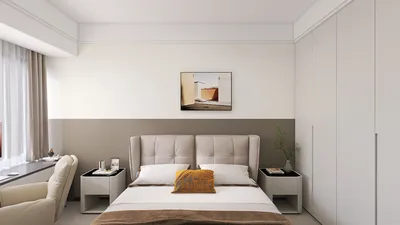


I once almost painted a client’s small powder room a matte black without first assessing the lighting, which resulted in a cave-like ambiance and left me quite embarrassed. This experience taught me that while small spaces encourage daring choices, they also require careful planning. To remind myself of this lesson, I even captured a photo of a compact layout from that project, highlighting how color selection, reflectivity, and contrast can drastically alter a space.
1. Soft Two-Tone with a Chair Rail
I enjoy dividing the wall with a soft, resilient lower hue and a lighter upper shade; this technique not only conveys a sense of spaciousness but also conceals scuffs. The benefits include enhanced visual height and simplified upkeep, while the challenge lies in achieving clean tape lines or incorporating modest molding for a sharp look — both are straightforward fixes and budget-friendly options.
save pin
2. Statement Ceiling (Yes, the Ceiling Counts)
Applying a light color or subtle pattern to the ceiling draws attention upward, creating an illusion of height. It may seem like a minor addition of paint, yet the psychological impact is significant. However, caution is needed with dark, glossy finishes as they can accentuate imperfections unless the ceiling surface is smooth.
save pin
3. High-Contrast Accent Wall Behind the Vanity
One of my preferred methods is to utilize a deep, rich color behind mirrors and brass hardware, allowing fixtures to stand out. This approach adds a dramatic touch ideal for photographs; however, it’s important to avoid overusing dark paint as it may make the room feel smaller. I often complement this with reflective mirrors or backlit medicine cabinets for balance. For additional ideas, I frequently revisit a Homestyler 3D layout I previously shared from similar small-bath projects to assess proportions and finishes.
save pin
4. Patterned Paint or Stencil for Texture
When wallpaper appears overly delicate, employing a geometric stencil or sponge technique can infuse character without long-term commitment. It’s cost-effective and forgiving — rough edges can appear artisanal. It does require patience and precision, or a stencil tool, to create a consistent pattern that holds up well in smaller spaces.
save pin
5. High-Sheen Trim and Bold Door Color
Using a high-gloss contrasting color (or even metallic paint) on trim and doors can present the powder room as elegantly framed, reflecting light in a clever manner. This method is both affordable and reversible. However, glossy surfaces may reveal brush strokes, so employing a quality brush or spray technique for the best outcome is essential. Additionally, if cabinetry is part of the project, coordinating the door accents with hardware finishes can harmonize the entire area — I once paired a vintage brass knob with a deep teal door, creating a custom feel.
save pin
Quick Practical Tips
Always test color swatches during various times of the day, ensuring to view them under your bathroom's lighting. Opt for satin or semi-gloss finishes below chair-rail height for durability, and consider a soft pearlescent or eggshell finish on the ceiling to enhance light reflection. If you wish to visualize paint against layout and materials prior to application, using color placements from the kitchen color study I preserved has helped my clients feel more confident in their choices.
save pin
FAQ
Q1: What paint finish is best for a small powder room?
Use satin or semi-gloss on lower walls and trim for moisture resistance and ease of cleaning; a low-sheen eggshell on upper walls softens reflections while still being washable.
Q2: Do dark colors make a powder room look smaller?
While dark colors can visually contract a space, when applied as an accent (such as behind mirrors or on the vanity wall), they introduce depth and drama without overwhelming the area.
Q3: How many paint colors should I use in a tiny powder room?
Keeping it to three colors is ideal: a main neutral or soft tone, a darker accent, and a trim/ceiling color. This strategy ensures a cohesive design and minimizes visual clutter.
Q4: Any tips to prevent mistakes when painting tight spaces?
Thorough preparation is key: sand, caulk, and prime. Utilize painter’s tape and small brushes for edges, and work in stages to allow each coat to dry thoroughly, preventing lap marks.
Q5: Can I use metallic paint in a powder room?
Yes, but use it sparingly. Metallic or high-gloss accents can impart a luxurious feel to trim or small feature areas; however, testing under your bathroom light is crucial to prevent an undesirable appearance.
Q6: How can I preview colors before painting?
Paint swatches are vital; apply 12x12" samples and observe them at various times. I also take photographs of swatches in the space to compare images on-screen under similar lighting.
Q7: Are there health or ventilation concerns with certain paints?
Opt for low-VOC or zero-VOC paints for bathrooms to minimize fumes; proper ventilation or a fan is still recommended during and after painting. As stated by the U.S. EPA, utilizing low-VOC products diminishes risks related to indoor air pollution (epa.gov).
Q8: Can paint alone transform a powder room on a tight budget?
Absolutely! Thoughtful color choices, a statement ceiling, or bold trim can create a significant transformation with minimal investment. Combining paint with smart fixtures and lighting can yield high-impact results without extensive renovations.
save pin
Homestyler is your go-to online home design platform! With its user-friendly design tool, stunning 3D renderings, and a wealth of DIY video tutorials, you can effortlessly create and visualize your dream spaces. Transform your home design ideas into reality today!
Design Now for FREE
































