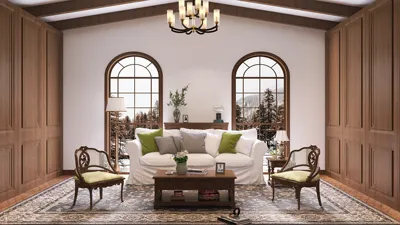


I once had a client who was adamant that every shelf needed a miniature painted house, as it was believed to “bring the neighborhood vibes inside.” This request inspired me to sketch out a dozen variations and create some quick room layouts to highlight how these small accents transform the overall ambiance. That quirky request turned into one of my favorite small-space projects: painted house ornaments that beautifully anchor a corner without overcrowding it.
1. Tiny distressed wooden houses for shelves
Creating small wooden house blocks with layered paint and distressed edges is one of my joys; this worn appearance exudes a cozy feel without creating clutter. They are affordable and lightweight, allowing you to group different sizes on a narrow shelf. However, keep in mind that the paint's durability may be an issue, so applying a clear coat is recommended if you have kids or pets around.
save pin
2. Painted ceramic address plaques as art pieces
Why settle for a generic plaque when you can paint a charming house motif featuring your entry number and hang it as wall art? This option not only stands up to weather conditions but also adds a decorative touch to porches or mudrooms, though ceramic pieces may cost a bit more than upcycled wood.
save pin
3. Mini seasonal houses on the windowsill
For renters, my go-to is using lightweight plywood cutouts painted in seasonal colors. Rotating these throughout the year instantly brightens a windowsill; I paired one project with some straightforward kitchen layout ideas to ensure the display didn’t disrupt the flow. The key is to maintain a slim base for functionality and space for plants.
save pin
4. Hanging felt houses for a soft decorative touch
To achieve a cozier atmosphere, paint (or dye) felt house shapes and hang them from a thin dowel or over cabinet knobs. They provide a delightful texture and are silent and safe for children. While they lack the crisp outlines of wood or ceramic, this irregularity adds to their charm.
save pin
5. Painted tabletop village for versatile styling
On occasion, I design a tiny tabletop village using a mix of materials like clay, wood, and even recycled cardboard, all uniformly painted. Before making a final decision, I enjoy creating a quick 3D floor visualization with Homestyler to assess the scale within the space; this prevents unforgiving “too-big” blunders. These villages can be stunning focal points but require time to craft and paint.
save pin
FAQ
Q1: What paints are recommended for small wooden ornaments?
A1: I generally opt for acrylics for hobby projects — they dry quickly and layer nicely. Sealing them with a matte or satin varnish will help protect the finish and minimize shine.
Q2: Can painted ornaments be used outdoors?
A2: Absolutely; however, you should select weather-resistant materials like treated wood or ceramic and use exterior-grade paints and sealers. Expect some upkeep over the years if they will be exposed to sun and rain.
Q3: Are house-shaped ornaments suitable for minimalist interiors?
A3: Certainly; just choose muted hues and simplify the shapes. A lone neutral-toned house can provide a carefully curated touch instead of overwhelming the space.
Q4: How do I scale ornaments for smaller areas?
A4: I recommend using groupings of odd numbers (like 3 or 5) and varying heights to create visual interest without monopolizing surface space. Sketching a few configurations in advance is a smart way to save both time and expense.
Q5: Are there safety concerns regarding painted decorations around children?
A5: Yes, it's best to use non-toxic, low-VOC paints and avoid small detachable parts in homes with young children. Sealed surfaces are easier to clean and more secure over time.
Q6: Can painted ornaments disguise wear on furniture or walls?
A6: Indeed — a well-placed ornament or small grouping can draw attention away from scuffs and create a captivating focal point instead of an eyesore.
Q7: I'm concerned about lead paint in older ornaments — what should I do?
A7: If you think there might be lead in older painted items, avoid sanding or dry-scraping. The U.S. EPA warns that homes built prior to 1978 may have lead-based paint hazards; consult epa.gov for guidance on testing and abatement (https://www.epa.gov/lead). Professional testing is the safest option.
Q8: How can I experiment before finalizing painted pieces?
A8: Begin with low-cost prototypes made of cardboard or craft wood, test color schemes on paper, and capture photographs of mockups in real settings to observe how they appear at varying times of the day.
save pin
Homestyler is an amazing online home design platform that empowers you to create stunning interiors effortlessly. With its user-friendly design tool, impressive 3D renderings, diverse design projects, and helpful video tutorials, transforming your space has never been easier or more enjoyable!
Zaprojektuj teraz za darmo
































