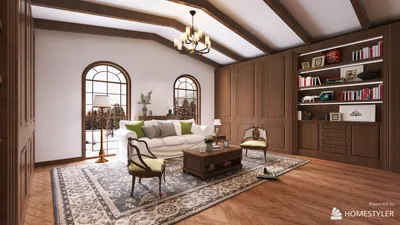


Once, a client requested a 'Jackson Pollock wake-up call' for their compact studio, wanting a vibrant paint splatter effect while also needing organized storage and a serene sleeping area. I confess I felt a wave of panic, but then I was reminded that limitations often yield the most creative ideas. In fact, I often utilize small space layout tips to integrate bold designs with furniture choices and overall flow using tools like Homestyler.
1. Statement Splatter Wall: A canvas with a powerful impact
Select a single wall and design it as a mural: controlled splashes, layered tones, and a defined frame can keep the energy concentrated without overwhelming the entire room. This approach is cost-effective as you only paint one area, and it’s easy to change if your tastes evolve — just remember that preparation and masking require patience.
save pin
2. Furniture-Centric Splattering: Paint the backdrop for key pieces
Rather than splattering the whole room, consider painting behind a sofa, headboard, or console. This creates distinct zones, stabilizes furniture, and conceals scuffs. Just remember to shield the upholstery and test out your patterns at eye level before finalizing your design.
save pin
3. Interchangeable Panels: Swappable splatter art
Utilize removable MDF panels or framed canvases for your splatter art, allowing you to change the look periodically or take them along when you move. This method offers both versatility and minimizes commitment, plus you can visualize the splatter arrangements prior to painting — just be mindful of ensuring clean edges and preventing warping in humid environments.
save pin
4. Dramatic Ceiling Splash: Add unexpected flair overhead
Ceilings are often overlooked, making them ideal for an engaging splatter that can be appreciated from below. This brightens smaller spaces and draws attention upwards, but it can also be a tricky method — consider hiring professionals or using spray techniques to dodge neck strain disasters.
save pin
5. Child-Friendly Play Area: Embrace the mess as a feature
Transform a corner into a washable splatter zone using low-VOC, washable paints and durable flooring. This results in a playful and resilient feature — stains blend into the design — however, frequent use of cleaning products might influence paint longevity, so choose your finishes with care.
save pin
Essential practical tips and budget-friendly notes
Limit your color palette (to 2-3 hues) to avoid visual disarray, and test color patches under different lighting throughout the day. Utilize affordable drop cloths and rollers for the base layers and save splattering for accent touches. For those working with tighter budgets, framed panels or removable wallpaper splatter prints can achieve a similar aesthetic at a much lower price point.
save pin
Frequently asked questions
Q1: What exactly are paint splatter rooms?
A: They are spaces that employ splatter or drip painting techniques as a decorative method, often as an accent wall, ceiling, or art panels, infusing energy and texture into the environment.
Q2: How can I locate paint splatter rooms near my area?
A: Explore local design showrooms, art collectives, or community paint studios. Additionally, check social media platforms with location tags. Visiting nearby portfolio pages and case galleries will give insights into professionals utilizing splatter techniques.
Q3: Are paint splatter finishes suitable for compact spaces?
A: Yes, provided you use low-VOC or water-based paints while ensuring good ventilation during the application process. Appropriate sealing and finishes can help mitigate long-lasting odors or off-gassing.
Q4: How much should I budget for a paint splatter accent?
A: Costs can vary significantly — DIY panels might cost less than $100, while professional mural-like splatter applications can start in the low hundreds, depending on the complexity and preparation needed.
Q5: Which types of paint should I opt for?
A: Opt for water-based, low-VOC acrylic or latex paints for interior use, as they are easier to clean up and have lower fume emissions. For areas that get a lot of traffic, select paints that have durability ratings.
Q6: What’s the best way to protect my furniture and flooring?
A: Generously mask with painter’s tape, lay down heavy-duty drop cloths, and either move or cover your furniture. You might also consider breaking the task into phases, applying the base coat first and then the splatter to reduce accidental marks.
Q7: Are there any environmental or health issues to be aware of?
A: Indeed — volatile organic compounds (VOCs) found in some paints can impact indoor air quality. For further information regarding VOCs and safe painting protocols, refer to the U.S. EPA’s resources related to indoor air and VOCs.
Q8: Can I visualize my designs before committing to paint?
A: Certainly — mockups, on-wall test patches, or digital previews can assist in determining color harmony and scale. If you’re looking for realistic depictions, I often utilize tools that generate detailed mockups, allowing clients to envisage the outcome before the first brushstroke is made.
save pin
Homestyler is an outstanding online home design platform that empowers you to create your dream space effortlessly. Utilize its user-friendly design tool, stunning 3D renderings, and a wealth of design projects and video tutorials to inspire and guide your home transformation journey.
Design Now for FREE
































