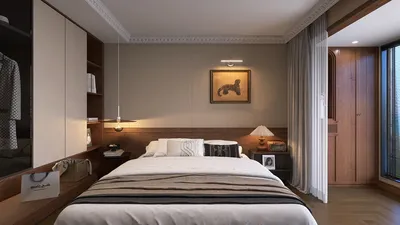


I once had a client who wanted a "rustic magazine wall" and brought OSB samples instead of reclaimed wood planks. To my surprise, we both fell in love with the unexpected texture. In moments like these, I often utilize room mockups to evaluate scale and color prior to making any final decisions. Indeed, small spaces can serve as the perfect canvas for bold design choices: OSB walls are cost-effective, tactile, and surprisingly versatile.
In this article, I will outline five practical ideas I've implemented in compact apartments and cramped kitchens, explaining why they are effective, key considerations to note, and some quick tips on budget and finishes to achieve the desired look.
1. Dramatic accent – full-height color block
Select a single vibrant color and cover an OSB panel wall from floor to ceiling as a bold accent. The flecked texture of the board mitigates the flatness of the saturated paint, giving the appearance of artisanal plaster at a fraction of the price. This option is perfect when seeking dramatic flair without extensive renovations.
Benefit: significant visual impact at a low cost. Challenge: edges require a strong sealant and a quality primer to prevent uneven absorption throughout the panel.
save pin
2. Brightening tiny rooms with whitewashed OSB
Dilute white latex paint and apply it in long, sweeping strokes to allow the wood grain to show through. In a studio I worked on, this technique instantly made the space appear larger and cozier—like providing the walls with a breath of fresh air. It’s favorable even for those who may not be professional painters.
Advantages: enhances light reflection and conceals minor flaws; Disadvantages: may need touch-ups in high-traffic areas. Tip: opt for a satin finish to find a balance between washability and soft reflection.
save pin
3. Injecting personality with graphic patterns and stencils
Utilize painter's tape or stencils to form stripes, grids, or organic designs across OSB panels. Once, I merged a muted teal with natural OSB strips to create a modern yet warm pseudo-wood slat wall. This method is fantastic for creating focal points in compact living rooms or behind beds.
It’s a playful and custom solution, though achieving alignment can be demanding. For small kitchen nooks, I frequently outline patterns against appliances to ensure harmonious visual flow during layouts.
save pin
4. Using protective clear coats and textured finishes
OSB can be treated with a matte polycrylic finish, or for a richer appearance, apply an oil finish followed by a clear polyurethane. This way, the tactile texture of OSB becomes both durable and appealing—ideal for areas like entryways or behind desks where scuffs may occur.
Advantages: elevates material quality and promotes durability. Disadvantage: the sealing process may darken the board; always test on a scrap piece and allow ample time for curing.
save pin
5. Practical painted OSB – creating storage and adaptable panels
Transform OSB into magnetic boards, pegboards, or modular panels that can be easily swapped out. In a small studio design, I turned painted OSB into a visual backdrop and a tool wall for pots and pans—an efficient and charming solution. Be sure to use a moisture-resistant primer if the surface is near water sources.
It’s both functional and fun; however, ensure that edges and joints have additional sealing to avoid swelling. To visualize dimensions in the overall space, I often utilize 3D software and assess flow with straightforward 3D layouts.
save pin
FAQ
Q1: Can OSB be painted directly?
A1: It is advisable to prime OSB before painting, as raw OSB can absorb paint unevenly. A shellac- or oil-based primer is best for sealing the surface and minimizing blotchiness.
Q2: What is the best primer for painting OSB walls?
A2: Use a high-build primer or acrylic latex primer formulated for engineered wood; these will level the absorption and create an even foundation for the topcoats.
Q3: Is painted OSB suitable for kitchen use?
A3: Absolutely, provided it is properly sealed with a durable clear coat and shielded from direct moisture. Avoid using painted OSB in wet splash areas unless waterproof finishes are applied.
Q4: Can OSB be installed in bathrooms?
A4: Generally, untreated OSB should be avoided in high-humidity bathrooms. If necessary, opt for moisture-resistant panels along with multiple coats of waterproof sealant and ensure good ventilation to minimize swelling risk.
Q5: What can I do to achieve a smooth finish on OSB?
A5: Lightly sand to remove raised flakes, apply a pigmented primer to even out the color, then top coat with two thin layers of paint, sanding between each application for a smoother result.
Q6: Are painted OSB walls environmentally friendly?
A6: OSB utilizes smaller wood strands and can be a more efficient use of timber compared to solid planks. For green building guidance regarding engineered wood products, refer to the APA – The Engineered Wood Association (https://www.apawood.org).
Q7: Do you have any budget tips for DIY painted OSB walls?
A7: Purchase OSB in standard panel sizes and strategize your layout to reduce cuts; test finishes on offcuts and use sample paint sizes for trials before committing to full cans.
Q8: How long can painted OSB be expected to last indoors?
A8: With proper priming and sealing, painted OSB walls can endure for many years inside. The longevity is influenced by the quality of the finish and exposure to moisture or wear.
save pin
Homestyler is your go-to online home design platform! With its user-friendly design tool, stunning 3D renderings, and a wealth of DIY video tutorials, you can effortlessly create and visualize your dream spaces. Perfect for both beginners and seasoned designers alike!
Progetta ora GRATIS
































