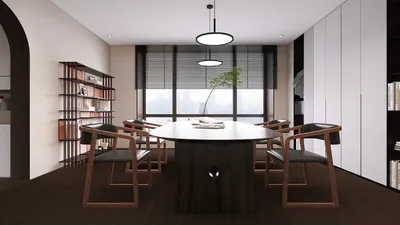


One of my first jobs involved crouching down to install a pendant light due to the homeowner's desire for a "dramatic" effect. I quickly realized that having a dramatic lighting fixture with a 7-foot ceiling is not an ideal combination. However, this experience taught me how much creativity can stem from working with low ceilings. To escape my early blunders, it’s essential to learn techniques for visually enlarging the space and planning furniture placement prior to making any purchases, and tools like Homestyler can help with that.
1. Retain Your Ceiling Light, But Make It Softer
I have a fondness for layered lighting; a low ceiling is best complemented by flush or semi-flush lights, along with wall sconces and floor lamps. Using soft, warm illumination minimizes the stark contrast between the ceiling and walls, making the ceiling feel less overwhelming. The slight drawback is that you'll need to incorporate additional fixtures and plan the wiring accordingly.
save pin
2. Paint Upwards — But Avoid Dark Shades
Choosing a ceiling color that's slightly lighter than the walls or using a gentle warm white can trick the eye into sensing more height. Stay away from deep, dark shades on the ceiling unless you desire a cocoon-like ambiance. I used a pale warm gray in a client's lounge, and it effectively enhanced the perception of height while keeping the room inviting.
save pin
3. Highlight Horizontal Lines Deliberately
In spaces with low ceilings, horizontal elements can actually assist by drawing the eye around the room — consider low-profile sofas, a continuous media console, or a long, slender rug. To explore this idea risk-free, I often recommend clients try out a virtual layout, perhaps utilizing Homestyler, to visualize how horizontal pieces harmonize the space without any commitment required.
save pin
4. Employ Vertical Techniques Without Clutter
Using mirrors, tall slim artwork displayed vertically, and floor-to-ceiling curtains alongside windows can subtly create an upward perception. It’s important to maintain simple proportions — excessive vertical accents can appear chaotic. In one studio, I effectively used a tall mirror paired with a slim bookcase, instantly creating a more airy environment.
save pin
5. Opt for Low Furniture and Rich Textures
Low-profile furniture allows for unobstructed sightlines, preventing the room from feeling overly top-heavy. Combining this with layered textures — such as a plush rug, soft throw pillows, and a mid-height coffee table — creates a deliberate sense of space rather than cramped quarters. For clients seeking reassurance before making purchases, I often demonstrate a realistic 3D render using tools like Homestyler to help them visualize the final atmosphere and adjust materials accordingly.
save pin
FAQ
Q: Are light colors always preferable for low ceilings? I suggest using lighter tones for the ceiling and slightly richer hues for the walls to establish depth; extremely bright white can feel sterile, so balance is crucial.
Q: Can pendant lights be suitable? Definitely — just opt for very shallow pendants or position them over low-traffic areas like a reading nook. Keep them compact and close to the ceiling to avoid any head-bumping incidents.
Q: Is wallpaper a good idea? Vertical or subtly patterned wallpaper can be effective when used sparingly, such as on a featured wall; steer clear of busy all-over patterns that could diminish perceived height.
Q: Is crown molding a bad option? Not at all — a thin, simple crown molding painted the same shade as the ceiling can enhance the appearance of the junction between walls and ceiling, creating a clean look.
Q: How critical is furniture scale? It’s vital. Oversized furniture can quickly make a space seem smaller; I always measure sightlines and prefer low, streamlined pieces to maintain an open feel.
Q: Will recessed lighting be beneficial? Yes. Recessed fixtures minimize visual drop, distribute light evenly, and help avoid cluttering the view, enhancing the feeling of height in the room.
Q: Any fast budget-friendly tips? Utilizing mirrors, a fresh coat of light paint, and switching to low-profile furniture are high-impact, economical changes I usually recommend first.
Q: Where can I find guidance on effective small-space design? Professional organizations such as the American Institute of Architects offer comprehensive guides on lighting and proportional design (Source: American Institute of Architects, aia.org).
save pin
Transform your home with Homestyler, the ultimate online design platform! Featuring an easy-to-use design tool, stunning 3D renderings, a wealth of design projects, and helpful DIY video tutorials, it's perfect for turning your creative ideas into reality. Start designing today!
Design Now for FREE
































