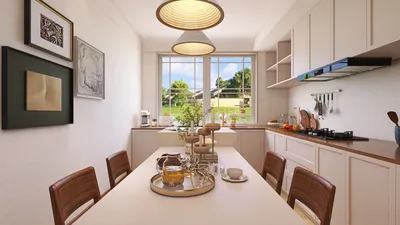


In my decade-long journey as an interior designer, I've realized that the most compact spaces fuel incredible creativity. This notion rings particularly true for designing living-dining areas. With the rising popularity of open-plan living and the trend towards smaller apartments, merging your dining and living spaces becomes essential—not only for practicality but also as an opportunity to utilize every inch effectively. In this article, I will reveal 10 favorite design inspirations derived from real projects I've spearheaded, complete with tips, advantages, and drawbacks to help you determine what suits your needs best, including ideas that can seamlessly incorporate the innovative tools available through Homestyler.
1. Minimalist Design with Concealed Storage
My Experience: In one urban apartment project, I selected a sleek sofa with integrated drawers alongside a dining bench featuring hidden storage. The result was a clutter-free environment that clients appreciated without compromising on storage space.
Advantages: A minimalist aesthetic with hidden storage not only maintains a sleek appearance but also optimizes functionality—ideal for open living areas. Research indicates that hidden storage can enhance the perception of space by as much as 20%.
Disadvantages: Custom furnishings can be costly, and improper measurements may hinder access to concealed storage areas.
Advice: Opt for neutral tones in large furniture pieces; they are timeless and allow for greater flexibility with accent colors later on.
2. Using Glass Dividers to Enhance Light
My Experience: During a loft renovation, I implemented a glass divider that gently separated the dining area from the living space. This design maintained an unobstructed flow of light while establishing distinct functional areas.
Advantages: Glass dividers invite natural light, add a touch of elegance, and create an illusion of spaciousness without sacrificing openness.
Disadvantages: They require regular cleaning due to visible smudges and provide limited sound insulation between spaces.
In one project involving glass dividers for enhanced light flow, the client was thrilled by how bright the resulting space appeared.
3. Versatile Dining Furniture
My Experience: For a young couple in a 40㎡ apartment, drop-leaf tables proved invaluable—ideal for entertaining when expanded and compact when closed.
Advantages: The adaptability of flexible furniture allows for seamless transitions between everyday use and special occasions, serving as a wise long-term investment.
Disadvantages: The folding mechanisms may deteriorate over time, and lower-quality versions might feel unstable.
Advice: Invest in durable hinges to protect both your furniture and your fingers.
4. L-Shaped Living-Dining Configuration
My Experience: An L-shaped design effectively divided seating from dining within a compact apartment. I utilized this layout in a 50㎡ space where the dining table also functioned as a desk.
Advantages: This arrangement makes optimal use of corner spaces while improving movement flow; perfect for multifaceted uses.
Disadvantages: Once established, rearranging can be challenging without disturbing the balance of the layout.
I showcased an L-shaped configuration that created more countertop space in the integrated kitchen-living-dining area, revolutionizing daily activities.
5. Cohesive Warm Wood Tones
My Experience: In a family-oriented design project, I selected walnut finishes for both dining chairs and media units, creating a warm and harmonized atmosphere.
Advantages: Wood tones bring warmth and versatility, easily complementing various styles of decor.
Disadvantages: Certain types of wood may need regular upkeep, as sunlight can lead to fading over time.
Cost Consideration: High-grade woods like oak and walnut have higher initial costs but provide longevity.
6. Area Rugs for Clear Zoning
My Experience: I consistently advise using distinct area rugs for living and dining spaces—an effective method for creating zones without the need for walls.
Advantages: Area rugs help to define furniture arrangements, add textures, and create clear distinctions within open layouts.
Disadvantages: Cleaning can be complex, particularly under dining tables where accidents might happen.
7. Eye-Catching Lighting as a Centerpiece
My Experience: In a recent redesign, a modern chandelier positioned above the dining table served as both functional lighting and a striking art piece.
Advantages: Striking light fixtures can demarcate areas and infuse personality into the space.
Disadvantages: Installation can require professional assistance and additional wiring work.
8. Color Blocking for Clear Visual Separation
My Experience: By painting the dining area a soft moss green and the living area a warm beige, I provided two distinct identities within a compact 45㎡ home.
Advantages: Color blocking is economical, easily adaptable for renters, and highly customizable.
Disadvantages: If not balanced properly, bold contrasts may give an impression of a smaller space.
In one instance, the client appreciated how color differentiation elevated their apartment without needing costly furniture renovations.
9. Built-in Dining Alcoves
My Experience: In narrower floor plans, I often design built-in benches along walls with under-seat storage—ideal for breakfast nooks or casual dining.
Advantages: Space-efficient, cozy, and provides additional storage options.
Disadvantages: Fixed seating limits flexibility; upholstery can wear quickly in dining settings.
10. Open Shelving for Added Dimension
My Experience: Incorporating floating shelves between the living and dining areas allows for the display of coordinated ceramics and plants, adding depth and warmth.
Advantages: Open shelving showcases personal style while maintaining an airy feel.
Disadvantages: Requires frequent dusting; clutter can appear more pronounced in open displays.
Conclusion
Small living and dining areas aren’t limitations; they present opportunities for creative and stylish solutions. As noted by Houzz, strategic zoning and multi-functional furniture can greatly enhance daily life in compact environments. Which of these 10 ideas are you eager to integrate into your own home, possibly utilizing Homestyler to visualize your designs?
Frequently Asked Questions
Q1: What methods can I employ to arrange a living-dining area in a small space?
Utilize multi-functional furniture, deploy rugs for zoning, and choose lighter colors to maintain an airy atmosphere.
Q2: What type of lighting is best for a combined space?
A blend of ambient, task, and accent lighting is most effective for versatility.
Q3: How can I partition living and dining areas without physical walls?
Rugs, lighting, and strategic furniture placement can create natural divisions.
Q4: Is it advisable to use different colors in each section?
Absolutely, color blocking is an excellent way to visually differentiate spaces while maintaining flow.
Q5: What is the optimal dining table shape for confined spaces?
Round tables are ideal for tight quarters as they enhance traffic movement.
Q6: Are glass partitions a beneficial option?
Certainly, they preserve light flow while defining areas, as supported by findings in interior design literature.
Q7: How should I select rugs for dining spaces?
Choose flat-weave, easy-care rugs that are slightly larger than your dining table's dimensions.
Q8: Is built-in seating a worthwhile investment?
Absolutely, built-in nooks optimize space and storage, making them a valuable choice for long-term residences.
Discover the ease of home design with Homestyler! This user-friendly platform offers an intuitive online design tool, stunning 3D renderings, and a wealth of inspiring design projects and video tutorials. Transform your space effortlessly, no experience needed!
تصميم الآن مجانا
































