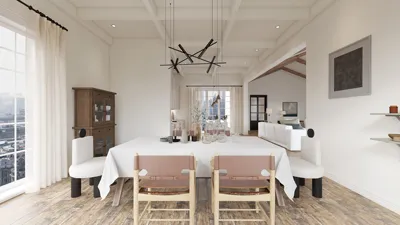


I once had the opportunity to install a glass dining table in a charming Parisian flat. The client was adamant that the floor design needed to "show through" while ensuring the table looked appealing both during the day and at night. This experience highlighted a crucial lesson: glass can transform small areas into remarkable spaces if approached with creativity, much like a stage director would. For those interested in visualizing how furniture placement and lighting will interact, utilizing an instant 3D mockup can be a game-changer before making a purchase. Try using Homestyler for this purpose.
1. Opt for a minimalist pedestal base — let the glass top take center stage
I have a preference for a single pedestal base, as it highlights the glass top and maximizes legroom. This design fits beautifully in narrow spaces or mid-century inspired interiors. Ensure the base is sturdy, as cheaper options may wobble when paired with thinner glass; remember, quality matters.
Tip: For durability, consider using 10–12mm tempered glass and combine it with a textured rug to bring warmth and prevent the table from appearing too "cold."
save pin
2. Combine materials — soften glass with wood or brass accents
Glass looks stunning when combined with warm wooden elements or brass accents, avoiding a cold or clinical atmosphere. For a family looking for elegance without the formality, I once paired a clear glass top with a reclaimed oak trestle — while fingerprints were a minor trade-off, the aesthetic result was fantastic.
Budget note: Mixing materials can increase costs somewhat, but you can save by choosing a simpler glass cut and investing in a standout base.
save pin
3. Choose round glass tables for compact spaces — promoting flow and conversation
Round glass tables help to mitigate sharp corners and enhance movement within tighter layouts, also fostering a cozier conversation setting. If in doubt about the size, sketching a floor plan can clarify how chairs and movement paths will function before making a final decision.
Challenge: Ensure chairs maintain consistent clearance; using cardboard cutouts for testing can prevent unwanted returns.
save pin
4. Consider frosted or tinted glass — adding privacy and ambiance
Frosted or tinted glass minimizes glare, better conceals smudges, and enhances mood. I opted for smoked glass in a loft dining area where the table also served as a casual workspace; it concealed coffee rings and provided a more grown-up feel compared to crystal clear options.
Note: Tinted glass may slightly darken the space, so it's wise to pair it with a reflective pendant light or opt for a lighter wall color.
save pin
5. Glass with built-in storage — balancing practicality with elegance
In spaces where storage is limited, a glass top over a low shelf or slim drawer unit is effective in keeping clutter hidden while maintaining an open visual feel. It’s advisable to use shallow storage solutions to avoid the table becoming a makeshift buffet — this is often recommended for small apartments needing a multifunctional dining surface. The neat appearance is a plus, but be cautious of the weight limits on integrated units.
If you’re aligning the overall layout with your kitchen or living area, using tools like Homestyler to enhance kitchen workflow can prevent future headaches.
save pin
FAQ
Q1: Is a glass dining table durable enough for regular family use?
I generally advise opting for at least 10mm tempered glass for everyday use; this type is significantly sturdier and shatters into small granular pieces rather than sharp shards, improving safety.
Q2: How do I minimize fingerprints and smudges on glass?
Using microfiber cloths along with a gentle glass cleaner yields the best results; applying a light silicone-free polish can also help minimize smudging. Regular quick wipes are much easier than doing deep cleans weekly.
Q3: What shapes are ideal for small dining areas?
For compact spaces, I tend to recommend round or oval tops since they facilitate better circulation and adapt to awkward corners more gracefully than rectangular shapes.
Q4: Can I place hot items directly on a glass table?
Tempered glass is more heat-resistant than standard glass, yet I still suggest using trivets to avoid thermal shock and to protect any finishes around the rim.
Q5: How do I select a stable base for my table?
Heavier bases with wide footprints or those designed for balanced weight distribution are the safest. Always check the manufacturer’s weight ratings and ensure it feels stable with chairs pushed around the table.
Q6: Are tinted or frosted glass options more difficult to maintain?
They are better at masking smudges but may show water marks; clean them with the same gentle glass cleaners, drying immediately to prevent streaking.
Q7: What lighting styles best complement a glass dining table?
Suspended pendant lights or linear lighting above the table can create striking reflections and help define the dining area — dimmable fixtures can allow for mood adjustments while controlling glare.
Q8: Where can I discover expert insights and resources on glass furniture design?
For curated ideas and expert analyses, Architectural Digest offers excellent design critiques and trend reports (check out ArchitecturalDigest.com), which I frequently consult to remain up to date.
save pin
Homestyler is an outstanding online home design platform that empowers you to unleash your creativity. With its user-friendly design tool, stunning 3D renderings, and a wealth of DIY video tutorials, you can effortlessly transform your ideas into reality. Perfect for any home project!
立即免费设计
































