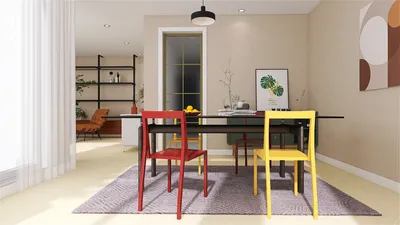


Having designed numerous living rooms over the past ten years, I've observed the rising trend of personalization and warmth in interior design. Particularly in compact spaces, creativity can shine through while celebrating cherished memories. Today, I’m delighted to present 10 ideas for incorporating family photos into your living room, blending my design expertise with professional advice, so you can infuse your space with heart and character — all while utilizing tools like Homestyler for your planning.
1. Minimalist Grid Arrangement
My Experience: I once assisted a client in a small apartment to create a visually appealing 3x3 grid of black-and-white family portraits. The simplicity of the design made the room feel more expansive while still adding a personal element.
Benefits: This layout is ideal for small living rooms, offering a sense of visual balance while neatly showcasing multiple family images.
Drawbacks: The uniformity may come off as overly rigid, causing unique personal touches to be overshadowed by the symmetry.
Pro Tip: To maintain visual cohesion, use matching frames, but feel free to vary the photo content to express personality.
2. Gallery Wall with Mixed Frames
My Experience: I enjoy combining vintage wooden frames with modern metal ones; once, I created this display for a family that spanned three generations, reflecting their rich, layered history.
Benefits: This approach injects texture and depth into your design; you can combine art, travel pictures, and candid snaps for an intriguing mix.
Drawbacks: If not carefully arranged, the look can become visually cluttered, undermining the overall impact.
Utilizing a gallery layout tool such as Homestyler can help you strategize spacing before making any commitments and damaging your walls.
3. Floating Shelves Display
My Experience: In my own residence, I opted for slim floating shelves to display frames alongside small decorative items — it allows for simple updates as new memories are made.
Benefits: This setup is adaptable and ideal for renters, especially those who relish redoing displays.
Drawbacks: It requires regular dusting, and can appear messy when overcrowded with too many small items.
4. Oversized Canvas Print
My Experience: For a modern apartment renovation, I utilized a single, large family photo printed on a canvas 1.5 meters wide — it immediately drew attention as the room’s centerpiece.
Benefits: This makes a striking statement; it works effectively in minimalist designs where fewer elements deliver a more potent impact.
Drawbacks: This option isn't for those looking to showcase multiple memories at once.
5. Picture Ledge Above the Sofa
My Experience: In one narrow living room project, I employed a ledge above the couch to save floor space and create a flowing visual line.
Benefits: This approach saves space and allows for easy rearrangements without creating new holes in the wall.
Drawbacks: You might be limited in frame size due to ceiling height and couch location constraints.
Experimenting with wall height through a design tool like Homestyler can help you determine optimal ledge positioning.
6. Themed Seasonal Photo Swaps
My Experience: For clients who enjoy seasonal updates, I recommend rotating frames with seasonal pictures — think of cozy winter gatherings or bright summer outings.
Benefits: This keeps your living room feeling vibrant and new throughout the year.
Drawbacks: You'll need to find storage for off-season photos.
7. Mix of Photo Sizes
My Experience: Recently, I paired large prints with small polaroids on a single wall, creating a dynamic storytelling experience.
Benefits: This strategy provides visual interest and movement to your wall display.
Drawbacks: It can be more challenging to plan and arrange without first creating a mock-up.
8. Black-and-White Series
My Experience: There's a timeless quality to black-and-white photography — it minimizes distractions and enhances emotional impact.
Benefits: This style can complement almost any color scheme and gives a sophisticated, cohesive appeal.
Drawbacks: It may not capture the vibrancy of colorful memories.
I've even employed monochrome styles in kitchen art to achieve a consistent aesthetic across different spaces.
9. Photo Collage Clock
My Experience: For playful families, incorporating photos into a working clock provides a daily reminder of shared moments.
Benefits: This dual-purpose item adds both function and interest; it’s also a standout conversation starter.
Drawbacks: The space for photos is limited, and it requires careful assembly to achieve the best look.
10. Digital Photo Frame Rotation
My Experience: In a recent family room overhaul, I introduced a large digital frame so my clients could enjoy hundreds of images without the clutter.
Benefits: This constantly updating display saves wall space and keeps the visuals fresh.
Drawbacks: It needs a power source, and some models might have lower resolution.
Summary
Small living rooms should not be seen as a limitation; instead, they encourage smarter, more imaginative design solutions. Whether choosing a bold oversized canvas or opting for the versatility of floating shelves, these 10 family photo ideas can beautifully narrate your story. According to the American Society of Interior Designers, adding personal touches is essential for making a space feel like home. Which idea are you excited to implement first with the help of Homestyler?
FAQ
1. What are the best layouts for displaying family pictures in a small living room?
Using grids, ledges, or vertical arrangements will maximize your space while ensuring visual harmony.
2. How do I select the right frame colors?
Choose frames that complement your furniture tones or opt for black-and-white for versatility.
3. Should family photos be hung at eye level?
Yes, ideally, the center of the photo should be around average eye level (approximately 57 inches from the ground) according to museum standards.
4. Is it possible to mix family photos with other artwork?
Absolutely — combining personal photos with art enriches depth and character. Just be mindful of maintaining balance in size and color.
5. How can I showcase many family pictures without creating clutter?
Consider using digital frames or thematic rotations to keep your display looking fresh without overcrowding the wall.
6. Do professional designers prefer black-and-white or color photos?
It depends on your design palette. Architectural Digest suggests monochrome is more suitable for minimalist interiors.
7. What is the average cost of printing an oversized canvas?
Costs vary between $50 and $200 based on size and materials; look for seasonal discounts from online services.
8. Can floating shelves support larger frames?
Yes, as long as the shelf is weight-rated accordingly. You can test placements using a 3D mockup tool like Homestyler before installation.
Looking to transform your space? Homestyler is your go-to online home design platform! With its easy-to-use design tool, stunning 3D renderings, and a wealth of inspiring design projects and video tutorials, you can effortlessly create the home of your dreams. Start designing today!
지금 무료로 디자인하세요
































