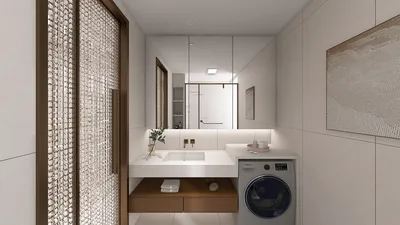


I once worked with a client who was adamant about placing the washing machine directly next to the front door to create a welcoming vibe for guests. While I found this amusing, it led to the creation of an elegant hidden washer nook, proving that unconventional ideas can inspire the best designs. To facilitate better planning, I often encourage clients to visualize their layout with tools like Homestyler before finalizing plumbing or walls.
1. Concealed vertical laundry closet by the entrance
Using stacked washer and dryer units hidden behind bi-fold or pocket doors can maximize floor space while maintaining a clean look. Adding an upper shelf for detergents along with a slender vented cabinet for shoes can help keep things tidy. However, keep in mind that this layout may feel cramped when loading larger items.
save pin
2. Drop-off zone paired with a folding area
Create a shallow countertop above the washer, complemented by hooks and cubbies for keys and jackets. This setup is ideal for families since it allows you to sort mail and fold socks in one location. However, this may slightly reduce vertical storage, so consider adding open shelves higher up to maintain an airy feel.
save pin
3. Slim utility wall with sliding panels
If space is limited to just 2–3 feet, consider designing a recessed utility wall with a sliding panel that effortlessly tucks away when not in use. I often visualize these spaces as narrow pantries that accommodate a slim sink, vacuum, and folding boards. To ensure precision, I suggest drafting a detailed floor plan first to verify appliance clearances and door swings. Remember, coordinating plumbing and electrical work in tight spaces may slightly increase costs.
save pin
4. Bench featuring hidden hampers and shoe storage
A built-in bench near the entry serves as a tidy staging area for laundry. Lifting the lids reveals separate hampers for lights and darks below, while cubbies beneath hold shoes. I created this for a client who appreciated the organized appearance, affectionately dubbing it her "laundry bench of serenity." It's both cozy and functional, though custom carpentry can be a moderate investment.
save pin
5. Noise management with multifunctional barriers
When your entry is adjacent to living areas, prioritize soundproofing the wall containing the washer and consider installing a shallow partition outfitted with hooks, a mail slot, and a compact appliance alcove. You could even adopt workflow strategies typically used in kitchens to enhance your laundry process, such as the sequence of drop, wash, dry, and fold. Ensure proper ventilation and access for maintenance—these factors can easily be overlooked in quick renovations.
save pin
FAQ
Q1: Is there room for a washer and dryer in a narrow entryway? A1: Absolutely! Stacked or compact units are ideal for limited spaces; just measure dimensions, door swings, and ventilation requirements before purchasing.
Q2: Is it safe to place a washer next to the front door? A2: Yes, as long as the water connections are secure, a drip pan is in place, and shut-off valves are accessible, it is safe to position a washer in the entry; just make sure plumbing is easily reachable for any leaks.
Q3: How can I soundproof an entryway laundry area? A3: To minimize noise, consider using resilient channels, acoustic insulation in the shared wall, and a solid-core door or heavy-duty sliding system for a quieter home experience.
Q4: What kind of ventilation does an entryway dryer require? A4: Vented dryers necessitate a short, direct vent to the outside; if that's not feasible, think about using a condenser or heat-pump dryer instead.
Q5: Any economical storage suggestions? A5: Utilize stock cubbies, removable hampers, and adhesive hooks; painting the same color as the wall can visually minimize clutter without significant expense.
Q6: Is it possible to add a sink in a small entry laundry? A6: A shallow utility sink or a washer-sink combination can fit well in tight locations, but always check local regulations regarding plumbing.
Q7: How do I prevent musty odors in an entry laundry area? A7: Keep the washer door slightly ajar post-cycles, use moisture-resistant materials, and ensure good airflow. Following ENERGY STAR guidelines for efficient machines and routine maintenance is also recommended (https://www.energystar.gov/).
Q8: Should I hire a professional for plumbing relocation? A8: When moving water lines or vents, I advise enlisting a licensed plumber and electrician to avoid the risks of leaks and code infractions associated with DIY fixes.
Homestyler is your go-to platform for effortless home design! Its user-friendly online design tool, stunning 3D renderings, and a wealth of DIY video tutorials empower you to create and visualize your dream spaces with ease. Transform your home design journey today!
立即免费设计
































