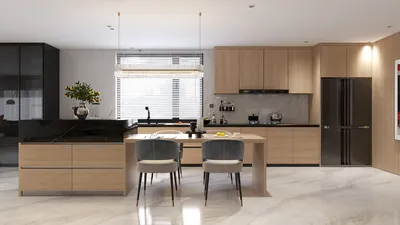


A while ago, a client inquired if we could simply position a dining table right in front of the TV to maximize space. While I chuckled at the idea, I recognized that their suggestion wasn't entirely off-base—compact living areas indeed require daring solutions. Throughout my experience, I have discovered that merging dining and living spaces often ignites more creative interior design possibilities than having them divided. Today, I want to present ten stimulating ideas that I have either implemented or witnessed achieving remarkable results, featuring the Homestyler design tool that can assist in visualizing these concepts.
1. Implement an open shelving divider
A tall open shelf can serve as a subtle barrier between your dining area and the sofa while ensuring light permeates the space. I applied this strategy in an urban apartment, and the inhabitants appreciated its dual functionality for storing cookbooks and greenery.
2. Align the dining table with the back of the sofa
I recommend positioning a slender dining table directly behind the sofa, allowing the sofa to function as both seating and a visual separator. This configuration proves particularly effective if you utilize a room planner like Homestyler to accurately gauge dimensions in advance.
3. Adopt a cohesive color scheme
Excessive colors in a shared area can create a sense of disorder. I usually opt for a primary hue accompanied by two accent colors, which elegantly links both spaces without making them appear monotonously similar.
4. Choose a round dining table
Round tables effortlessly ease the transition between zones and facilitate movement. I find that they instantly make smaller apartments feel airier and more welcoming.
5. Layer rugs for distinct zoning
Positioning one rug under the sofa and another beneath the dining table effectively delineates each area. The exciting part is that you can experiment with contrasting textures to inject additional character.
6. Utilize pendant lighting to mark zones
One of my preferred strategies involves hanging a striking pendant light above the dining table, complemented by softer lamps in the living section. Using Homestyler to explore layouts allowed me to see how much more purposeful the space became.
7. Invest in multi-functional furniture
Consider furniture that serves multiple roles, such as a storage bench or a coffee table that can expand into a dining table. These choices are especially valuable for tiny homes where every square inch must be optimized.
8. Experiment with partial walls or screens
At times, a half wall or a folding screen can provide just enough separation to create a cozy atmosphere without confining the space. I have even used lightweight lattice panels to achieve a bohemian flair.
9. Introduce greenery to soften divisions
Plants are my secret weapon for making transitions feel seamless. A tall fiddle-leaf fig placed between the dining and living zones acts as a gentle, organic divider. You can easily visualize plant arrangements using a kitchen layout planner on Homestyler, which, despite its name, is versatile for all areas.
10. Maintain clear pathways
This may seem straightforward, yet I've encountered numerous setups where chairs obstruct the flow to the sofa. Always ensure a minimum of 90cm between furniture pieces for optimal comfort.
FAQ
Q: What can I do to create a balanced dining and living combo?
A: Utilize elements such as rugs, lighting, and a consistent color palette to unify the space while clearly defining separate areas.
Q: Is it feasible to fit both areas within 20sqm?
A: Absolutely, but it will require compact furniture and a meticulously thought-out layout plan.
Looking to transform your home effortlessly? Homestyler is your go-to online design platform! With its user-friendly design tool, stunning 3D renderings, and inspiring DIY video tutorials, you can easily create and visualize your dream spaces. Start designing today!
立即免费设计
































