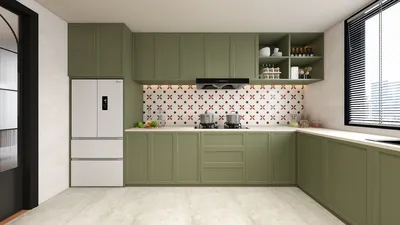


I once worked with a client who was determined to paint their entire compact apartment in a dark green hue, claiming it evoked a forest cabin ambiance. This approach nearly diminished their natural light. However, after presenting several design mockups, I introduced them to a specific room example that skillfully leveraged contrasts and finishes, allowing for a vibrant yet moody atmosphere. This close call taught me a pivotal lesson: small spaces can ignite tremendous creativity.
1. Elegant Accent Wall with Warm Wood Finishes
Combining deep green walls with warm wooden tones creates an inviting, autumn-inspired environment all year round. The richness of dark green adds character, while oak or walnut furniture ensures a cozy and grounded ambiance. However, if the wood is too dark, the space can appear heavy, so opt for medium tones or incorporate brass accents to lighten the overall look.
save pin
2. Two-Tone Half-Painted Design
Consider painting the lower section of your walls dark green and the upper section a soft neutral. This strategy creates drama while opening up the room. I once applied this technique in a narrow hallway; it visually shortened the wall height but lent a curated and intentional feel to the passage. It’s also budget-friendly as it covers less area with the premium color; just ensure proper transitions by using a chair rail or slim molding, especially if your walls are not perfectly straight.
save pin
3. Dark Green Ceilings for a Cozy Atmosphere
Applying dark green paint to the ceiling can completely transform a space, creating a cocoon-like, intimate vibe that is perfect for bedrooms and dining areas. I tested this approach in a small kitchen and found the result surprisingly elegant; the kitchen case study demonstrated how ceiling color can shift perceptions. Remember to plan for varied lighting options and reflective surfaces to prevent the area from feeling oppressive.
save pin
4. Green Canvas for a Gallery Wall
Using dark green as a backdrop makes art truly stand out. As a deep, almost neutral background, frames and prints appear richer against it. I’ve curated eclectic gallery walls with mixed frames on dark green backgrounds, achieving a balanced and intentional aesthetic. However, cooler-toned mats might blend in, so it's advisable to test real pieces with the wall color before finalizing your choices.
save pin
5. Color Accents in Nooks, Cabinets, and Closets
Not every surface needs a coat of paint; sometimes, a splash of color inside a bookcase, closet, or reading nook is sufficient. I once designed a small reading alcove featuring deep green on the interior and a neutral exterior, utilizing Homestyler for precise scaling and fabric selection. This method allows you to embrace drama without a significant commitment. Expect a bit more masking work, but the result is a designer-inspired look at a fraction of the cost.
Practical advice: always test full-size color swatches at varying times of day, invest in layered lighting solutions, and combine deep green with at least one warm or reflective material. While dark green works beautifully with textures, it requires careful lighting consideration — diligent planning is essential.
save pin
FAQ
Q1: Is dark green paint suitable for small spaces?
Absolutely — when applied thoughtfully. Dark green can infuse depth and warmth into smaller rooms, but balance it with lighter accents, reflective hardware, and layered lighting to avoid a cramped atmosphere.
Q2: What paint finish is ideal for dark green?
Eggshell or satin finishes work best for walls, as they soften imperfections while reflecting some light. For a moody contemporary vibe, matte finishes are an option, but be prepared for touch-ups to be more noticeable.
Q3: Which colors work well alongside dark green?
Timeless palettes are created with warm woods, soft creams, terracotta, and brass, whereas pale pinks and ochres provide trendy contrast. I recommend testing combinations in the actual room before making a final decision.
Q4: How can I test a dark green paint before committing?
Apply 2–3 large swatches (at least 2x2 feet) on different walls and observe them in morning, noon, and evening light. This will give you a reliable understanding of undertones and how the finish reflects light.
Q5: Will dark green make my room appear smaller?
It might, but it can also create a cozy and intentional atmosphere. Use it strategically (on an accent wall, for the ceiling, or in niches) and incorporate vertical lines or mirrors to maintain a sense of space.
Q6: Do you have maintenance tips for dark-painted walls?
Darker colors tend to show marks more than medium tones, so opt for washable finishes in high-traffic areas and keep a touch-up can readily available. Regular dusting and gentle cleaning will ensure the finish stays fresh.
Q7: Are there safety or light-reflective standards to consider?
Check the Light Reflectance Value (LRV) provided by the paint brand to determine how much light the color will absorb or reflect. Brands like Sherwin-Williams offer detailed technical data for more precise planning (source: Sherwin-Williams technical color data).
Q8: How do I choose the right shade of dark green?
Decide whether you prefer a cooler, blue-tinged green or a warmer, yellow-tinged tone, then test relevant swatches. My guideline: to achieve warmth, pair the green with warm wood and brass; for a modern calm, select cooler greens paired with chrome or black accents.
save pin
Discover the joy of home design with Homestyler! This user-friendly online platform offers a powerful design tool, stunning 3D renderings, and a wealth of design projects and DIY video tutorials. Whether you're a novice or an expert, Homestyler makes it easy to bring your vision to life!
Design jetzt kostenlos
































