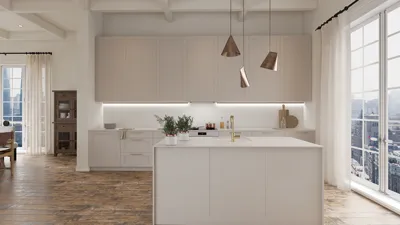


I once made the mistake of installing crown molding upside down on a client's shaker cabinets. Interestingly, the client found the uniqueness appealing, and I learned to always test trim layouts on the floor first. Such minor errors opened my eyes to how small spaces can inspire significant transformations; a full renovation isn’t always necessary to give a kitchen a fresh vibe. For inspiration, I recommend checking out a real kitchen project I frequently reference when considering trim designs, and I'll guide you through five creative ideas for cabinet trim molding that work seamlessly on tight budgets and within short timelines, especially using tools like Homestyler.
1. Simple Crown for Height and Finish
Starting with a simple crown molding is a favorite of mine as it instantly elevates the cabinets and gives a polished look. It’s budget-friendly, complements most door styles, and is quite forgiving, even if your ceiling isn't perfectly straight.
However, keep in mind that it can gather dust and add some height, making it less suitable for spaces with very low ceilings. Pro tip: paint the crown the same color as the cabinet fronts for a cohesive and upscale appearance without incurring additional material costs.
save pin
2. Toe Kick Trim with a Shadow Line
Incorporating a decorative toe kick or a recessed shadow line creates an illusion of floating base cabinets while adding a boutique feel that mimics custom furniture. I implemented this technique in a galley kitchen, which made the kitchen feel airier without altering the layout.
The challenge lies in achieving precise cuts, and installers must account for kickboard gaps. However, this subtle enhancement effectively conceals spills while providing a built-in aesthetic.
save pin
3. Framed Inset Trim for a Built-In Look
For shaker or slab doors, framing the cabinet face with trim gives a built-in appearance that harmonizes with surrounding millwork. I advise maintaining consistent proportions (around 3/4" to 1" wide) to ensure it is perceived as a well-planned detail rather than an afterthought.
While this option may require extra carpentry and slightly increase costs, the perceived quality is worth it. If you want to present clients with photorealistic choices, use Homestyler to generate striking before-and-after renderings to sell the idea efficiently.
save pin
4. Applied Molding Strips for Pattern and Rhythm
Applied trim strips allow for the creation of horizontal or vertical patterns across flat cabinet doors—imagine farmhouse doors imbued with an Arts-and-Crafts spirit. I have successfully added narrow applied battens on painted cabinets, enhancing texture while staying within budget.
These strips can easily be replaced or painted over later, but alignment is crucial: incorrect spacing can come across as poorly executed DIY. For budget-conscious projects, consider using MDF or poplar strips and remember to prime them before painting for a flawless finish.
save pin
5. Integrated End Panels and Pilasters
If you want your cabinets to resemble furniture, incorporate trimmed end panels or pilasters at the ends. I once transformed an awkward fridge end into a faux built-in column with simple trim and crown; instantly, the kitchen felt more intentional. For modern clients interested in technology, I also experiment with AI-assisted layouts in Homestyler to visualize scale before finalizing custom trim decisions.
These enhancements elevate craftsmanship and hide minor inconsistencies, but they demand precise measurements and a higher level of carpentry skill. If you're embarking on a DIY project, mock up the design with cardboard to test the proportions before committing.
save pin
FAQ
Q1: What are the most common trim styles for kitchen cabinets?
Common styles include crown molding, applied battens, framed trim, toe kicks with shadow lines, and pilasters. I select a style based on the cabinet design, ceiling height, and budget.
Q2: How much does adding trim to cabinets typically cost?
Pricing varies widely; simple applied strips or toe kicks can be under $100 per linear foot installed, while custom pilasters and integrated panels are more expensive. Labor and finishing quality significantly influence the overall cost.
Q3: Can I paint trim the same color as my cabinets?
Certainly—painting the trim to match the cabinets creates a unified, high-end appearance and conceals joints effectively. Opt for contrasting trim color only if it enhances the room's overall palette.
Q4: Are there trim options suitable for small kitchens?
Absolutely. Thin applied strips, low-profile crown, and shadow-line toe kicks are excellent choices for compact kitchens as they provide detail without overwhelming the visual space.
Q5: Do I need a pro to install cabinet trim?
Basic applied strips can be a DIY weekend project if you have some basic tools; however, crown molding, pilasters, and integrated panels typically benefit from professional installation to ensure clean seams and miters.
Q6: How do I choose trim proportions?
Align the trim width with the cabinet door scale—narrow doors look best with slimmer trim (3/4"–1"), while larger doors can accommodate wider profiles (1"–2"). I always create a sample mockup to ensure a visually pleasing balance.
Q7: Where can I find reliable design guidance for kitchen layouts and clearances?
For authoritative information on kitchen clearances and ergonomics, refer to the National Kitchen & Bath Association (NKBA) guidelines at https://nkba.org; they provide vital recommendations for spacing and workflow.
Q8: Will adding trim reduce cabinet durability or function?
Typically, trim is cosmetic and won’t affect functionality if properly installed, but be sure that doors and drawers open freely; add trim after confirming that hinges and drawer clearances are adequate to prevent expensive rework.
save pin
Discover your interior design potential with Homestyler! This user-friendly online platform offers a fantastic design tool, stunning 3D renderings, and a wealth of DIY video tutorials. Whether you're a beginner or an expert, Homestyler makes it easy to bring your creative vision to life!
Design Now for FREE
































