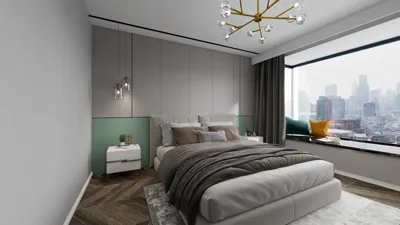


Over the past ten years of designing numerous living rooms, I've consistently observed a growing interest among clients toward window treatments—particularly those for larger windows. While limited spaces necessitate innovative design, large windows present a unique set of challenges. In this article, I'll introduce you to 10 creative blind ideas for large windows that I have successfully implemented in various projects, balancing aesthetics, privacy, and light control with the help of tools like Homestyler.
For one of my favorite living room designs, I matched natural wood blinds with walls in neutral shades, instantly creating a warm and inviting atmosphere. If you've ever embraced the cozy essence of minimalist living spaces, you can relate to this feeling.
1. Wooden Venetian Blinds for a Cozy Atmosphere
Experience: In a loft-style living room featuring 3-meter-high windows, I installed walnut-colored Venetian blinds that resulted in both beauty and practicality.
Advantages: These blinds generate warmth, complement various interior styles, and offer flexible light control through adjustable slats. Trends from Houzz 2024 indicate that natural textures in window treatments are becoming increasingly favored.
Disadvantages: Dust tends to accumulate on the slats, necessitating regular cleaning. They may not be ideal for extremely humid areas unless properly treated.
2. Sheer Roller Blinds for Gentle Illumination
Experience: I appreciate using sheer roller blinds in urban apartments as they filter natural light without confining the space.
Advantages: They maintain the view while softening harsh sunlight and come in various patterns and colors to fit your design scheme.
Disadvantages: Privacy is limited at night with indoor lighting, often requiring combination with heavier drapes.
3. Motorized Blinds for Effortless Control
Experience: In a penthouse project, motorized blinds proved invaluable for windows that were tall and difficult to reach.
Advantages: They provide smooth operation via remote control or smart home integration, making them perfect for expansive spaces or elevated installations.
Disadvantages: They come with a higher initial cost and require a power source, along with potential professional installation.
4. Roman Blinds for a Refined Appearance
Experience: In a mid-century modern living room, I added linen Roman blinds which introduced softness without complexity.
Advantages: They create elegant folds that provide structure and are compatible with a range of fabrics, from casual cotton to luxurious velvet.
Disadvantages: Fabrics may fade under prolonged sunlight and generally require more time to clean compared to plastic or aluminum options.
5. Vertical Blinds for Wide Open Spaces
Experience: Vertical blinds are unmatched for light and privacy control in floor-to-ceiling glass doors leading to a balcony.
Advantages: They pivot easily side-to-side, work well for patio or sliding doors, and introduce a modern aesthetic.
Disadvantages: Material choice is critical; poor options might render them too ‘office-like’. Opting for textured fabric can add a more inviting feel.
6. Bamboo Blinds for an Earthy Feel
Experience: In a coastal design project, bamboo blinds harmonized beautifully with bright whitewashed walls, crafting a fresh and natural ambiance.
Advantages: This sustainable option adds warmth and texture while filtering light into a comforting golden hue.
Disadvantages: Compared to Venetian blinds, they provide less precise light management and may deteriorate faster in humid environments.
7. Double-Layer Zebra Blinds
Experience: With their alternating sheer and opaque stripes, these blinds offer versatility; I employed them in a modern loft, achieving a layered and vibrant effect.
Advantages: They blend privacy with adjustable light filtering, and their sleek design suits contemporary environments seamlessly.
Disadvantages: The quality of the mechanisms may fluctuate; opting for high-end tracks can prevent snagging issues.
In projects like this, advanced planning with designer tools such as Homestyler can help visualize proportions and layouts effectively.
8. Combining Draperies and Blinds
Experience: Layering blinds with curtains can yield a perfect solution; I executed this in a vintage-style living room for added depth and texture.
Advantages: This approach offers maximum light control and design flexibility, ideal for accommodating seasonal changes.
Disadvantages: The cost rises with multiple treatment layers, and maintenance tends to be more involved.
9. Panel Track Blinds for Modern Elegance
Experience: For particularly large spans, I used panel track blinds in a contemporary gallery-like living room, achieving impressive results.
Advantages: The clean, sliding panels provide a minimalist appearance, perfect for spacious, glass-dominated environments.
Disadvantages: Compared to vertical blinds, they offer fewer tilt options, and the panels may require periodic realignment.
I have also integrated these into neutral-toned open designs to maintain a continuous flow between spaces.
10. Color-Blocked Fabric Blinds
Experience: Custom color combinations can transform blinds into striking design elements; I once perfectly matched a client’s sofa with the top section of the blinds for a cohesive look.
Advantages: These add character and enhance the room’s color palette while allowing easy customization.
Disadvantages: Custom orders may require extended lead times and can be pricier; trends in design may also render some options less timeless.
Conclusion
In my experience, large living room windows serve as a canvas for experimenting with light, texture, and style rather than a hindrance. Thoughtful window treatments can significantly uplift the ambiance of a room, as noted by experts in the field. Which of these large window blind concepts will you experiment with first?
Common Questions
1. What are the best blinds for large living room windows?
For large windows, I recommend wooden Venetian, motorized, and panel track blinds for their durability and light management capabilities.
2. How do I clean wooden blinds effectively?
Use a microfiber cloth for weekly dusting and perform a deeper clean every few months, steering clear of overly wet methods to avoid warping.
3. Is the investment in motorized blinds justifiable?
Absolutely, particularly for high or hard-to-reach windows. Energy efficiency studies also highlight their benefits in temperature regulation.
4. Is it feasible to pair blinds with curtains?
Yes, layering can enhance light control and enrich your interior design.
5. What blinds complement modern aesthetics?
Zebra blinds, panel track blinds, and sheer rollers seamlessly fit into modern designs.
6. Are bamboo blinds a durable choice?
They can endure for years in dry climates, but in humid regions, select treated bamboo options for added durability.
7. How should I select an appropriate color for my blinds?
Aim to match existing room accents or use them as a contrasting highlight; neutral colors provide the most adaptability.
8. Do vertical blinds retain their stylish appeal?
Certainly, provided you opt for textured fabrics or modern hues. Old-fashioned styles might have tarnished their reputation, but contemporary variations appear refreshingly stylish.
Looking to transform your home? Homestyler is your go-to online design platform! With its user-friendly design tool, stunning 3D renderings, and a wealth of DIY video tutorials, you can effortlessly create, visualize, and execute your dream spaces. Start your design journey today!
Дизайн сейчас бесплатно
































