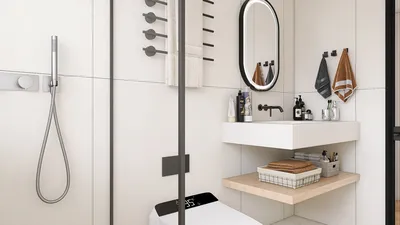


I once had a client who fancied a laundry chute to go "right into the basement," and even inquired if it could pass through the shower—what a classic moment! It brought a smile to my face, yet prompted a thorough review of all safety regulations. This amusing disaster enlightened me on the importance of merging creativity with practicality when designing bathroom laundry chutes. Often, a hidden door can play the unsung hero in these designs. If you're looking for a more refined approach, think about utilizing a concealed chute design that maintains elegance without transforming your bathroom into a utilitarian space.
1. Vertical Shaft Hidden Behind a Linen Closet
This idea captivates me due to its simplicity: a vertical shaft descends from a discreet wall hatch in the bathroom to the laundry room or basement below. It's efficient, occupies minimal floor space, and can be fashioned to resemble a towel door or a recessed panel, giving it a built-in appearance.
Advantages include a low visual footprint and a direct line to central laundry. Challenges feature the necessity for fire-rated construction coupled with an access clean-out at the bottom; anticipate basic carpentry and possible fire-stop enhancements.
save pin
2. Vanity Pass-Through to a Lower Cabinet
In smaller bathrooms, I've crafted a short chute connecting the vanity to a lower cabinet or chute box that empties into the nearby laundry area. It feels like a magical illusion—clothes enter, vanish into the vanity, and later someone retrieves them from the collection box.
This method is economical and positions everything nearby the sink where clothing changes occur. However, it requires meticulous sealing to avert unpleasant odors and lint accumulation. Prior to commencing construction, ensure you measure and plan the chute's pathway, ensuring gentle angles for easy maintenance.
save pin
3. Wall Panel with Fold-Down Hatch
Ideal for renters or minimalists, a shallow chute concealed behind a fold-down hatch in a wall panel provides a tidy, reversible solution. The hatch can also serve as towel storage or a decorative feature, with the chute terminating in a removable bag or sorter in the laundry area.
This option is cost-effective and reversible, but keep in mind that horizontal runs have limitations; it's best to keep them as vertical as possible to prevent blockages.
save pin
4. Stacked Sorter in the Linen Closet
If your linen closet is conveniently located near the bathroom, consider transforming the back wall into a stacked chute/sorter: small drop openings feed separate baskets for lights, darks, and delicates. I once incorporated this in a townhouse renovation—clients adored dropping pajamas into labeled bins, akin to little mail slots.
This system is a dream for organization and easy to maintain, though it does utilize closet depth and requires sturdy baskets or drawer slides for constant use.
save pin
5. Direct-to-Washer Short Run with Access Panel
When the laundry room lies directly below or adjacent, a brief, well-ventilated chute leading to the washer area is ideal. Ensure the chute terminates with an access hatch and trap to thwart any moisture, lint, or pests from moving back up. If you prefer to visualize your design beforehand, you can use Homestyler to create a 3D model to assess placement and service accessibility.
This design allows for quick transfers and less carrying, but it requires careful plumbing considerations (especially near wet zones) and routine lint management to prevent clogs.
In conclusion, even small bathrooms can ignite big ideas—the secret lies in harmonizing aesthetics, safety, and functionality. My personal rule: always incorporate an access panel and an easy clean-out option. This foresight prevents future headaches and ensures your chute coexists harmoniously within the home.
save pin
FAQ
Q1: Are laundry chutes safe in bathrooms?
A: Absolutely, provided you adhere to fire safety and ventilation guidelines. Chutes must be enclosed with fire-rated barriers where they penetrate floors, alongside clean-outs to avert lint buildup.
Q2: What materials are optimal for a bathroom laundry chute?
A: Smooth, non-combustible materials like metal or fire-rated PVC liners are recommended as they minimize lint accumulation. Wood may be suitable for the housing, but the chute's interior should remain smooth and easy to clean.
Q3: How much does it cost to install a simple laundry chute?
A: Expect a reasonable budget for carpentry and fire-stopping for short, built-in solutions—typically ranging from a few hundred to a few thousand dollars based on finishes and accessibility needs. Longer, code-compliant shafts will increase costs.
Q4: Is it permissible for a chute to pass through a shower or plumbing chase?
A: No—do not route a chute through a shower, plumbing chase, or HVAC duct. These paths pose risks of moisture and contamination; it is imperative to keep chutes in dedicated, sealed shafts.
Q5: Are there building codes governing laundry chutes?
A: Yes, per the International Building Code (IBC) and NFPA 101 (Life Safety Code), vertical shafts must be designed to restrict fire spread and often necessitate fire-rated doors or assemblies. Always consult local code officials prior to construction.
Q6: How can I control odors and pests?
A: Install tight-sealing hatches, flaps, and a bottom accessible trap or collection box. Routine cleaning and a small inline vent leading outside (if allowed by code) assist in managing odors and moisture.
Q7: Will a laundry chute enhance my home's value?
A: It can be a valuable asset if executed neatly and safely—buyers often appreciate convenience features that feel intentional as opposed to makeshift. Avoid conspicuous ductwork or haphazard chutes that suggest poor craftsmanship.
Q8: How frequently should I clean or inspect a chute?
A: Conduct inspections annually and clear out lint or debris at least twice a year, more often with regular use. Routine checks of seals, access panels, and any fire-stopping measures serve as quick insurance against potential issues.
save pin
Homestyler is your go-to online home design platform, perfect for transforming your ideas into reality. With its user-friendly design tool, stunning 3D renderings, diverse projects, and helpful DIY video tutorials, you can effortlessly create your dream space—whether you’re a novice or a pro!
Projete agora para LIVRE
































