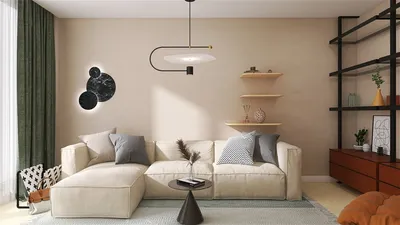


I often chuckle when recalling a particular project where a client requested a living room wall painted to resemble a sunset, but with an exact specification of only three Pantone colors and no gradients. This experience challenged my creativity within those boundaries and reinforced the importance of creating a 3D mockup with tools like Homestyler. This way, we can finalize the mood together before any actual painting begins.
1. Artistic Touch: Bold Brush Strokes
I enjoy recommending the use of large, intentional brush strokes on a single wall to inject a sense of movement while avoiding clutter. It resembles art, remains budget-friendly, and effectively conceals uneven plaster. The key challenge lies in achieving the right scale, so I typically mark some vertical reference lines beforehand.
2. Geometric Tape Designs
By taping off triangles, hexagons, or irregular grids, you can fill them with a cohesive color palette to create a striking modern effect. The advantage lies in the sharp edges and consistent results; however, it does require patience. A quick round of testing on foam board can prevent costly mistakes later on.
save pin
3. Ombre or Color Block Gradients
Utilizing fading tones from floor to ceiling or creating horizontal blocks of color can instantly alter the perception of a small room, making it appear more spacious. This technique is forgiving with textures, yet demands good blending of paints. When clients wish to visualize the spatial changes, I often pair it with a quick Homestyler floor plan sketch to illustrate how the color flow interacts with furniture placement.
save pin
4. Stenciled Patterns and Faux Finishes
Stencils enable you to replicate a design without needing custom wallpaper, while faux wood panels painted with a glaze can add warmth on a budget. They are ideal for renters if you opt for low-tack adhesives and reversible paint layers. However, using stencils does require patience; the time invested rewards you with a unique appearance.
save pin
5. Mixed-Media Feature Wall
Combining paint with other materials like fabric, cork, or metallic leaf can create captivating textures that photograph beautifully. This approach is favored by designers as it anchors a seating area effectively. Maintenance can vary; for instance, metallic leaf necessitates careful sealing. For those interested in innovative concepts, utilizing a Homestyler-generated design can inspire unexpected combinations that traditional sketches might not convey.
save pin
Practical Tips and Budget Advice
I always suggest testing colors on full-sized poster boards and observing them in your space for a day under actual lighting conditions. For most rooms, mid-range acrylic paints work best; reserve higher spending for specialty finishes like metallics or glazes. Generally, a single accent wall can remain budget-friendly, but be cautious of spontaneous color changes that can increase labor costs.
save pin
FAQ
Q1: Which paint finish is ideal for decorative walls?
A: For most decorative techniques, an eggshell or satin finish provides a good balance between sheen and washability. Apply flat for textured effects and semi-gloss only for trims or areas needing frequent cleaning.
Q2: How can I select colors that will remain timeless?
A: Stick with a timeless base of warm neutrals or muted gray-blues, and introduce one trendy accent color. Small updates like cushions or artwork can refresh the look without necessitating a repaint.
Q3: Is stenciling something I can do by myself?
A: Absolutely — stenciling is quite DIY-friendly if you use a pouncing roller, low-tack tape, and practice on scrap materials first; expect the initial panel to take the longest time.
Q4: How do I calculate the amount of paint needed for an accent wall?
A: Measure the wall's square footage and check the paint's coverage (typically about 350–400 sq ft per gallon). Always purchase a little extra for touch-ups and matching purposes.
Q5: Are decorative paints safe for indoor use?
A: Most modern paints are low in volatile organic compounds (VOCs); for sensitive households, select paints labeled as low- or zero-VOC and ensure proper ventilation during application. For authoritative information on indoor air quality, refer to the EPA resources regarding Volatile Organic Compounds.
Q6: How can I remove decorative paint later on?
A: You can either remove or paint over with appropriate priming; for metallics or glazes, a shellac or high-adhesion primer is often beneficial. Renters may prefer removable wallpapers or paint systems designed for easy removal.
Q7: Which rooms gain the most from decorative painting?
A: Living rooms, entryways, and bedrooms are great choices for bold decorative statements; kitchens and bathrooms require moisture-resistant finishes and careful sealing processes.
Q8: When is it best to hire a professional?
A: It's advisable to hire a professional for extensive gradients, structural faux finishes, or when integrating lighting and millwork; skilled painters can save time and prevent common errors such as uneven blending.
save pin
Looking to transform your space effortlessly? Homestyler offers an intuitive online design tool that allows you to create stunning interiors with ease. Explore a vast library of 3D renderings, inspiring design projects, and helpful video tutorials. Start your home design journey today!
今すぐ无料でデザイン
































