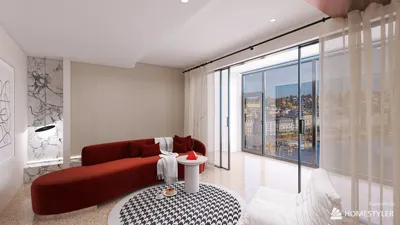


Creating unforgettable hotel rooms may appear effortless at first glance, as they offer soft yet functional lighting, beds that cradle the body comfortably, a logical and intuitive layout, and every detail designed with care. Achieving this effect requires meticulous planning involving lighting, ergonomics, acoustics, and color psychology. Following the WELL v2 lighting guidelines, it is recommended to maintain a vertical illuminance of 150–300 lux during the day to support occupants’ circadian health, whereas warm, low glare lighting at night promotes relaxation. Additionally, Steelcase's research highlights that environmental factors such as light, temperature, and noise significantly influence perceived comfort and satisfaction, principles that seamlessly transition from workplace environments to hospitality settings—all of which can be optimized with tools like Homestyler.
Guests pay attention to the nuances that enhance their experience. Insights from Gensler emphasize that clear spatial legibility—understanding where to store luggage, where to sit, and how to navigate—reduces cognitive load and enhances the perception of quality during their stay. This translates into practical features like a direct pathway leading from the entrance to the bed and bath, conveniently located outlets, and a versatile sit/stand surface suitable for both laptop work and room service. The emphasis on glare control and spectral quality in the WELL v2 guidelines also supports the trend towards layered lighting, incorporating task lights set at 300–500 lux for reading, accent lighting to create warmth, and adjustable ambient sources for winding down.
Design a Restful Layout That Guests Instantly Recognize
I begin by mapping out circulation routes to ensure a straight and unobstructed path leading from the entrance to the window and bathroom, allowing a minimum clear width of 36 inches where feasible. Guests’ luggage should be positioned on a bench or rack close to the door, avoiding disruption of the sleeping area. The bed should be placed on the quieter side of the room, and when possible, I offset the headboard from adjoining walls to minimize sound transfer. For efficient layout planning and to check sightlines effectively, I utilize a room layout tool, which is instrumental in visualizing relationships and clearances without trial-and-error on-site, similar to the capabilities offered by Homestyler.
Ensure the Bed is Perfect: Support, Height, and Microclimate
The quality of the mattress is crucial, as it shapes guests' perceptions within the first five minutes. I aim for a medium-firm mattress that supports spinal alignment for back and side sleepers, coupled with a top layer that alleviates pressure on the shoulders and hips. Maintaining a bed height of around 24–26 inches from the floor to the top of the mattress facilitates comfortable transitions for various guests. Incorporating breathable mattress protectors and dual-weight duvets caters to different thermal preferences, as thermal comfort plays an essential role in restorative sleep. Moreover, generous duvet sizing prevents tug-of-war scenarios when two guests share a room.
Create a Multi-layered Lighting Scheme for Mood, Function, and Circadian Support
Lighting significantly influences the emotional ambiance of the room. I incorporate three layers of lighting: ambient (2200–2700K in the evening, with dimming capability), task (2700–3000K, at 300–500 lux for reading), and accent (using 2700K grazers or wall washers to highlight textures behind the headboard). Following IES guidelines for glare management ensures that cutoffs and shielding for downlights are effectively implemented; utilizing fixtures with low UGR or indirect sources prevents harsh hotspots on reflective surfaces. Occupancy sensors can adjust lights to a modest 10–20% level upon entry at night, while bedside controls should enable individual dimming for reading, ambient light, and blackout curtain motors to eliminate the need for searching for a master switch in the middle of the night.
Designed for Quiet: Acoustic Comfort That Guests Appreciate
Sound serves as an understated element of comfort. I focus on developing a layered acoustic strategy featuring resilient channels or sound-isolating clips on shared walls, solid-core doors equipped with perimeter seals, and soft finishes—such as upholstered headboards, heavy drapery, and area rugs on padding—to enhance sound absorption. It’s crucial to mitigate mechanical noise near the head of the bed and select quieter bathroom exhaust systems. Incorporating white noise from discreet fan settings or dedicated sound conditioning devices can help mask corridor noises without an industrial feel.
The Impact of Color Psychology on Grounding and Renewal
Color subtly influences behaviors and moods. Warm neutrals, muted greens, and soft blues help reduce arousal and support post-travel recovery. Bright, saturated colors should be utilized sparingly as accents in art or accessories rather than spreading across large surfaces. Keeping the ceiling slightly lighter than the walls increases the perceived height of the room; additionally, contrasting the headboard wall by one or two LRV steps anchors the bed. If integrating a brand color into the room design, it should be toned down to a saturation of 30–60% and paired with natural materials—such as timber, linen, and stone—to create a calming, human-centric palette.
Furniture Designed to Fit How Guests Live
Modern travel routines have evolved; guests often stream content, engage in quick calls, and dine casually. I recommend a compact work-dining table (28–29 inches high) accompanied by a comfortable side chair and a small lounge chair with an ottoman for reading purposes. Power outlets should be positioned within a reach of 12–18 inches from both bedside tables and the desk, and at least one USB-C PD port should be available. To prevent clutter, a luggage bench set at a height of 18–20 inches protects the bed while enabling convenient access to luggage. In rooms with limited space, a wall-mounted drop-leaf can create flexibility in circulation when not in use.
Create a Breathable Bath Sanctuary with Light, Storage, and Safety
Quality bathrooms contribute positively to hospitality experiences. I emphasize 350–500 lux vertical lighting at mirrors for grooming, ensuring fixtures are positioned at eye level to minimize shadows. Floors must meet at least an R10 slip resistance rating in wet areas. Providing open and obvious storage solutions—clearly indicating where towels and toiletries belong—eliminates guesswork for guests. Features such as quiet-close seats, thoughtfully designed drawers, thermostatic mixers, and a small stool or ledge in the shower enhance accessibility while maintaining a discreet presence.
Air Quality, Temperature, and Breathability are Key
Implementing low-VOC paints, GreenGuard-certified composite materials, and solid surfaces that resist moisture accumulation ensures the room remains fresh and inviting. Controllable temperatures within a range of 68–72°F are crucial, as well as the option for nighttime setbacks that won’t abruptly activate at 3 a.m. If climate permits, operable windows are invaluable; if not, then ensuring regular maintenance of filters and providing optional, non-mandatory in-room fragrances is essential.
Storage Solutions and Rituals to Clear Visual Clutter
Minimizing clutter is vital for reducing cognitive load. I aim for straightforward storage solutions: a closet or rail accommodating two full-size coats, four to six hangers, an accessible iron and board hidden behind a flush panel, as well as a drawer for personal items. A tray placed on the console serves as a designated area for keys and wallets. Ideally, the minibar should be silent or completely absent; if included, a shelf for guest items should be provided. Nightstands ought to accommodate a book and a water carafe without overcrowding the space.
Design the Room for Flow, Not Just Space
Consider the sequence of experiences: entry as a decompression area, luggage placement, gradual illumination, and an inviting bed. Seat arrangements should allow for daylight from the window during the day while blending in with a warm lamp lighting at night. TVs should be positioned to pivot without disturbing the headboard wall. The bathroom should maintain privacy while still being easy to locate. Utilizing an interior layout planner can effectively mock up this choreography, allowing for pre-testing of clearances, adjacencies, and sightlines—not unlike the capabilities of a platform like Homestyler.
Reflections from Recent Projects
- Dimming features resulted in fewer complaints. The integration of bedside dimmers and layered circuits led to a noticeable decrease in nighttime light-related service calls at a 180-key property during the first quarter.
- Blackout plus sheer curtains are indispensable. Guests appreciate natural light without exposure during the day and complete darkness at night; side channels on blackout shades effectively eliminate pinhole leaks.
- Provide a comfortable perch. Positioning a small lounge chair near the window enhances dwell time, generating more positive guest comments regarding ‘relaxing with a view.’
Final Checklist: Ensure Quality Before Completion
- Maintain a 36-inch circulation path from the door to the bed and bath.
- Bed height should be set between 24–26 inches, ensuring outlets are within reach by bedside and at the desk.
- Ambient lighting should be set to 2200–2700K at night; reading lamps should offer 300–500 lux with cut-off features.
- Incorporate sound seals in doorways; soft finishes to enhance sound absorption.
- Ensure bath floors are slip-resistant; provide 350–500 lux vertical mirror lighting.
- Install blackout curtains with side channels alongside sheer options.
- Utilize low-VOC materials; ensure HVAC systems operate quietly with intuitive controls.
Frequently Asked Questions
Aim for 300–500 lux at the bedside with a reading lamp set between 2700–3000K, directed adequately to prevent direct glances at the light source, in accordance with the WELL v2 focus on glare control and ergonomic task lighting.
A medium-firm mattress with a pressure-relieving top layer accommodates a wide variety of sleepers, promoting spinal alignment for both side and back sleepers.
Combine construction isolation methods (resilient channels, dense insulation, solid-core doors with seals) with soft room finishes and careful positioning of TVs and plumbing away from headboards to minimize noise issues.
Using muted greens, warm neutrals, and soft blues fosters a calming atmosphere, while brighter hues should be reserved for small accents or artworks.
Separate dimmable circuits for ambient, reading, and accent lights, in addition to curtain controls and a clearly visible master off switch, should be included. Ensure at least one USB-C PD port and a standard outlet at each bedside.
Provide increased vertical illuminance during daylight hours and warm, adjustable lighting during the night; utilize blackout shades to ensure darkness conducive to quality sleep, minimizing blue-rich light exposure after sundown.
Target at least R10 slip resistance in wet areas to mitigate risk without employing overly rough textures that can be challenging to clean.
Implement a compact drop-leaf table mounted on the wall, paired with a comfortable side chair, ensuring power outlets are within arm's reach while maintaining clear circulation when the leaf is folded down.
Setting the bench height between 18–20 inches facilitates convenient lifting without encroaching on the bed, making packing easier.
Pair sheer curtains for daytime privacy and daylight with side-channeled blackout shades to achieve complete darkness at night, promoting better sleep quality.
Employ layered, dimmable lighting solutions with easily accessible bedside controls to avoid overly bright, single-circuit setups that frequently lead to service calls during nighttime hours.
Indeed, positioning a cozy chair near the window creates an inviting secondary space where guests can enjoy reading, coffee, or calls, which ultimately enhances the perceived value of the room.


Homestyler is your go-to home design platform! With its user-friendly online design tool, stunning 3D rendering, and a treasure trove of design projects and DIY video tutorials, you can effortlessly transform your living space into a masterpiece. Experience the joy of creating your dream home today!
Design Now for FREE
































