

The summer heat can be particularly harsh on dogs, especially for breeds with short snouts and older dogs. When I create small pet enclosures, I apply the same meticulous approach as I do for human workspaces, prioritizing factors like thermal comfort, proper ventilation, moisture control, and sound insulation—even within a compact dog house. Heat stress is a genuine concern; according to the WELL Building Standard (WELL v2), ideal thermal comfort ranges from 20–25°C (68–77°F) for most inhabitants, with adjustments based on humidity and airflow. Research from Steelcase indicates that discomfort from heat can negatively affect human behavior and productivity. Similarly, dogs exhibit signs of distress—such as restlessness, excessive panting, and lack of appetite—when they experience thermal strain, highlighting the importance of solutions like Homestyler to create comfortable environments for our pets.
Effective ventilation is crucial alongside cooling systems. The Illuminating Engineering Society (IES) points out that glare and heat due to direct sunlight are significant discomfort sources. In canine shelters, direct sunlight on a dark roof can increase temperatures by over 20°F, potentially causing internal environments to exceed safe limits. My designs focus on creating shade, ensuring cross-ventilation, and employing controlled mechanical cooling. When clients request an air-conditioned dog house, I suggest compact cooling systems tailored to the volume. For instance, small insulated enclosures of around 20–40 ft³ typically benefit from 1,000–2,000 BTU of cooling capacity, while larger areas may pose efficiency and safety challenges if not properly ventilated or managed for condensate.
Begin with the Structure
Before considering mechanical elements, prioritize the envelope of the dog house—its roof, walls, and floor. Adequate insulation minimizes heat intake, stabilizes temperatures, and decreases compressor cycling. I incorporate rigid foam insulation (EPS or XPS) at R-5 to R-10 values for the walls and roof and elevate the floor to reduce heat and moisture from the ground. Using reflective exterior finishes can lower solar absorption, and a cool roof color can significantly reduce surface temperatures even on the hottest days, enhancing the overall efficiency of systems like Homestyler.
Dimensions and Placement of the Dog House
To ensure comfort, it's essential to consider proportions. Dogs prefer resting areas allowing them to stretch out comfortably. As a guideline: the length should equal the dog’s nose to tail plus an additional 25–35%, width should be double the shoulder width, and height should be the standing height plus 20%. Keep the volume compact enough for efficient conditioning but spacious enough to allow for posture changes. Utilizing room layout tools helps visualize sunlight angles, circulation, and electrical access points when determining where to place the structure.
Select the Appropriate Cooling Method
Cooling methods can be categorized into three types: portable air conditioners, mini-split heat pumps, and ventilation-assisted cooling systems (such as fans combined with evaporative elements). Portable ACs provide convenience with capacities ranging from 5,000 to 8,000 BTU, but may require hot air to be vented through hoses and can cool small spaces too quickly; it’s wise to select low-BTU models. Mini-split systems are effective and quiet but necessitate professional installation. Evaporative coolers can be beneficial in dry climates, though their performance diminishes in humid conditions. Regardless of the method chosen, integrating passive ventilation with two operable vents (one low for intake, another high for exhaust) is vital to expel warm air and odors.
Ventilation, Clean Air, and Condensation Management
Achieving thermal comfort extends beyond mere temperature control. The WELL v2 standard advocates for clean air and humidity regulation; ideal relative humidity levels should remain between 40% to 60% to reduce the risk of mold and heat stress. Install a small, weatherproof intake louver near the floor and a corresponding exhaust louver above head height. It’s essential to manage condensate produced by cooling devices by directing it through a trap to an exterior drain or absorption bed; ensure that no stagnant water is present inside.
Prioritize Safety
Dogs are naturally curious and may explore with their teeth and claws. Any mechanical components must be securely tamper-proof. I recommend housing wiring in metal conduits, utilizing GFCI-protected outlets, and installing chew-resistant grilles over any fans. Air conditioning units should be housed away from direct interaction, ideally in a partitioned service area made of perforated metal for air circulation. Protect refrigerant lines and drain tubes to prevent accidental damage. I also suggest incorporating a thermostat with a defined upper limit (e.g., 77°F) and a temperature alarm for monitoring purposes.
Control Noise and Vibrations
Acoustic comfort is just as important—many dogs experience anxiety due to constant background noise. To reduce sound and vibration, decouple the AC unit from the structure using rubber isolation pads and resilient mounting methods. Lining interior panels with closed-cell foam serves as both an acoustic dampener and a moisture barrier. Avoid any metal contact; instead, employ grommets and washers to minimize rattling.
Material Selection and Finishes
Opt for non-toxic, low-VOC materials such as sealed plywood or composite panels, along with chew-resistant trim. Make sure the interior surfaces are smooth enough for easy cleaning yet textured to prevent slipping. For exteriors, choose finishes that withstand UV degradation. Sustainability is a priority: I often use FSC-certified plywood and recycled-content rigid insulation when possible. A washable and removable bedding pad simplifies maintenance and cleanliness.
Shading, Orientation, and Solar Management
When placing the dog house, position it in shaded areas during the hottest part of the day. Ensure the entrance faces away from hot winds and afternoon sunlight. Adding a shallow roof overhang can shield the entrance from direct sunlight and lower heat absorption. If your yard lacks natural shade, consider implementing a freestanding shade sail made from high reflectance fabric and maintaining at least 8 feet of clearance to allow for convective cooling to occur.
Considering Ergonomics and Animal Behavior
Dogs have the ability to self-regulate their comfort levels. Ensure there is a designated cool zone and a neutral area inside the house, giving your dog the freedom to choose their preferred microclimate. A raised cot positioned close to the cooled interior can be beneficial as many dogs will shift between cool and neutral air depending on their activity level. Additionally, provide easy access to water—keeping it outside the cooled area to limit humidity spikes is advisable.
The Impact of Color and Light
Color plays a significant role in heat absorption and creating a calming environment. Research on color psychology, such as that from Verywell Mind, highlights that softer hues like blues and greens can have a soothing effect on anxious dogs. For this reason, applying these colors as interior accents can be beneficial. Maintain light shades inside to reduce radiant heating, and avoid high-gloss finishes that could cause glare.
Build Process Overview
1) Measure your dog's dimensions to determine the required interior space and overall volume. 2) Construct the frame for the walls and roof using 2x2 or 2x3 timber; include a raised floor with a moisture barrier. 3) Install rigid insulation (R-5 to R-10) with sealed seams, then add plywood or composite interior paneling. 4) Cut and set up two vents: one low for intake and one high for exhaust, both equipped with insect screens. 5) Design a service area for the AC or cooling device, utilizing perforated metal to separate it from the main chamber. 6) Route electrical wiring via GFCI outlets, ensuring protection for all wires in conduit. 7) Install a thermostat and incorporate a high-temperature alert system. 8) Finish the build with acoustic pads, a rubber floor mat, and easily washable bedding. 9) Seal the exterior, apply a reflective roof finish, and position the structure beneath a shade element. 10) Finally, conduct tests for leaks, condensation drainage, and temperature control before introducing your dog into their new environment.
Ongoing Maintenance and Monitoring
Regularly check filters monthly, clear any vent blockages, and inspect for signs of chew damage. Keep an eye on temperature and humidity levels using a digital sensor. If you observe symptoms like excessive panting or reluctance to enter the dog house, adjustments may be necessary—consider lowering the temperature, adding more shading, or enhancing ventilation to improve comfort.
Frequently Asked Questions
Q1: What’s the ideal temperature for an air-conditioned dog house?
A: Aim to keep it between 72–77°F, with relative humidity levels around 40–60%. This range aligns with WELL v2 comfort standards and keeps dogs safe from overheating without leading to excessive cooling.
Q2: How many BTUs do I need for cooling?
A: For a well-insulated enclosure measuring 20–40 ft³, 1,000–2,000 BTU is usually sufficient. Oversizing can cause short cycling and humidity spikes—focusing on insulation and shading is key.
Q3: Is a portable air conditioner a safe option for dogs?
A: Yes, as long as it’s correctly vented, secured, and monitored with a thermostat that has a defined upper limit. Ensure cords are contained within conduits and that fans are behind chew-proof grilles.
Q4: Can I use an evaporative cooler in a dog house?
A: Evaporative coolers work effectively in dry climates. However, in humid areas, they can make the environment feel muggy—consider using mechanical ventilation and options like mini-splits or low-BTU AC units instead.
Q5: Do I need ventilation if I have an AC unit?
A: Yes, fresh air circulation is crucial for reducing odors and CO2 levels, stabilizing humidity, and preventing heat buildup. Install low intake and high exhaust louvers for optimal airflow.
Q6: What materials are best for the interior of the dog house?
A: Choose low-VOC sealed plywood or composite materials, closed-cell foam for sound dampening, and rubber mats for traction. Avoid soft foams that dogs may chew through.
Q7: How should I handle condensation in the cooling system?
A: Ensure that condensate is managed through tubing that connects to an exterior drain or gravel bed. Maintain dry interior surfaces and conduct weekly inspections during peak heat periods.
Q8: Could cooling unit noise stress my dog?
A: Yes, it’s possible. Utilize inverter-driven units, isolation pads, and acoustic lining within the interior. Observe your dog's behavior; if anxiety continues, consider lowering fan speed and reducing vibrations.
Q9: Do color choices impact the dog house environment?
A: Light, reflective exteriors help minimize heat gain. Inside, calming colors like soft blues and greens can create a more relaxed atmosphere for anxious dogs, aligning with color psychology principles.
Q10: Can I power the cooling system using solar energy?
A: Yes, but careful load calculations are necessary. Small air conditioners or mini-splits can consume a significant amount of energy; it’s recommended to utilize energy-efficient units and appropriate battery storage for peak heat usage.
Q11: How often should I service the cooling unit?
A: Clean filters monthly during the summer, check condensate drainage every quarter and ensure annual professional servicing for mini-splits.
Q12: What can I do if my dog refuses to enter the cooled house?
A: Gradual acclimatization is effective: introduce familiar bedding, keep the door open, and allow your dog to choose between cool and neutral areas. Fine-tune the temperature and minimize noise to enhance comfort.

70.8” Tall Arched Bookcase, 5 Tier Tall Bookshelf,


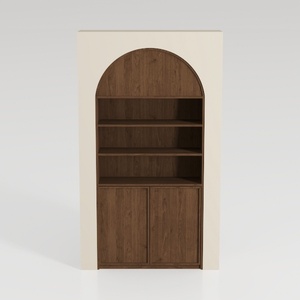
Minimalist Walnut Arched Open Shelf Cabinet 3D Model
Homestyler is your go-to online home design platform, perfect for anyone wanting to revamp their space. With easy-to-use design tools, stunning 3D renderings, inspiring design projects, and helpful video tutorials, you can effortlessly transform your vision into reality. Start designing today!
Desain sekarang Gratis
































