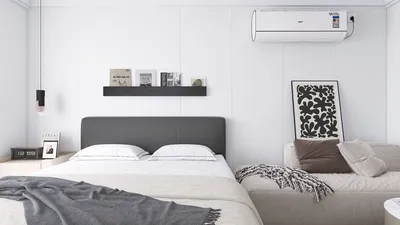


A twin room is specifically designed with two distinct single beds, commonly available in dimensions of 38" x 75" (Twin) or 38" x 80" (Twin XL). This design provides exceptional flexibility, making it perfect for accommodating siblings, guests, or family members of various generations, all without the need to share a bed. Unlike a double or queen room, which might feel cramped, a twin room focuses on personal space and versatile layouts, often serving duel functions as a children’s room during the week and a guest suite on weekends, which can be creatively enhanced using tools like Homestyler.
When planning a twin room, it's vital to emphasize measurable comfort in your design selections. According to WELL v2 guidelines, general areas should have at least 300 lux of ambient light, while task-oriented zones require about 500 lux. This ensures comfort during reading and reduces visual fatigue. Research from Steelcase highlights that giving individuals control over their surroundings—such as lighting, temperature, and privacy—improves satisfaction in shared spaces. It’s a good idea to incorporate independent bedside lighting and acoustic strategies into your design. Additionally, color psychology studies from Verywell Mind suggest that cooler colors like soft blues and greens promote relaxation, which can be particularly beneficial for sleep stability in a shared environment.
For families, utilizing the twin bed configuration effectively addresses practical challenges: it allows two sleepers with varied routines or preferences to coexist more comfortably. Based on my recent projects, twin rooms often need to accommodate three main activities—sleep, study, and play—making it essential to plan for adequate circulation, storage, and acoustic separation. The success of a twin room ultimately relies on human-centric factors such as accessibility range, spacing between beds, and glare management at both desks and sleeping areas. To explore various furniture arrangements or traffic flow, consider using a layout simulation tool to inform your decisions before investing in new items. A resource like Homestyler can aid in visualizing your ideal arrangements.
What is the Definition of a Twin Room?
A twin room features two individual single beds with clear access around them—ideally with unobstructed pathways on at least one side of each bed—to simplify bed-making and nighttime accessibility. The arrangement of beds may be parallel, L-shaped, or separated by a shared nightstand. Unlike bunk beds that elevate the sleeping surface, twin beds remain level, making them suitable for guests who prefer easy access without climbing.
Bed Dimensions and Recommendations
The standard Twin size measures 38" x 75", making it most suitable for younger children or adults under 6 feet tall. The Twin XL size, measuring 38" x 80", is better suited for teenagers and taller adults. For comfortable movement, maintaining a minimum 24" walkway alongside at least one bed is crucial, while 30" is ideal for added ease of movement. If you opt for a central nightstand that is 18" to 24" wide, allow for an additional 8" of clearance from each bed’s edge for bedding arrangements.
Room Shape Layout Techniques
In rectangular spaces, position the beds parallel with a shared nightstand in between while ensuring a circulation space of at least 30" at the end of the beds. For square rooms, an L-shaped configuration—one bed against one wall and the other against an adjacent wall—opens up a central area for play or yoga. In a long, narrow room, opt for a head-to-head arrangement complemented by a tall storage divider or fabric screen for enhanced privacy. Before finalizing these arrangements, experiment with an interior layout planner to accurately assess pathways and desk placements—tools like Homestyler can be particularly useful here.
Lighting Strategies: Ambient, Task, and Glare Control
To adhere to WELL v2 recommendations, incorporate layered lighting strategies: use ambient lighting between 300 to 500 lux, employ task lighting at desks (500 lux with a CRI of at least 90 for color precision), and include dimmable bedside lights with warm hues (2700–3000K). To mitigate glare, select diffused light fixtures and position task lights perpendicularly to screens. For improved sleep conditions, add blackout shades and a motion-sensor nightlight for safe nighttime navigation without waking the other occupant.
Understanding Color Psychology and Material Selection
Choosing calming color palettes—such as soft blues, sage greens, and muted taupes—fosters relaxation and minimizes stimulation at bedtime. Insights from Verywell Mind reveal that blue shades are associated with calmness and stability, which align well with twin rooms meant for siblings sharing space. Material choices should favor low-VOC finishes, washable performance fabrics for headboards and bedding, and acoustic-absorptive rugs or cork underlays to reduce noise levels.
Ergonomic Considerations for Shared Spaces
Think about reachability: a nightstand height of 24" to 28" is generally comfortable for seated users. If including desks, aim for a height of 28" to 30" with adjustable chairs that promote healthy hip and knee angles. Each user should also have individual task lighting and integrated cable management to minimize tripping hazards in shared corridors. Bed heights around 20" to 24" provide comfortable entry points for children and older adults alike.
Managing Acoustics and Ensuring Privacy
Utilize features such as upholstered headboards, area rugs, and fabric curtains to enhance sound absorption. Implementing a soft divider, bookshelf, or portable screen can establish visual separation without permanently disrupting the layout. For those who wake up earlier, create a small preparation zone, perhaps with a warm dim light and quiet drawer mechanisms, situated away from the other sleeper’s side of the room.
Planning for Storage Solutions
Maximize small spaces with under-bed drawers or lift-up frames for efficient storage. To minimize disputes, equally distribute closet sections between occupants. Organize items using labeled bins for specific hobbies or sports gear. If space permits, consider providing two identical nightstands, as this symmetry contributes to a sense of fairness and streamlines nightly routines.
The Choice Between Twin and Double Rooms
Opt for twin configurations when regularly hosting friends or relatives, when siblings benefit from distinct sleep surfaces, or when guests have varying preferences for firmness or allergenic materials. In contrast, choose a double room when a couple primarily occupies the space or when cramped conditions limit safe movement around two beds. Twin rooms, particularly when styled effectively, are advantageous for staging homes to captivate potential buyers.
Creating a Guest-Ready Environment
Make sure each bedside is equipped with an individual lamp, accessible outlets or USB ports, a carafe of water, and a small tray for convenience. Offer a variety of spare blankets to accommodate different thermal needs. Keep a foldable luggage rack near the entrance to prevent luggage from cluttering bed spaces. Ensure clear labeling for Wi-Fi access and uncomplicated control of shade operations.
Safety Considerations in Design
Incorporate rounded corners on nightstands, secure furniture firmly to the walls, and select slip-resistant rugs accompanied by appropriate pads. Maintain a clear pathway with a minimum width of 24". For children's rooms, avoid hanging heavy wall art directly above beds and install tamper-resistant electrical outlets for additional safety.
Effective Solutions for Small Rooms
Choose Twin XL mattresses paired with narrow upholstered headboards to conserve space. Wall-mounted reading lights can free up nightstand areas. Instead of two separate desks, consider a longer shared desk positioned under a window. To create an illusion of more space, use mirrors and select lighter finishes that enhance reflectivity without producing glare.
Sustainable Budgeting Choices
Priority should be given to selecting mattresses as they greatly influence sleep satisfaction. Opt for durable bed frames with replaceable slats, covers that are machine washable, and, when available, finishes that are Greenguard-certified. Reuse dressers across varying layouts since the twin bed format adapts seamlessly should you later decide to convert to a queen arrangement by recentering the furniture.
Planning for Future Adaptability
If your children are likely to grow taller, consider implementing Twin XL beds from the beginning. Allow for dimmable lighting and modular storage solutions that enable easy transitions between guest accommodations and study spaces. Ensure flexibility in bed spacing by opting for lightweight side tables that can be rearranged as needed.
Common Questions Addressed
A standard Twin measures 38" x 75", while the Twin XL version is 38" x 80". Be sure to confirm your mattress and frame measurements prior to making bedding purchases.
Maintain at least an 8" clearance for bedding if using a narrow center table; 18" to 24" is comfortable for a nightstand and lamp setup. Aim for a walking clearance of at least 30" at the foot of the beds.
Absolutely, particularly with Twin XL options. Ensure proper mattress support, 30" of clearance at the foot, and personal lighting to guarantee adult comfort.
Layer ambient lighting within the range of 300 to 500 lux, bedside dimmable lights with warm tones (2700–3000K), and desk lighting projecting around 500 lux for optimal task efficiency.
Enhance acoustics by integrating upholstered headboards, rugs, curtains, and consider installing a visually soft divider. Utilize soft-close hardware and avoid positioning doors near the head of either bed for improved comfort.
Certainly. A communal desk setup featuring two task lights, cable management solutions, and streamlined chairs can work efficiently; ensure desk depth remains between 20" to 24" to uphold clear circulation.
Twin configurations allow for adaptive arrangements catering to unrelated guests or different sleep needs, while a double room suits couples predominately.
Offer medium-firm mattresses as a base; having a mattress topper on hand allows for greater comfort adjustments for sensitive sleepers.
Calm color choices such as soft blues and greens are conducive to a relaxing atmosphere; neutral taupes and creams lend versatility while avoiding saturating reds close to sleeping areas.
Divide closet space evenly, implement labeled bins, and ensure identical nightstands are available to foster a sense of equality.
Opt for Twin XL when height and long-term comfort needs are essential; these are more accommodating for taller guests.
Choose low-pile, non-slip rugs utilizing a quality pad while ensuring their edges do not obstruct primary walking paths.

Minimalist Solid Oak Wood Wardrobe with Black Accent Stripe 3D Model

Bedroom Table Modern Minimalist Nightstands Small

Purple Plus Queen Mattress - 11" GelFlex Grid
Homestyler is your go-to online home design platform for transforming your spaces effortlessly. With its user-friendly design tool, stunning 3D renderings, and a wealth of DIY video tutorials, you can easily create and visualize your ideal home décor, inspiring your next project with confidence!
Progetta ora GRATIS
































