


Designing a 3D model of a Paramecium serves as an interactive method to visualize this intriguing single-celled organism and gain deeper insights into its anatomical structure, whether for educational purposes or research. Start by collecting reference images and diagrams that highlight features like cilia, the oral groove, contractile vacuoles, food vacuoles, as well as the micronucleus and macronucleus. Select a suitable 3D modeling software—options such as Blender, Maya, or tools tailored for education are commonly used. Initiate your project with a simple ellipsoid shape to replicate the organism’s elongated form. Then, implement arrays or particle systems to accurately portray the numerous cilia that adorn its exterior, thereby enhancing its realism. Next, incorporate internal structures by carefully shaping and placing the macronucleus and micronucleus, simultaneously creating vacuoles as rounded forms within the cytoplasm. For additional specificity, sculpt the oral groove on one side and consider applying textures to represent the cell membranes and cytoplasm, showcasing the Paramecium’s translucent, granular look. Utilizing a tool like Homestyler can further allow you to place and animate your Paramecium model within a virtual classroom or exhibition space, thereby boosting viewer engagement and delivering a polished presentation. Homestyler also provides detailed controls for lighting and scaling, making your scientific models visually captivating.
Tips 1:
By utilizing a 3D Floor Planner, you can creatively position and animate your Paramecium model in various educational environments, which enriches engagement and results in a more professional display. This feature also allows for exceptional precision in lighting and scaling, ensuring that your biological models leave a lasting impression.
FAQ
Q: Which software is ideal for creating models of microscopic organisms like Paramecium?
A: Popular choices for modeling include Blender, Maya, and educational tools such as Tinkercad. Select your software based on previous experience and the level of detail you need.
Q: Are there free resources available for 3D modeling of Paramecium?
A: Absolutely! There are numerous free online platforms and libraries where you can find basic 3D models that can be tailored to meet your specifications.
Q: What key components should be included to create an accurate Paramecium model?
A: Important features to incorporate are the cilia, oral groove, macronucleus, micronucleus, and contractile and food vacuoles.
Q: How can I enhance the realism of my 3D model?
A: Employ high-resolution textures, maintain appropriate scaling, refer to scientific images for accuracy, and ensure the cytoplasm displays the correct translucent or granular quality.
Q: Is it possible to animate my Paramecium 3D model?
A: Yes, many contemporary 3D design platforms support basic animations, including the movement of cilia and cell rotation, which can elevate your educational presentations.
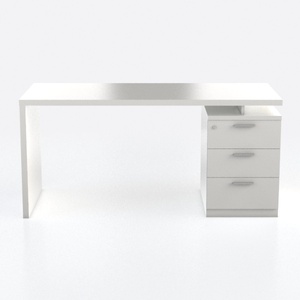
Minimalist White Solid Wood Office Desk With Storage Drawers 3D Model
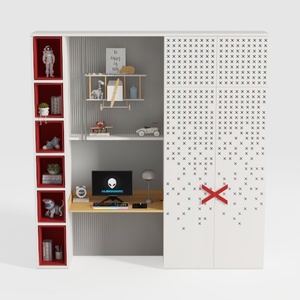

Modern Minimalist Multi functional Kids Study Wardrobe Cabinet 3D Model
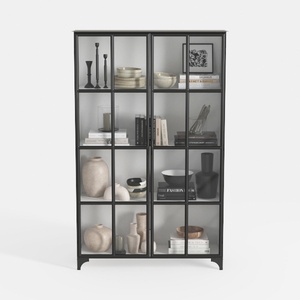
Modern Black Metal Glass Display Cabinet 3D Model
Discover the ease of home design with Homestyler! This user-friendly online platform offers an intuitive design tool, stunning 3D renderings, inspiring design projects, and helpful DIY video tutorials, perfect for turning your home vision into reality. Transform your space today!
Дизайн сейчас бесплатно
































