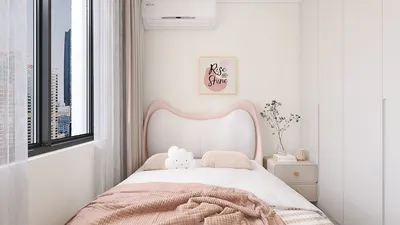


Semi-private rooms offer an excellent balance by maintaining natural light and social interaction while designing focused, restorative spaces. In various living environments such as multi-use homes, shared apartments, and compact studios, I create these semi-private zones using layered boundaries including screens, shelving, elevation changes, and sound-absorbing elements. This design approach ensures that spaces feel both open and sheltered, promoting natural behaviors like conversation, quiet work, rest, and efficient storage. Utilizing tools like Homestyler can greatly enhance the visualization of such designs.
My design strategy is guided by two key insights. The first is the WELL v2 guidelines, which advocate for ambient lighting levels of about 215–300 lux in living areas, along with brighter task lighting for focused activities. This baseline is crucial when dividing spaces to prevent dark corners. The second insight comes from workplace studies conducted by Steelcase, which indicate that people prioritize both concentrated work and connections with others. Their research highlights a significant demand for adaptable environments capable of smoothly transitioning between different needs—precisely what semi-private designs achieve. For ergonomics and color choices, I follow WELL's recommendations on lighting and comfort, while also drawing from Verywell Mind's color psychology to incorporate calming neutral tones and stimulating accents.
When reorganizing an open space, I focus on optimizing flow, as circulation impacts usability more than any individual feature. Steelcase's research supports the idea that seamless transitions contribute to well-being and productivity. Therefore, boundaries should enhance movement and light, not obstruct them. My toolkit consists of low-contrast partitions, perforated dividers, and furniture-level dividers that preserve sightlines while mitigating distractions and sound.
Layered Zoning: The Foundation of Semi-Privacy
I construct semi-private areas using three essential layers: visual, acoustic, and behavioral. Visual control is achieved through translucent panels, ribbed glass, open shelving, and greenery. To manage sound, I incorporate rugs, upholstered panels, and ceiling baffles. Behavioral indicators, such as a floor lamp and side table, create the feel of a reading nook, even without full walls. This combination minimizes distractions and maintains a sense of community.
Effective Light Management Without Structural Barriers
Natural light should flow freely. I utilize frosted or reeded glass, slatted screens, and perforated metal to allow daylight to pass while subtly obscuring sightlines. In the evenings, I combine warm lights (2700–3000K) for relaxation with neutral-task lighting (3500–4000K) in focus areas, aligning with WELL v2's emphasis on circadian-friendly environments. It's important to minimize ceiling glare: place fixtures out of direct line of sight when seated, and incorporate dimmable layers to adjust for various activities.
Psychology of Color for Peace and Definition
Color zones help anchor activities. Soft greens and gentle blues facilitate relaxation in areas meant for resting or reading, while calmed terracotta and warm neutrals enliven social spaces. Insights from color psychology, as summarized by Verywell Mind, suggest that blues and greens evoke calmness and stability, whereas warmer shades promote sociability and warmth—ideal for dining or conversation areas. I ensure gentle contrasts across boundaries to maintain visual harmony and introduce brighter accents within semi-private enclaves to signify changes in purpose.
Furniture Serving as Adaptable Dividers
I often use sofa backs, console tables, bookshelves, and banquettes as partial barriers. Ideally, these partitions should be between 36 to 60 inches high to provide seated privacy while still allowing light to filter through. Open-backed shelving allows for dual display and helps absorb sound when filled with books and textiles. Employing items like rolling credenzas or nesting tables can create more space for gatherings or make small areas cozier for focused tasks. Using a furniture layout simulation tool, such as those offered by Homestyler, can aid in visualizing boundaries and flow prior to finalizing designs.
Acoustic Comfort: Reducing Noise in Important Spaces
Hard surfaces can enhance noise levels. By layering a thick rug in semi-private spaces, incorporating fabric wall panels or cork materials behind seating, and softening the ceiling with light fixtures or ceiling tiles, the acoustic environment significantly improves. A ceiling canopy positioned above a reading nook alters the sound dynamics effectively. Additionally, it is wise to orient noisy appliances (like kitchen equipment and TVs) away from focus areas and use soft background music during gatherings to mask disruptive sounds.
Micro-Architecture: Versatile Screens, Drapes, and Elevated Areas
Implementing sliding panels, pivoting screens, and ceiling tracks for full-height drapes allows for the cozy feel of a room, sans the permanence of a wall. Using double drapery layers—sheer ones for daytime brightness and heavier textiles for evening privacy—creates flexibility. In spaces where it's feasible, a 4–6 inch platform can delineate a sleeping or work zone; this can be enhanced with an LED toe-kick light for safe navigation and a touch of drama. Keeping threshold heights low encourages accessibility while clearly establishing boundaries.
Ergonomic Spaces for Work and Learning
For a desk tucked away behind a bookcase or within an alcove, privacy arises naturally from its positioning. To ensure proper ergonomics, a desk height of about 28–29 inches is ideal for most users, along with an adjustable chair that supports proper knee and elbow angles of 90–100 degrees. Incorporating task lighting at 3500–4000K alongside a soft pinboard for notes and a narrow shelf for accessories helps keep the work surface uncluttered. If this nook benefits from natural light, manage glare with a translucent shade, and set the monitor perpendicular to the window.
Semi-Private Sleeping Areas and Daybeds
In studio apartments or guest rooms, positioning the headboard against a solid backdrop and layering a tall screen or bookshelf at the foot provides privacy. A daybed serves dual purposes—seating by day and a bed at night; accessorizing it with adjustable lamps allows for versatile lighting whether lounging or reading. Incorporating heavy textiles behind the bed area can effectively minimize sound and create a cocoon-like atmosphere.
Shared Rooms that Maintain Personal Touches
In rooms shared by siblings or roommates, I designate personal micro-areas for each occupant: each side has their own lighting, a small pinboard, and discreet storage solutions. A central shared area furnished with a rug and soft poufs fosters collaboration and harmony. It's crucial to ensure visual equity; each person should have a significant 'anchor' element in the space (like headboards or desk walls) to ensure the room feels balanced.
Storage as a Boundary and an Organizer
Closed storage units should line the outer edges, while open storage solutions are best placed within the semi-private area for easy access. Tall wardrobes or fluted cabinets can act as a serene backdrop to a lounge setting. To maintain an acoustic environment, ensure that doors feature soft-close mechanisms. In extremely compact studios, a single floor-to-ceiling cabinetry piece can effectively distinguish between sleeping and living areas while reducing visual clutter.
Rhythmic Design, Proportions, and Visual Harmony
Creating semi-privacy benefits from the repetition of motifs: identical slat widths in screens and shelves, matching metal finishes on lamps and curtain tracks, and a consistent wood tone on either side of a partition. I typically strive for a ratio of 60% open, 30% semi-private, and 10% fully enclosed spaces in smaller areas, adjusting this based on factors like light and noise levels. It's important to maintain sightline ‘windows’ at both standing and seated heights to keep spaces interconnected.
Purposeful Material Selections
Select materials that serve multiple functions. For instance, ribbed glass, woven cane, and perforated metal allow light to filter through while offering a degree of privacy. Wool rugs, cork, and acoustic PET felt panels enhance sound quality and add warmth to an environment. If sustainability is a primary concern, consider using recycled-content PET felt and responsibly sourced wood materials; coupled with low-VOC finishes, this approach promotes healthy air quality.
Quick Layout Solutions
- A daybed paired with an open shelf spine creates a division for living and sleeping areas.
- Utilize curtain tracks to enclose the sleeping nook for visitors.
- A small round table positioned near the kitchen can be complemented with folding chairs that store conveniently on hooks.
- Desk tucked behind a shelf with a task lamp and pinboard promotes efficiency.
- A sofa can be placed in the center of the room with a low console behind it to establish a reading corridor.
- A duo of pivoting screens flanking the TV wall can be swung open for larger gatherings.
- A banquette along a window creates a dining area while also softening acoustic impacts.
- Headboards positioned back-to-back on a low platform provide each individual with their own side.
- A centered rug paired with poufs fosters shared play, and a ceiling canopy can assist with sound diffusion.
- Two task lights alongside personal shelves help maintain clear boundaries.
Design Planning and Testing Prior to Implementation
I prototype various boundary solutions—like screens, shelving, and curtain tracks—before evaluating visual sightlines and circulation from both seated and standing perspectives. Utilizing a room design visualization tool speeds up this process, facilitating testing of spatial proportions, flow dynamics, and daylight quality before any hardware installation. An interior layout planner, such as Homestyler, can be invaluable for assessing options effectively.
Ensuring Maintenance and Longevity
Choose hardy textiles for areas where bodies regularly come into contact. Select wipeable paint finishes for high-touch surfaces, and install track hardware rated for frequent usage if curtains are the main dividers. Having extra curtain hooks, felt pads, and light bulb replacements handy is wise—semi-private configurations function best when all components remain smooth, quiet, and consistent.
Additional Notes of Authority
- For information on light and wellness standards, refer to the WELL v2 features regarding Light and Comfort at wellcertified.com.
- For evolving insights on how individuals seek both concentration and collaboration, consult Steelcase research at steelcase.com/research.
Frequently Asked Questions
Q1. How can I keep a semi-private space bright without causing glare?
A1. Use translucent materials (like reeded glass or sheer drapes) to allow daylight in while layering dimmable task lighting at 3500–4000K for focus and warm lighting at 2700–3000K for relaxation. Ensure fixtures are positioned out of direct sight and manage window glare with light-diffusing shades.
Q2. What’s the ideal height for a semi-partition?
A2. A height between 36–60 inches typically offers sufficient seated privacy while ensuring visual openness. If greater shielding is needed (as in sleeping areas), opt for taller dividers while blending with transparent upper sections (open shelves or slats).
Q3. Can curtains substitute for a wall effectively?
A3. In many scenarios, yes. A ceiling track deployed with double layers—sheer for daytime light diffusion and heavier for privacy and noise isolation—works well. Ensure to select quality glides and implement a return to the wall to minimize light seepage.
Q4. How can I lessen noise in an open plan?
A4. Incorporate plush rugs, upholstered seating, and acoustic panels or felt baffles. Position noisy appliances away from focus zones and consider soft background music during gatherings to mask conversational noise.
Q5. Which colors help a small semi-private area achieve a calming effect?
A5. Soft, desaturated greens, gentle blues, and warm neutrals foster calmness and visual cohesion. It's best to keep high-contrast accents minimal; utilize saturation within the nook to define its purpose without fragmenting overall space.
Q6. What ergonomic considerations should I have for a study nook?
A6. Desk height should be around 28–29 inches for optimal positioning, an adjustable chair must support knee and elbow angles in the range of 90–100 degrees, and the monitor should be positioned perpendicular to windows to minimize glare. Lastly, a dedicated task lamp ensuring low glare is essential.
Q7. How do I separate a studio while retaining enough storage?
A7. Utilize floor-to-ceiling cabinets or open-back bookshelves as dividers. Position closed storage on the public-facing side and open display on the private side, incorporating integrated lighting on both sides to ensure brightness.
Q8. Are screens or shelves more suitable for renters?
A8. Freestanding shelves and folding screens prove to be renter-friendly and easily reversible. When installing curtain tracks, using adhesive or tension-based systems is preferable to avoid excessive drilling.
Q9. What’s a quick method to test various layouts?
A9. Set up two or three scenarios using movable partitions and rolling furniture to assess circulation and sightlines effectively. Using a room layout tool can quickly simulate options before any purchases are made.
Q10. How can I keep a semi-private corner from feeling constricted?
A10. Allow at least 30–36 inches in passage space, ensure the upper portion of dividers remains visually light (through sheer fabrics or slats), and use a larger rug that extends beyond the designated zone to maintain a sense of openness.
Q11. What materials both obscure views and enhance acoustics?
A11. Ribbed glass can soften visual interference; combine it with acoustic PET felt panels, wool rugs, and upholstered items to address sound while allowing light.
Q12. How do I design lighting scenarios for multifunctional days?
A12. Create distinct presets: morning (brighter, cooler), afternoon (well-balanced ambient), and evening (warm, dimmed). Employ separate circuits or smart plugs for task, ambient, and accent lighting layers.
Discover your dream home design with Homestyler! This intuitive online platform offers an easy-to-use design tool, stunning 3D renderings, and a wealth of design projects and DIY video tutorials. Whether you're a beginner or a pro, transforming your space has never been easier or more enjoyable!
立即免费设计
































