

Crafting a 3D representation of the periodic table serves as an engaging method to illustrate chemistry principles in a compact and interactive manner. Begin by defining the objective of your 3D model: is it meant for educational purposes, decorative use, or as part of a broader design concept? Once you’ve established your intent, select a modeling tool, such as Homestyler or other specialized software, where you can construct each element as distinct blocks or spheres, systematically organizing them to showcase their properties like atomic number, group, and period.
Think about how to physically represent various dimensions. You could arrange the elements along the x-axis by groups, the y-axis by periods, and utilize the z-axis for properties such as atomic radius or electronegativity. Incorporating color codes and labels will simplify the process of identifying groups and trends. For tangible models, consider utilizing materials such as foam cubes, 3D-printed shapes, or even LEGO bricks to enhance the hands-on learning experience.
As a designer, I often contemplate the integration of a 3D model into a chosen space. If you plan to display this in a classroom or a science-themed study, it's essential that the structure is both accessible and aesthetically pleasing within its environment. Utilizing a digital platform like Homestyler, which offers 3D rendering capabilities, allows you to visualize and customize your design before constructing a physical model, ensuring that the scale and design align perfectly with your space.
Tips 1:
Begin by sketching a layout on paper to organize your ideas prior to transitioning to digital or physical construction. This practice clarifies the spatial arrangement and positioning of each element within your selected three-dimensional format.
FAQ
Q: What software is ideal for creating a 3D periodic table model?
A: Notable options include Homestyler, Blender, and Tinkercad, which are particularly user-friendly for beginners and feature robust 3D visualization tools.
Q: What materials are suitable for crafting a physical 3D model?
A: Uses can range from foam, plastic blocks, LEGO bricks, to 3D-printed components; your choice should reflect the desired durability and level of detail.
Q: How should I structure the elements in three dimensions?
A: Generally, the x and y axes represent groups and periods, while the z-axis could denote a property like atomic radius or categorization block (s, p, d, f).
Q: What importance does color coding have in a 3D periodic table?
A: Color coding helps differentiate between element types—such as metals, nonmetals, and noble gases—facilitating quick identification of trends and families.
Q: Can 3D modeling assist in grasping chemical trends?
A: Absolutely, spatially organizing elements and visually emphasizing their properties allows for a more profound understanding of chemical relationships and periodic trends.

Hampstead Storage Set, Rattan Sideboard Buffet

Minimalist Solid Wood Home Office Desk With Storage Shelves 3D Model
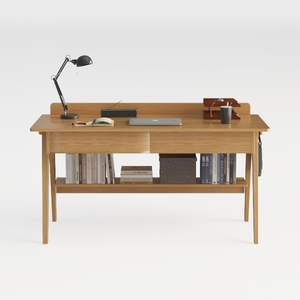

Modern Solid Wood Home Office Desk With Lower Storage Shelf 3D Model
Homestyler is your go-to online home design platform, perfect for turning your ideas into reality! With its user-friendly design tool, stunning 3D renderings, and a wealth of DIY video tutorials, you can effortlessly explore and create beautiful interior spaces—no experience needed!
Diseño ahora GRATIS
































