

Building a 3D Earth model with layered sections is an exciting endeavor for students, educators, and anyone interested in understanding our planet's composition. Start by collecting reference materials to grasp the primary layers of the Earth: the crust, mantle, outer core, and inner core. Select your modeling materials—whether it be colored clay, foam spheres, or even digital 3D design software. If you're working with physical materials, begin with a spherical base, segment it to represent each layer accurately, and assign distinct colors for easy differentiation. Alter the materials by carving or layering them to ensure the proportions are visually informative. For digital creations, software like Blender or SketchUp provides tools for detailed modeling and coloring. As a keen designer, I suggest enhancing your project by employing a room planner tool such as Homestyler to picture how your model can be showcased in educational environments like classrooms or science exhibits. This approach ensures that your model is not only scientifically sound but also aesthetically appealing in its setting, which is crucial for effective educational design.
Tips 1:
Clearly label each layer and consider making sections detachable to promote interactive learning. Proper lighting and strategic placement can elevate the educational impact of your Earth model in any interior environment.
FAQ
Q: What materials are best for crafting a physical 3D Earth model?
A: Popular choices include colored polymer clay, Styrofoam spheres, and specialized modeling paints which offer great clarity and detail.
Q: How precise should the thickness of each layer be?
A: Utilize scaled proportions; while exact accuracy isn't essential for basic models, projects intended for science fairs or educational uses benefit from more precise scaling.
Q: What digital tools are effective for creating a 3D Earth model?
A: Programs like Blender, SketchUp, along with educational modeling apps offer excellent features for this purpose.
Q: How can the Earth model be incorporated into a learning environment?
A: Utilizing a room planner, such as Homestyler, can help visualize the model's placement and optimal lighting in classrooms or museums.
Q: Is it beneficial for each layer of the Earth to be removable?
A: Having removable or rotatable sections encourages interactive learning, making the model more engaging and educational.

Modern Fabric Upholstered Armchair With Metal Legs 3D Model

Safavieh Home Soleil Natural and White Leather Wov
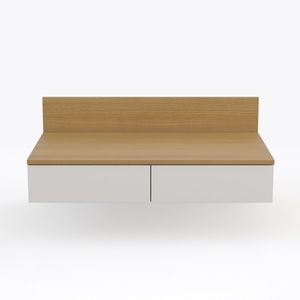
Modway EEI-6312-WHI-NAT Kinetic 49" Wall-Mount Off
Homestyler is your go-to platform for amazing home design! It features an easy-to-use online design tool, stunning 3D renderings, diverse design projects, and helpful DIY video tutorials. Transform your living space effortlessly, regardless of your experience level—get inspired and start designing today!
Design Now for FREE
































